If you’re up late on Pinterest searching for small bedroom tips, you’re in the right spot.
Many people struggle to fit their lives into tight spaces without feeling cramped.
The key lies in Japan’s timeless design ideas.
Japanese interior design goes beyond looks; it’s a lifestyle.
It encourages mindfulness, calmness, and harmony with your space.
In small bedrooms, this style pairs nicely with modern Scandinavian design, called “Japandi.” By adopting ideas like *Kanso* (simplicity), *Shizen* (naturalness), and *Ma* (the beauty of empty space), you can make your room feel bigger and create a serene atmosphere, similar to a luxury Zen spa.
This guide is for Pinterest fans and home decor lovers who want to maximize their space.
Below, we present 13 Japanese-inspired, minimalist bedroom ideas to transform your personal sanctuary..
1. The Low-Profile Platform Bed
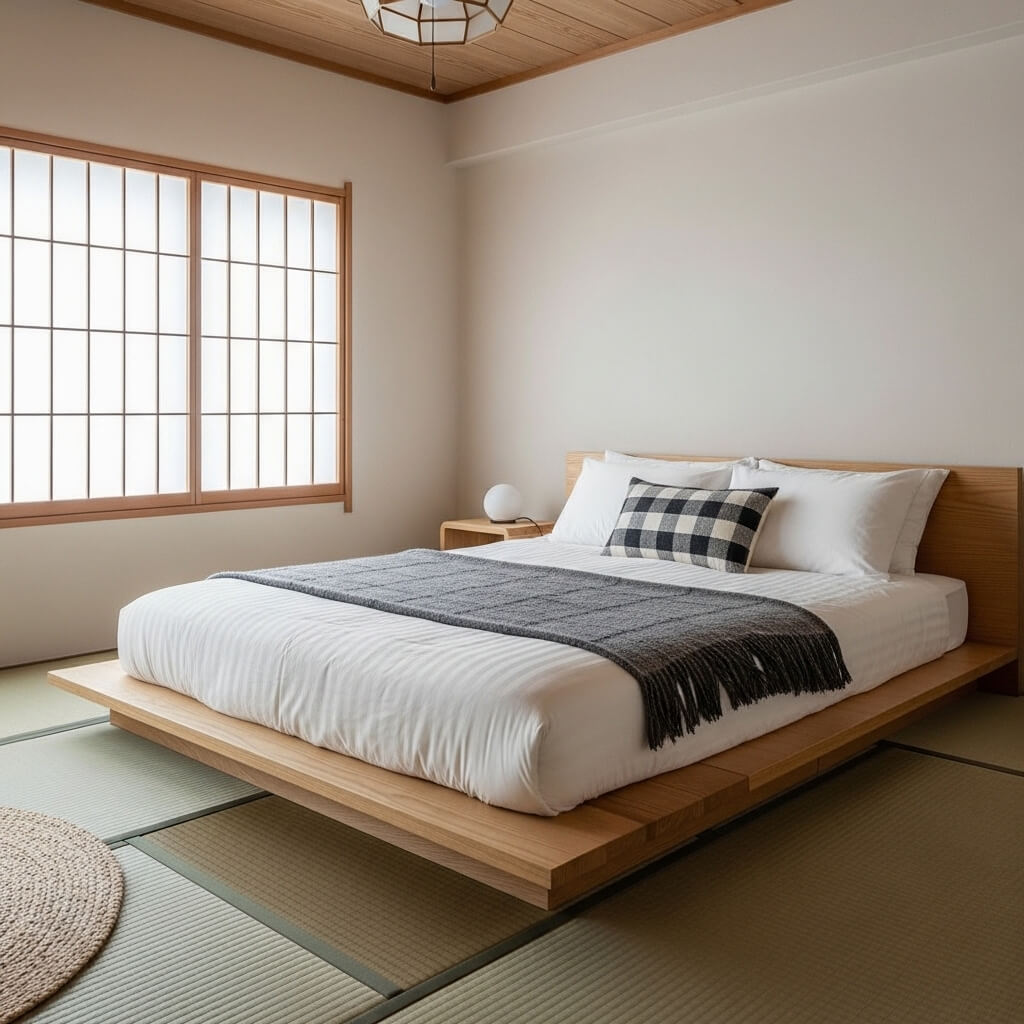
In traditional Japanese homes, people sleep on a futon placed directly on tatami mats.
You don’t need to give up your comfy Western mattress.
Instead, try a sleek, low-profile platform bed to capture this look.
- Why it saves space: Lowering your bed makes the room feel taller and more open. The gap between the mattress and the ceiling creates a sense of airiness.
- Pinterest Styling Tip: Skip the heavy headboard. Choose a light-wood platform frame that sits just a few inches off the floor. This allows the space above the bed to stand out as the focal point.
2. Shoji-Inspired Window Treatments and Room Dividers
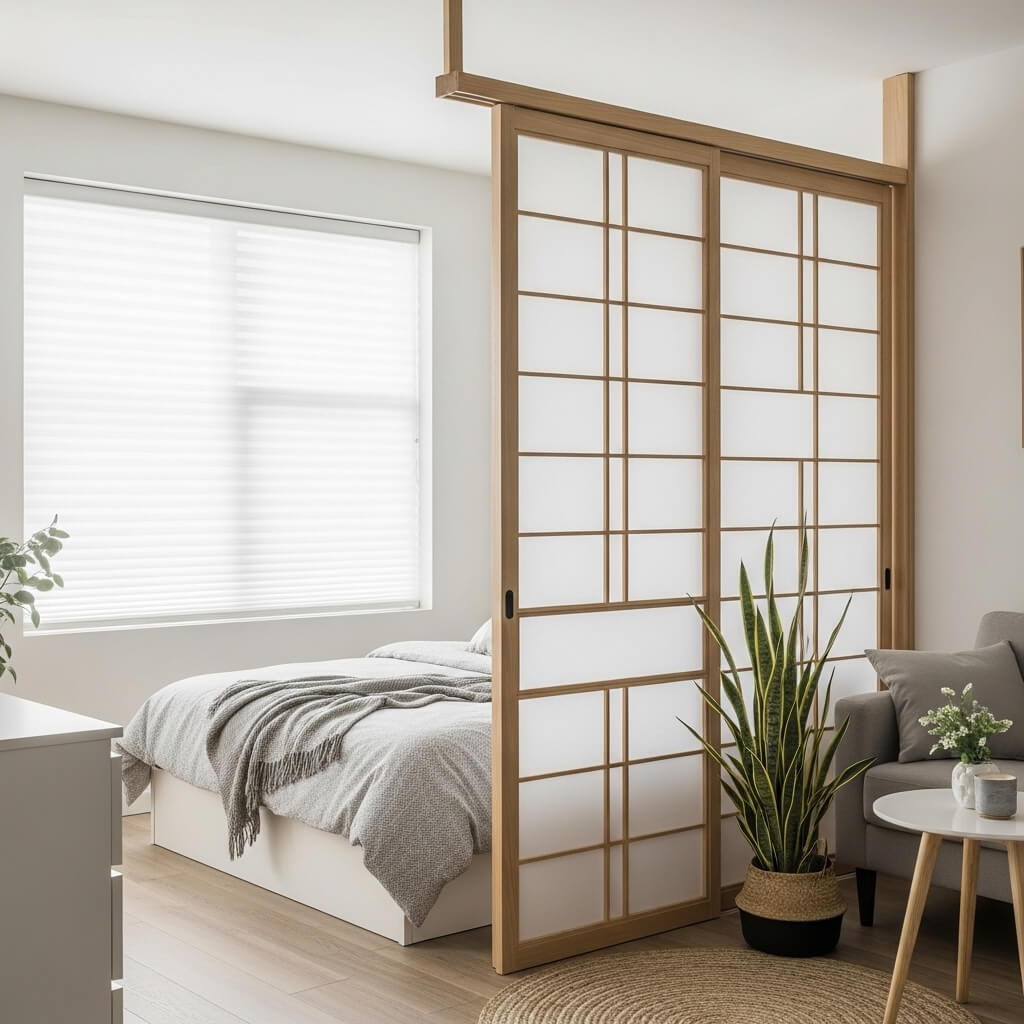
Traditional Shoji screens are classic in Japanese architecture.
They use translucent paper over a wooden frame.
These screens soften harsh sunlight into a warm glow while ensuring privacy.
- Space-Saving Benefits: Heavy curtains can make small windows feel bulky and take up space. Shoji-style blinds or sliding panels sit flat against the wall. In a studio, a folding Shoji screen is a sleek way to divide your sleeping area from your living space.
- Pinterest Styling Tip: If custom wooden screens are too pricey, try top-down, bottom-up cellular shades. Choose a crisp white or rice-paper texture for a similar look and light-filtering effect.
3. Embrace “Ma” (The Art of Negative Space)
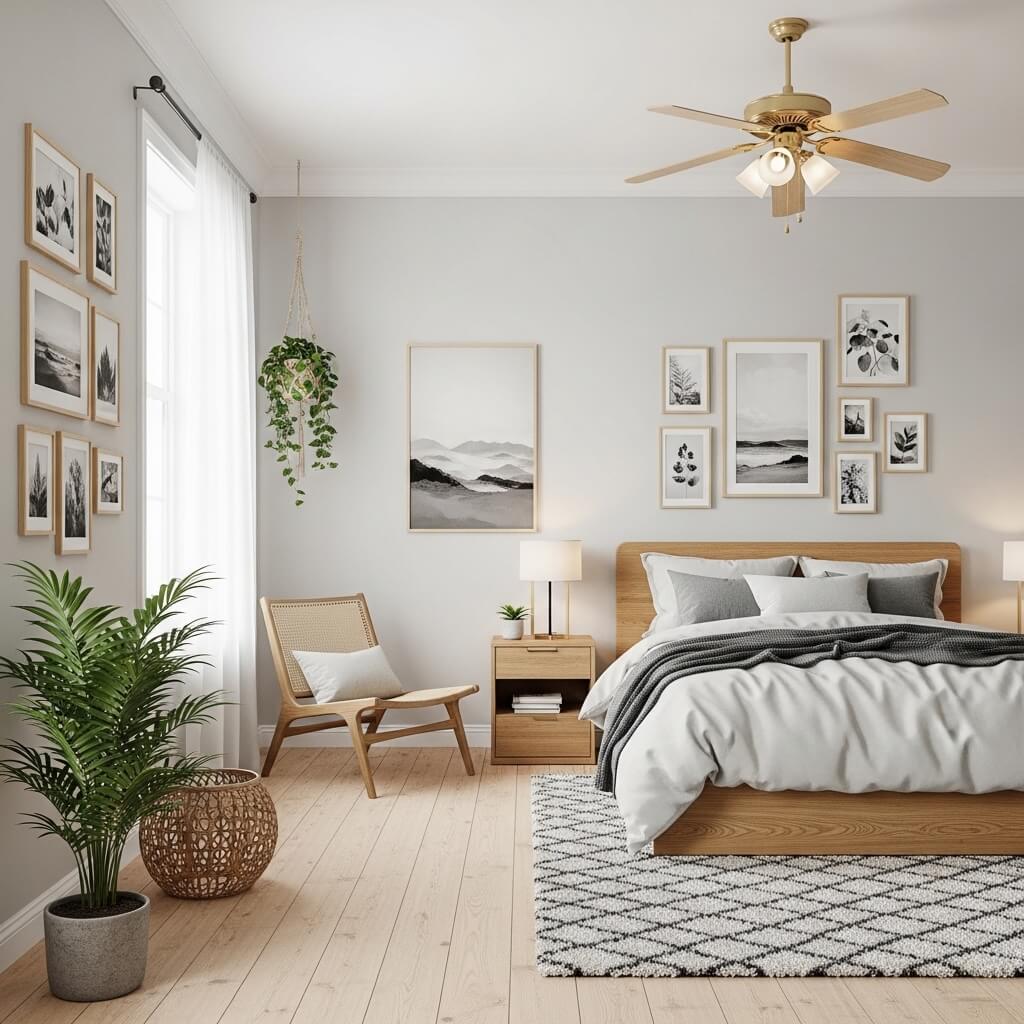
In Western design, there’s often a push to fill every empty space with a plant, chair, or art piece.
In contrast, Japanese design values Ma, which means negative space.
Emptiness is not seen as lacking but as a vital part that enhances what is present.
- Why it saves space: Leaving some walls or corners bare helps the room breathe. This avoids the cramped feeling often found in small bedrooms.
- Pinterest Styling Tip: Be tough when editing your decor. Instead of a gallery wall with many small pictures, choose one large, calming piece of art. Let the empty wall around it create a soothing visual break.
4. Hidden Under-Bed Storage (The Minimalist Way)
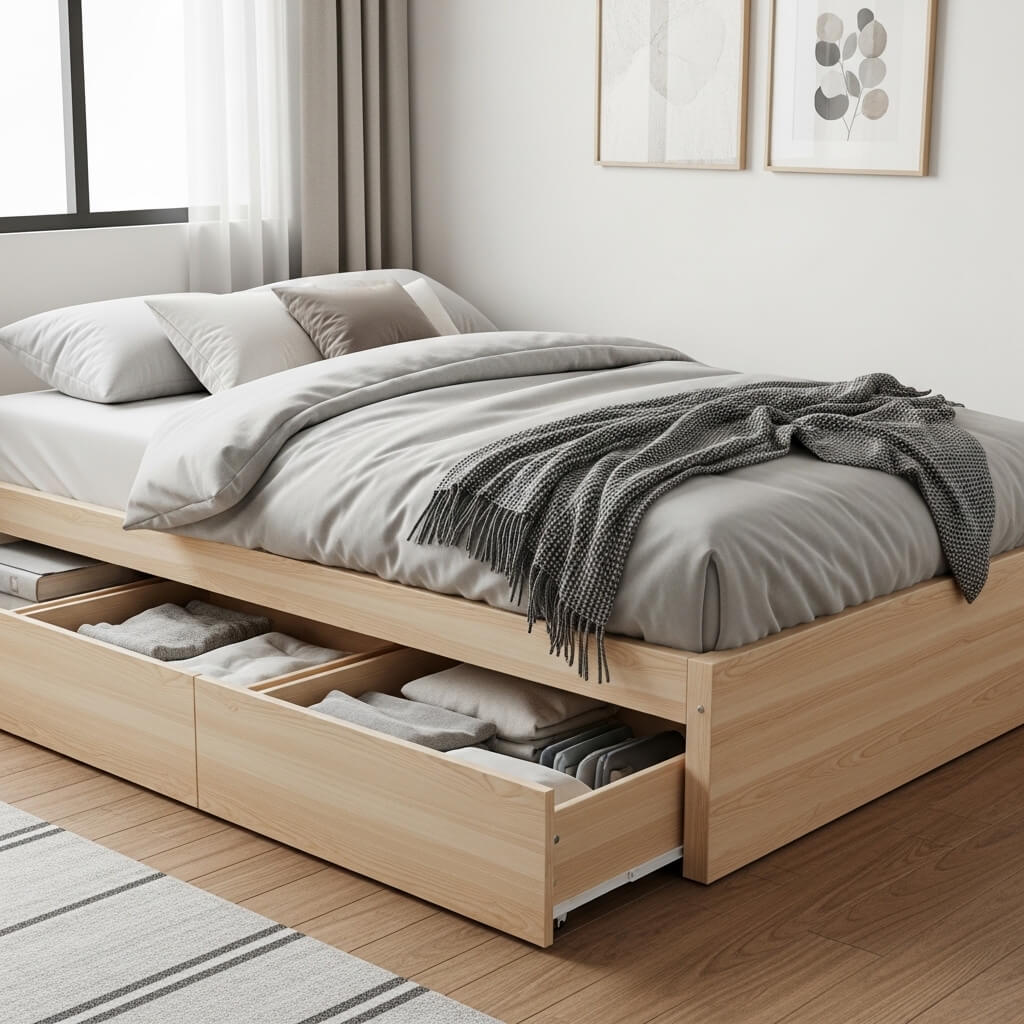
Minimalism doesn’t mean you have no belongings.
It means your items are hidden and well-organized.
To keep a clean Japanese look in a small bedroom, your storage should be discreet.
- Why it saves space: The area under your bed is the biggest unused space in your room. A platform bed with built-in storage drawers can help you skip a bulky dresser.
- Pinterest Styling Tip: Avoid plastic bins that stick out and disrupt the look. Opt for a bed frame with flush, handle-less drawers made of natural wood. This keeps the sleek lines typical of Japanese design.
5. A Grounding, Earth-Toned Color Palette
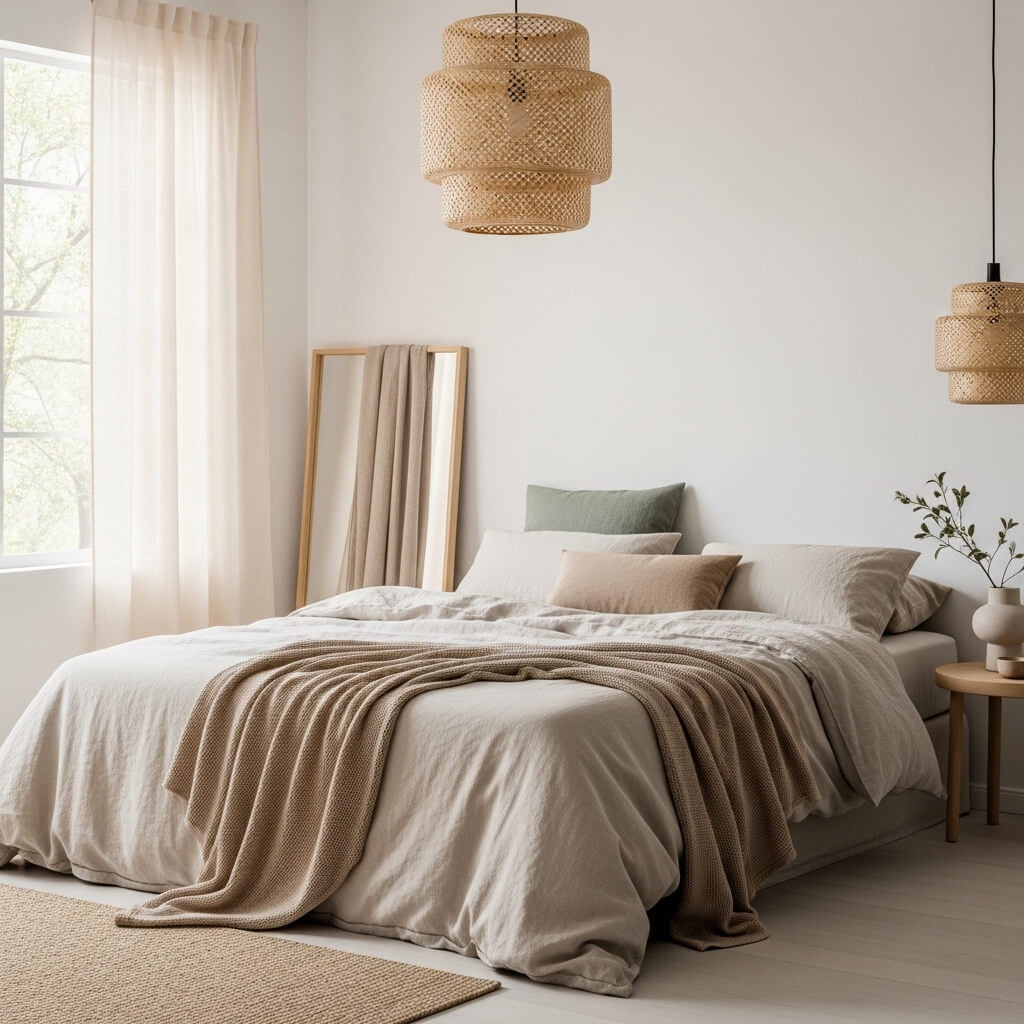
Japanese minimalism favors soft, natural hues over bright colors.
Think warm off-whites, gentle stones, muted sage greens, sandy beiges, and pale taupes.
- Why it saves space: Light, monochromatic colors help blend room boundaries. When walls, bedding, and curtains share these soft tones, the eye moves easily across the space. This creates an open feel without harsh contrasts.
- Pinterest Styling Tip: Layer different shades of one color for depth. For instance, pair a cream wall with oatmeal linen sheets and a darker beige throw pillow for a subtle, elegant look.
6. Minimalist Open Wardrobes for a Capsule Closet
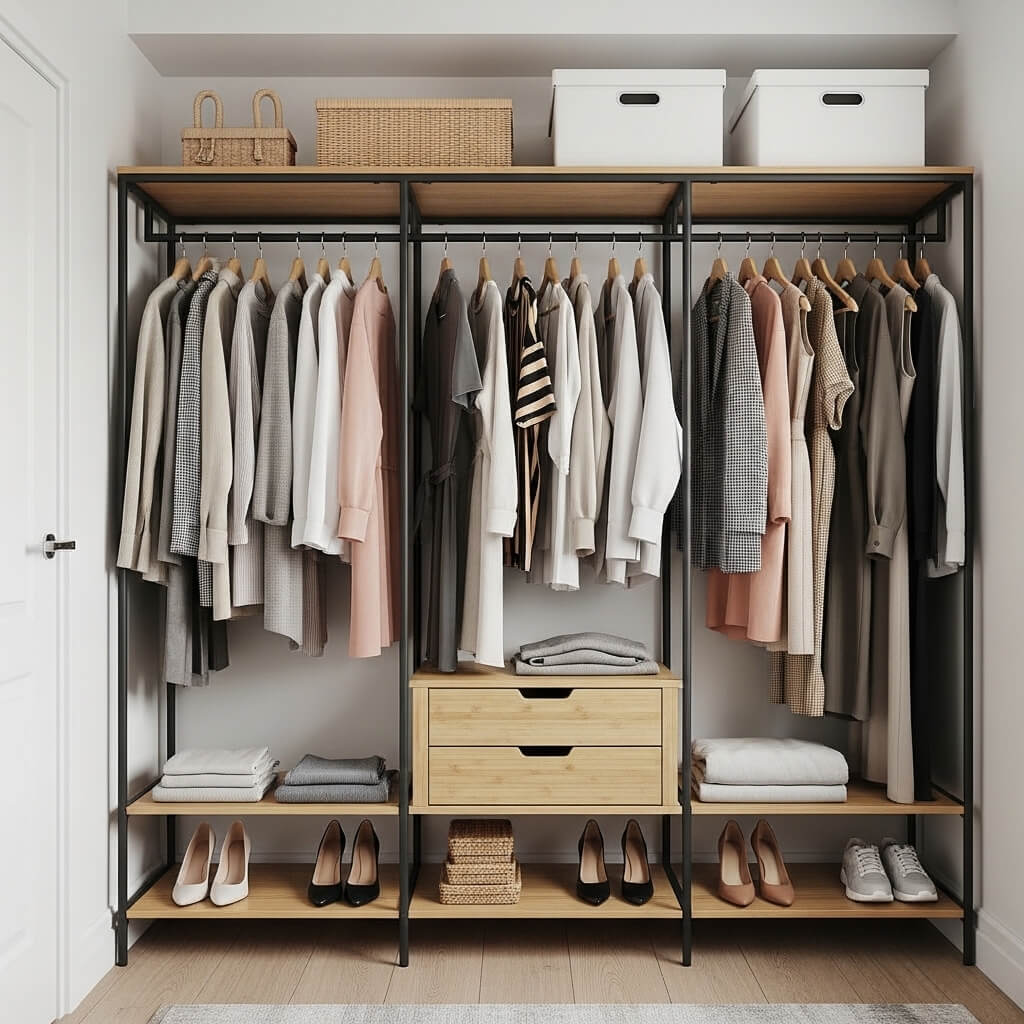
If your small bedroom doesn’t have a built-in closet, a heavy wooden armoire will take up too much space.
Instead, try a minimalist approach with a capsule wardrobe on a sleek, open garment rack.
- Why it saves space: A bamboo or matte black metal rack takes up less space than bulky furniture. Since it’s open, you can see the walls and floor, which keeps the room feeling spacious.
- Pinterest Styling Tip: An open wardrobe only works if it stays neat. Use matching hangers, arrange clothes by color, and show only the current season’s items. Store off-season clothes in hidden under-bed drawers.
7. Warm, Diffused Paper Lighting (Akari Lamps)
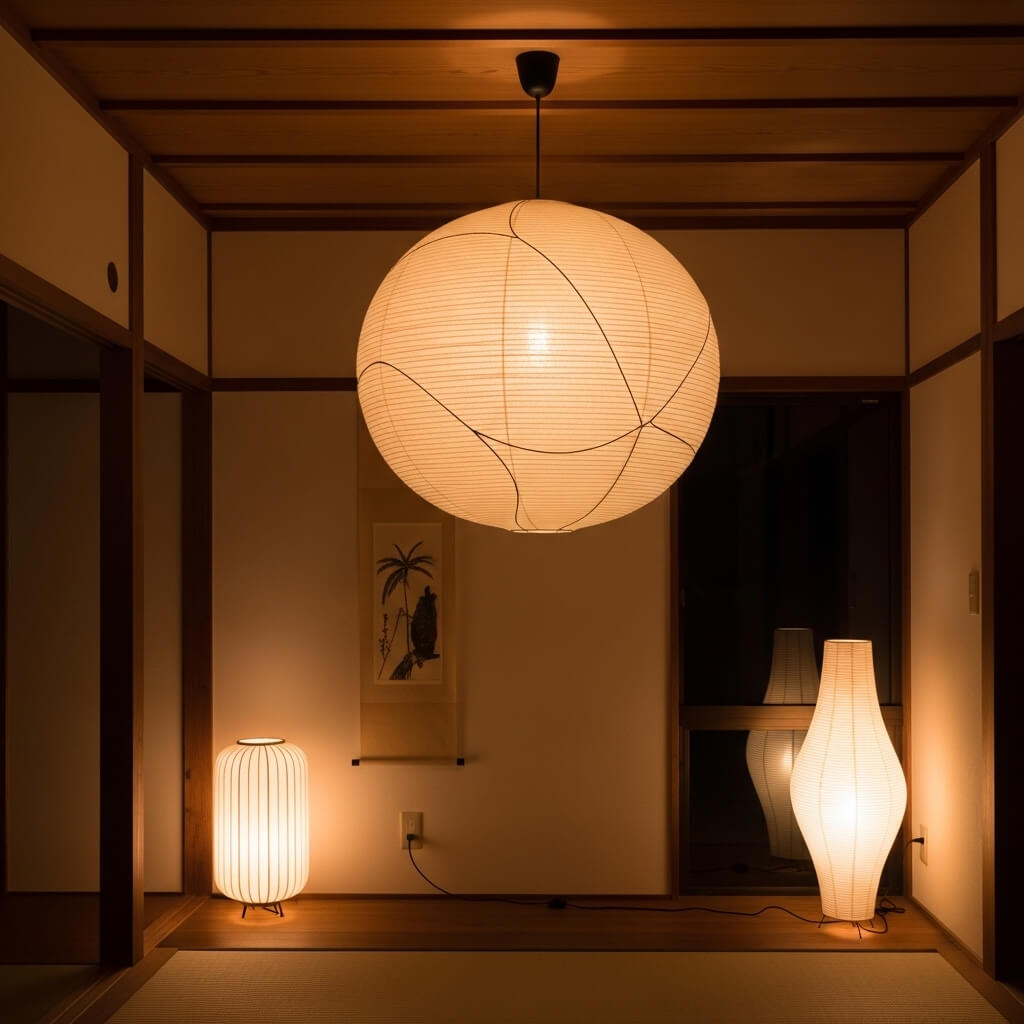
Lighting is essential in Japanese interior design.
Avoid harsh, cool overhead lights. Instead, choose soft, warm, and diffused light.
Paper lanterns work well, especially Isamu Noguchi’s Akari light sculptures.
- Why it saves space: A large paper pendant light draws the eye upward. A slender floor lamp with a paper shade takes up little floor space compared to a bulky nightstand lamp.
- Pinterest Styling Tip: Hang a large, asymmetrical paper globe from the ceiling in the room’s center. Use warm-toned LED bulbs (around 2700K) for a cozy, candle-like glow.
8. Wabi-Sabi Textures: Finding Beauty in Imperfection
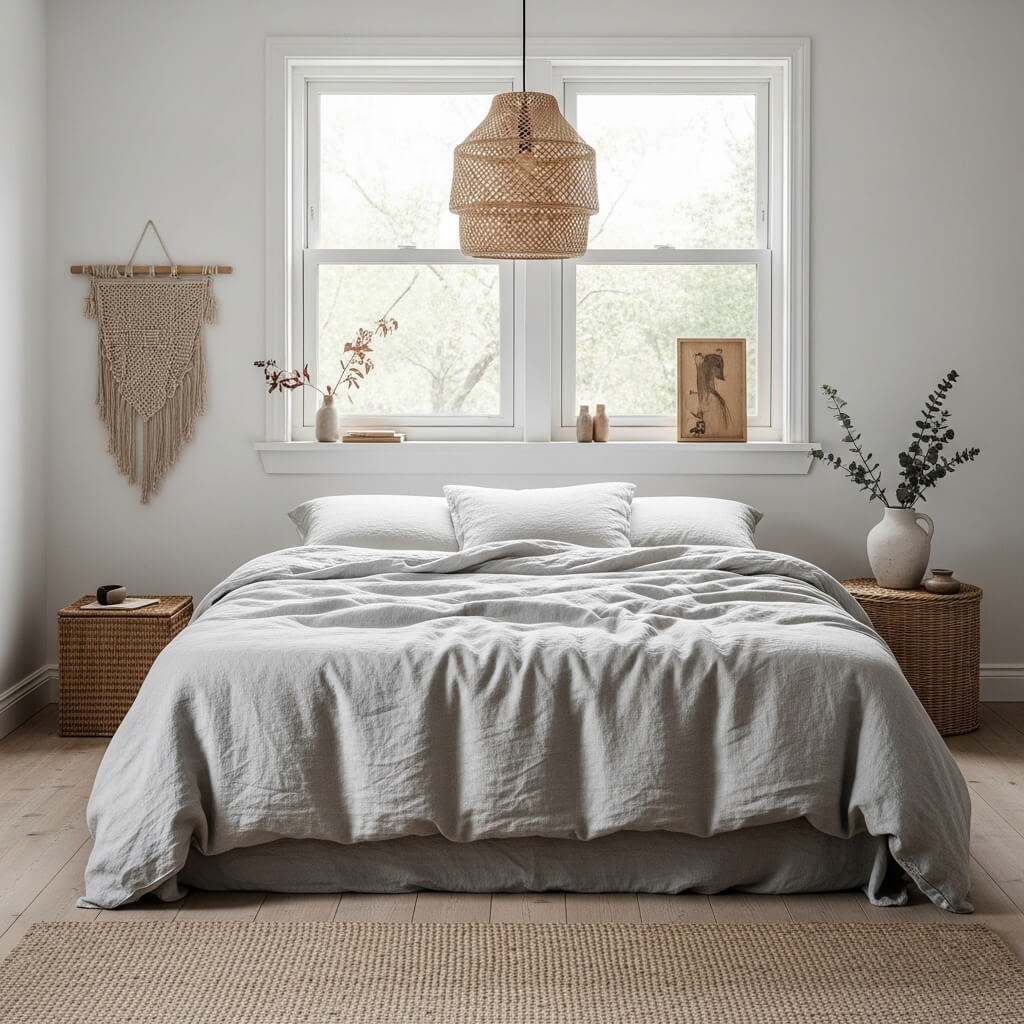
Wabi-Sabi is a Japanese idea that finds beauty in growth and decay.
It celebrates imperfection and the natural texture of materials.
In a bedroom, this means using organic fabrics and unpolished surfaces.
- Why it saves space: While it doesn’t save physical space, rich textures keep a minimalist room from feeling sterile. They add character without needing extra decorative items.
- Pinterest Styling Tip: Dress your low-profile bed with 100% natural, washed linen. Skip the iron. The organic wrinkles embody Wabi-Sabi, creating a bed that feels lived-in, soft, and comforting.
9. Multi-functional Furniture (The Chabudai Approach)
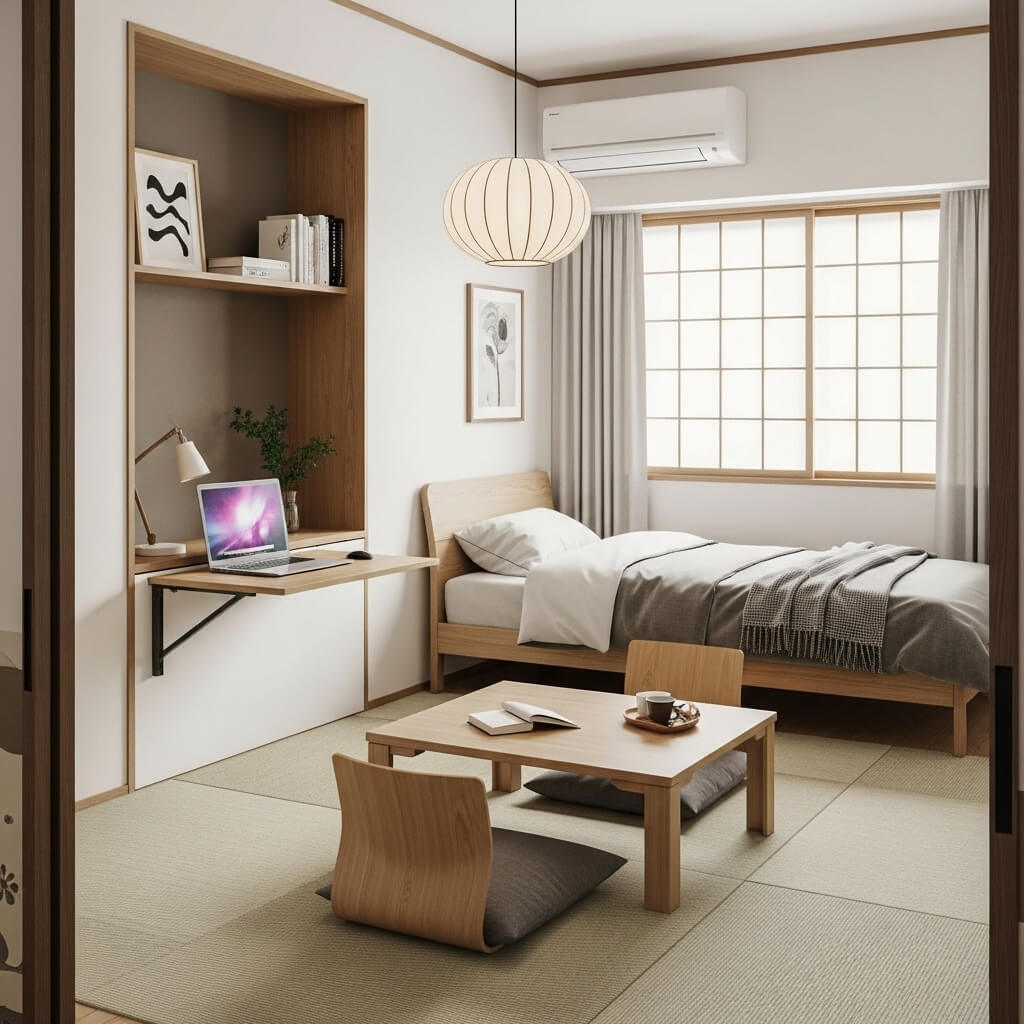
Traditional Japanese rooms are very flexible.
A room can serve as a bedroom at night, a dining room during the day, and a living area in the evening.
This is possible due to lightweight, movable, and multi-functional furniture.
- Why it saves space: Each piece of furniture in a small bedroom must be useful. By choosing multi-functional items, you can cut the amount of furniture you need in half.
- Pinterest Styling Tip: If you need a workspace in your bedroom, consider a modern, wall-mounted folding desk. You can also use a small, low table, like a chabudai, which slides under your bed when not in use.
10. Sliding Doors to Reclaim Floor Space
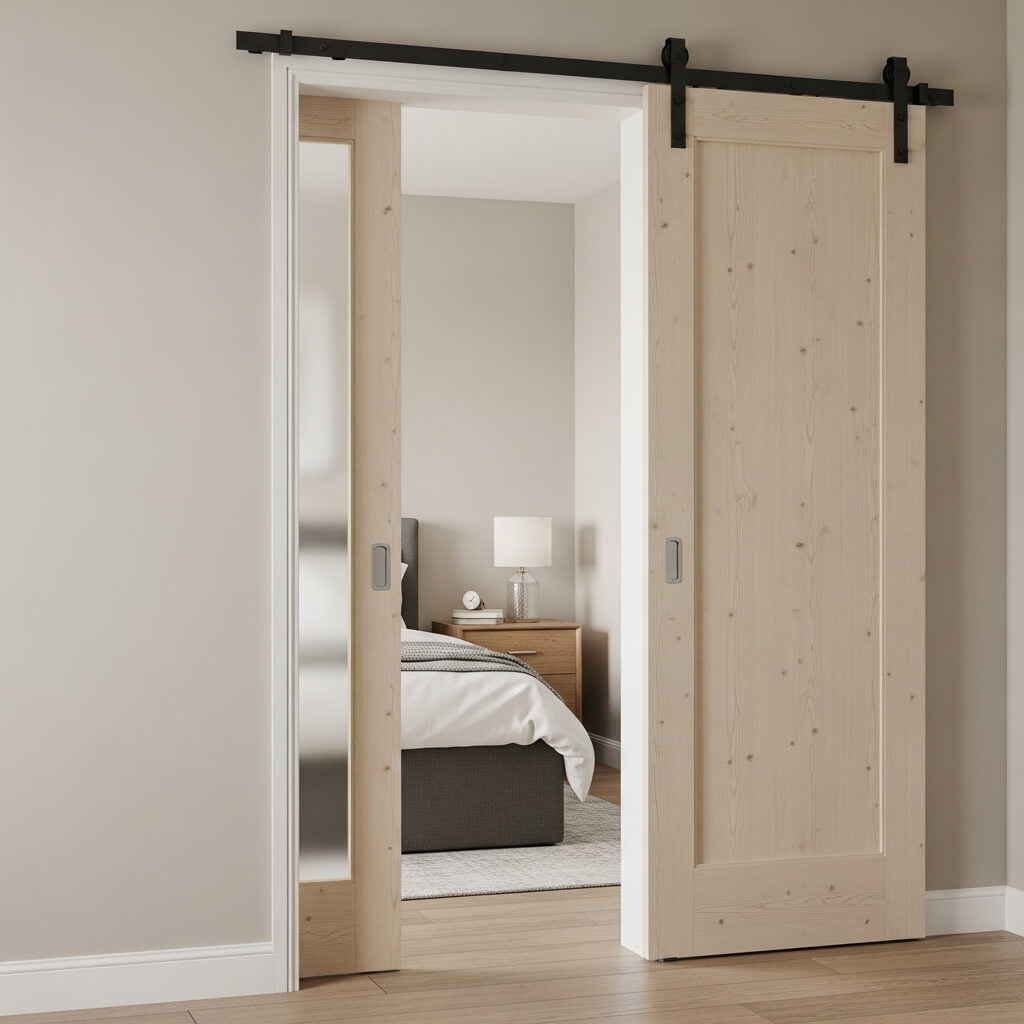
If you are doing a minor renovation or have the ability to swap out doors, replacing a traditional swinging door with a sliding door—inspired by Japanese Fusuma doors—is a game-changer for tiny spaces.
- Why it saves space: A standard bedroom or closet door requires roughly nine square feet of clearance just to swing open. That is a massive amount of “dead zone” in a small bedroom where you cannot place furniture. A sliding pocket door or a sleek barn door slides flush against the wall, giving you that precious floor space back.
- Pinterest Styling Tip: Choose a sliding door with frosted glass or a pale wood finish. The frosted glass will allow natural light from the hallway to filter into your bedroom while still maintaining complete privacy.
11. Floor Seating with Zaisu and Zabuton
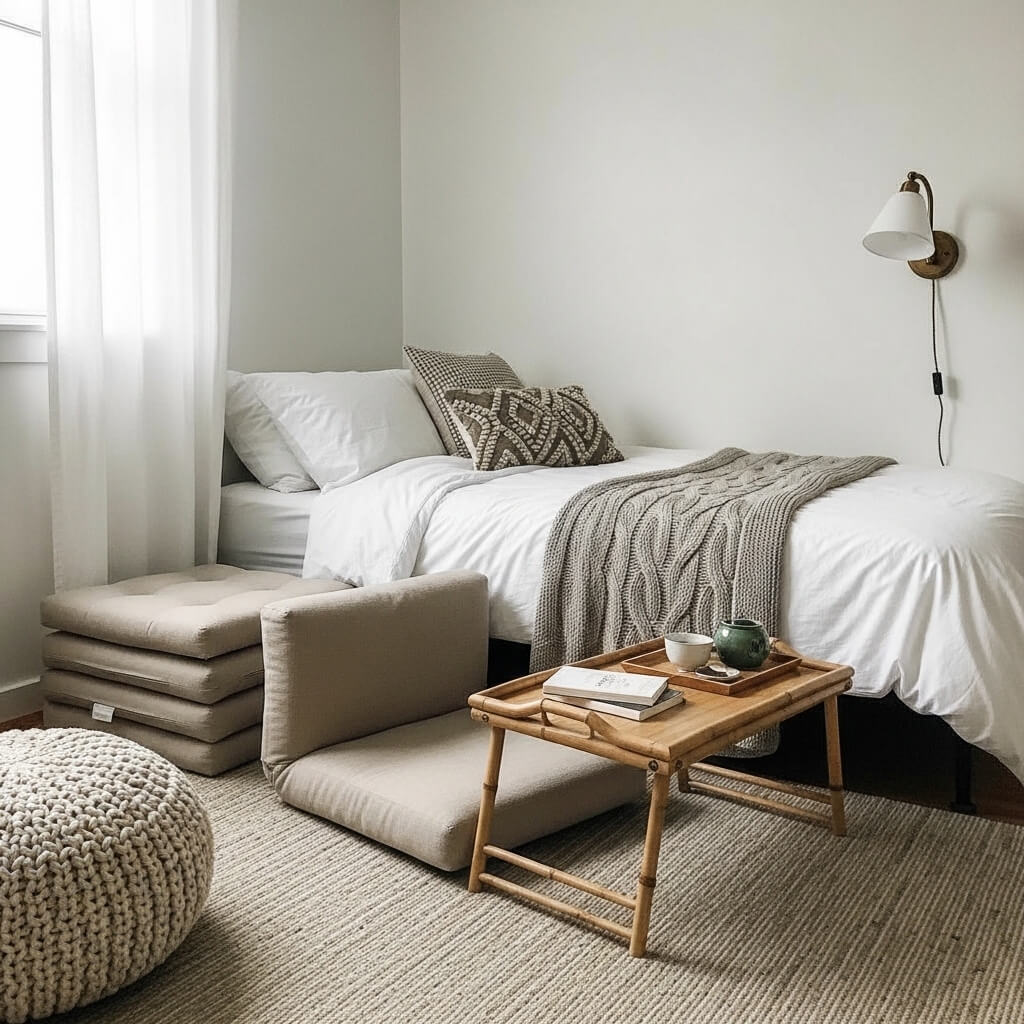
If your small bedroom has just enough extra space for a reading nook, skip the bulky armchair.
Japanese interiors utilize floor seating to maintain a low center of gravity in the room.
- Why it saves space: Floor cushions (zabuton) or legless chairs (zaisu) can be stacked in a corner or slid under the bed when you need floor space for yoga or rolling out a yoga mat. They offer comfortable seating without obstructing sightlines across the room.
- Pinterest Styling Tip: Create a cozy corner with a plush, neutral-toned floor pouf, a small bamboo tray table, and a dedicated wall sconce. It’s the perfect, space-saving spot for your morning matcha or evening journaling.
12. Intentional, Sculptural Greenery (Ikebana & Bonsai)
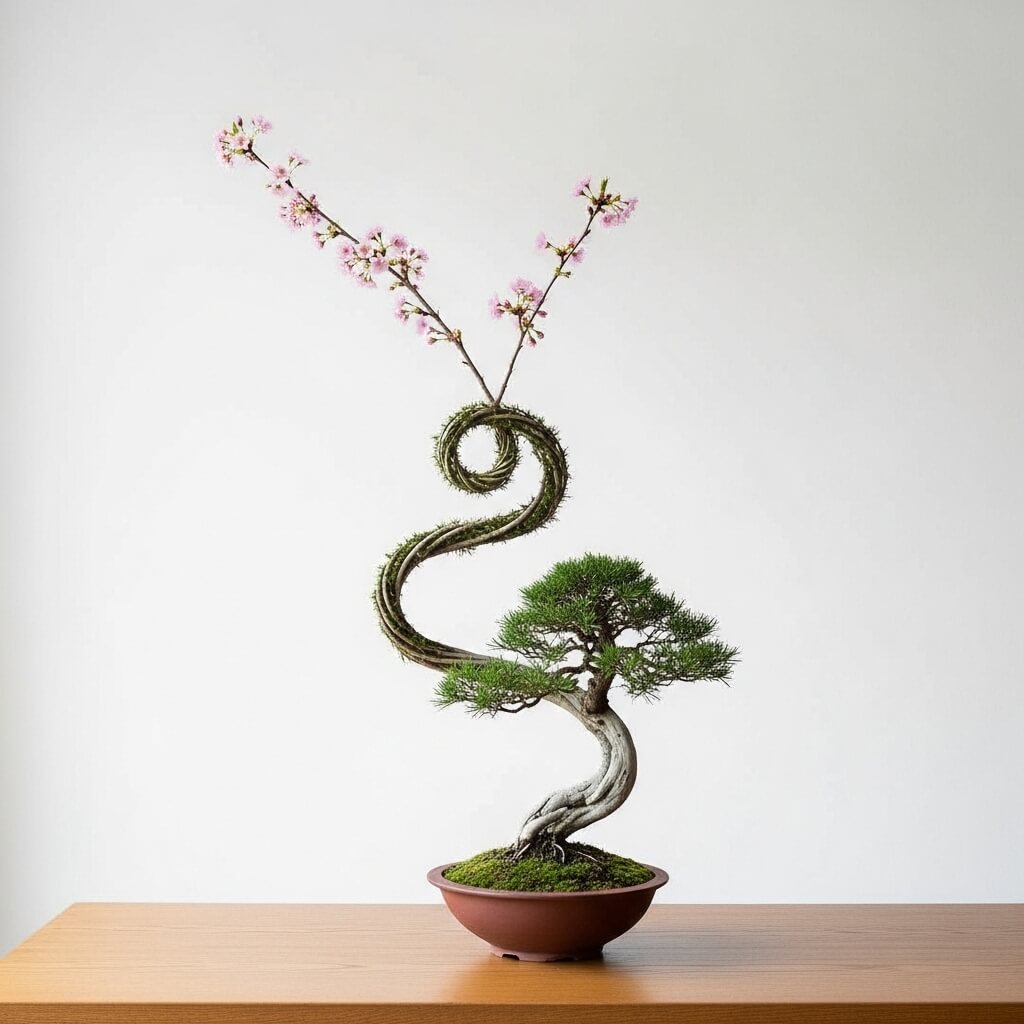
Connecting with nature is key in Japanese design.
Instead of filling a room with many small plants, the Japanese style focuses on curated, sculptural greenery.
- Why it saves space: One well-pruned plant occupies much less space than an indoor jungle, helping maintain a minimalist look.
- Pinterest Styling Tip: Take cues from Ikebana, the Japanese art of flower arrangement. Use a single cherry blossom branch, a curled willow, or a delicate bonsai in a Wabi-Sabi style vase. This creates a living art piece that adds life without clutter.
13. Light, Natural Woods for an Airy Feel
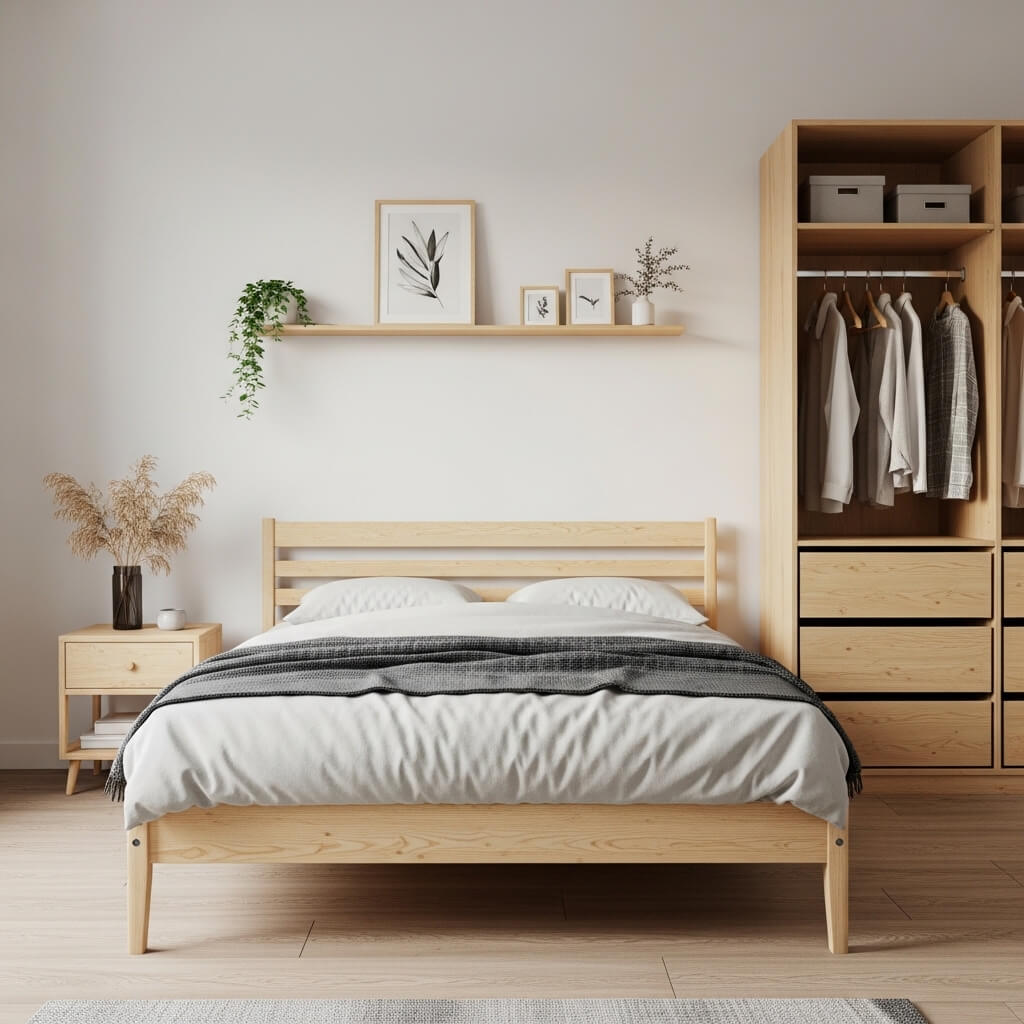
To truly capture the essence of Japanese minimalism, the materials you choose are just as important as the items themselves.
Dark, heavy mahogany or glossy painted furniture can weigh down a room.
Instead, look to the forests of Japan.
- Why it saves space: Light woods like ash, white oak, hinoki (cypress), and bamboo have a brightening effect on a room. They reflect natural light rather than absorbing it, contributing to the illusion of a larger, more open space.
- Pinterest Styling Tip: Keep your wood tones cohesive. If your bed frame is a pale ash, ensure your floating shelves, picture frames, and open wardrobe share a similar warm, light-wood tone. This consistency calms the eye and unifies the tiny bedroom.
How to Start Your Japanese-Inspired Bedroom Makeover on a Budget
Transforming your space into a minimalist, Zen-like retreat doesn’t require a massive budget or a total renovation.
If you are ready to apply these 13 small bedroom japanese inspired, minimalist small bedroom inspirations space saving concepts, start with these free or low-cost steps today:
- The Great Purge: Minimalism begins with decluttering. Follow the principles of Kanso and remove any item from your bedroom that does not serve a purpose or bring you profound peace. Clear your nightstands completely.
- Lower Your Mattress: If you have a box spring, consider removing it. Placing your mattress directly on a low slatted base instantly gives you the Japanese platform bed aesthetic for free.
- Change Your Bulbs: Swap out cool, bright daylight bulbs for soft, warm white (2700K) LED bulbs. Drape a simple paper lantern over a bare pendant light.
- Embrace the Wrinkles: Stop ironing your sheets. If you can afford one upgrade, invest in a set of linen or high-quality percale cotton sheets in a solid, earthy tone like sand or sage.
Final Thoughts on Your Minimalist Sanctuary
Your bedroom should be the ultimate antidote to the chaos of the outside world.
By incorporating these Japanese-inspired design principles, you are doing much more than just saving space; you are actively designing an environment that lowers your heart rate, clears your mind, and promotes restorative sleep.
Through the clever use of low-profile furniture, natural Wabi-Sabi textures, hidden storage, and a deep appreciation for negative space, even the smallest, most awkwardly shaped bedroom can become a masterpiece of modern Japandi design.