Windows blinds can completely change how a room looks and feels, from controlling sunlight to adding warmth, privacy, and personality.
Whether you love wooden blinds, soft white shades, dramatic black finishes, or modern Japanese styling, the right window treatment can make your space feel polished without overwhelming the décor.
1. Create a Warm Look With Wooden Window Blinds
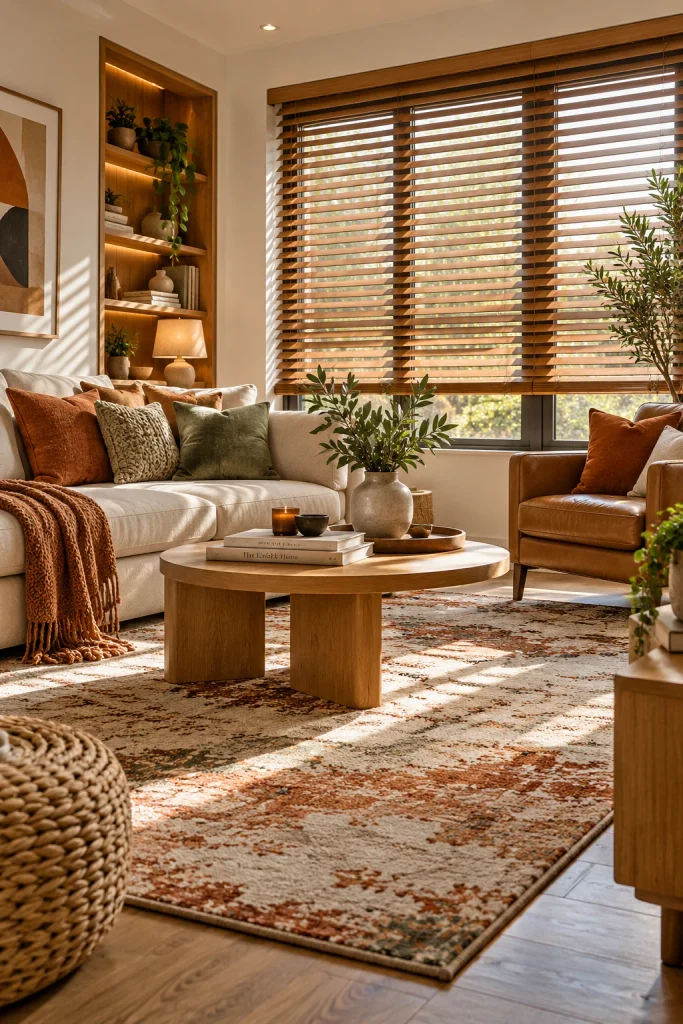
Wooden blinds bring natural texture and warmth to interiors, making them especially appealing for cozy living spaces.
Their organic appearance works beautifully with neutral walls, natural furniture, woven accessories, and modern minimalist décor.
Simple steps:
- Choose natural wood or a warm oak finish.
- Match the blind tone with nearby furniture.
- Keep surrounding décor simple so the texture stands out.
- Adjust the slats to control light throughout the day.
Tip: Choose wider slats when you want a cleaner, more contemporary appearance.
2. Make a Modern Living Room Feel Softer
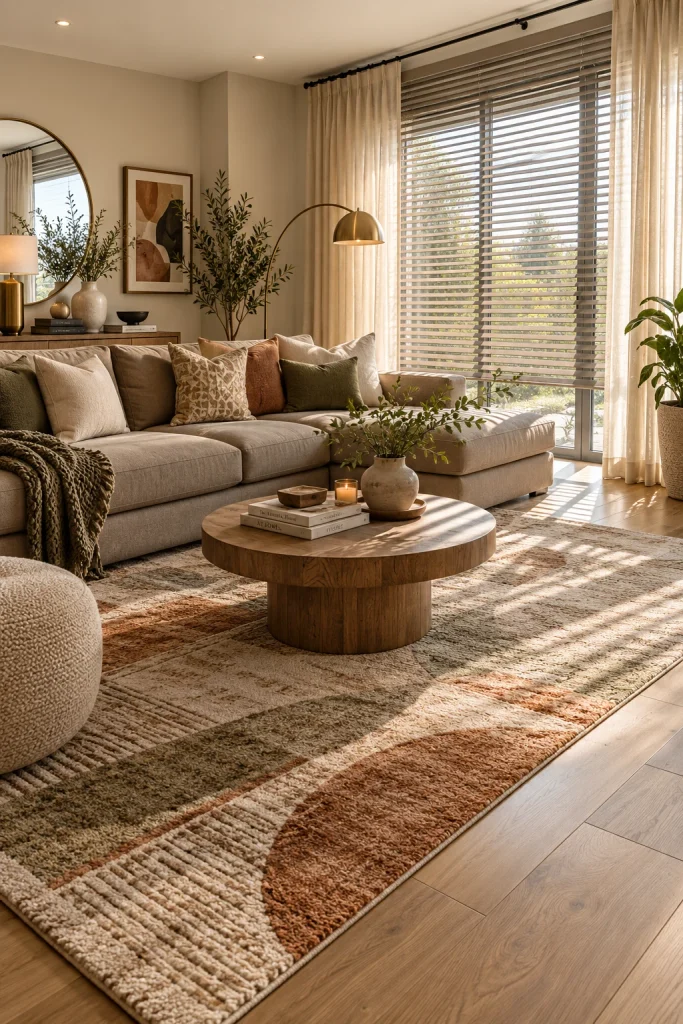
For ideas living room modern decorators can use, combine sleek blinds with soft furnishings rather than relying on curtains alone.
This creates a balanced look that feels structured but still comfortable.
Simple steps:
- Select neutral blinds in beige, cream, white, or soft gray.
- Add curtains in a slightly contrasting shade.
- Repeat one blind color elsewhere in the room.
- Keep furniture silhouettes clean and uncluttered.
Tip: Layering blinds with curtains gives you greater flexibility over privacy and natural light.
3. Dress Large Windows With Oversized Shades
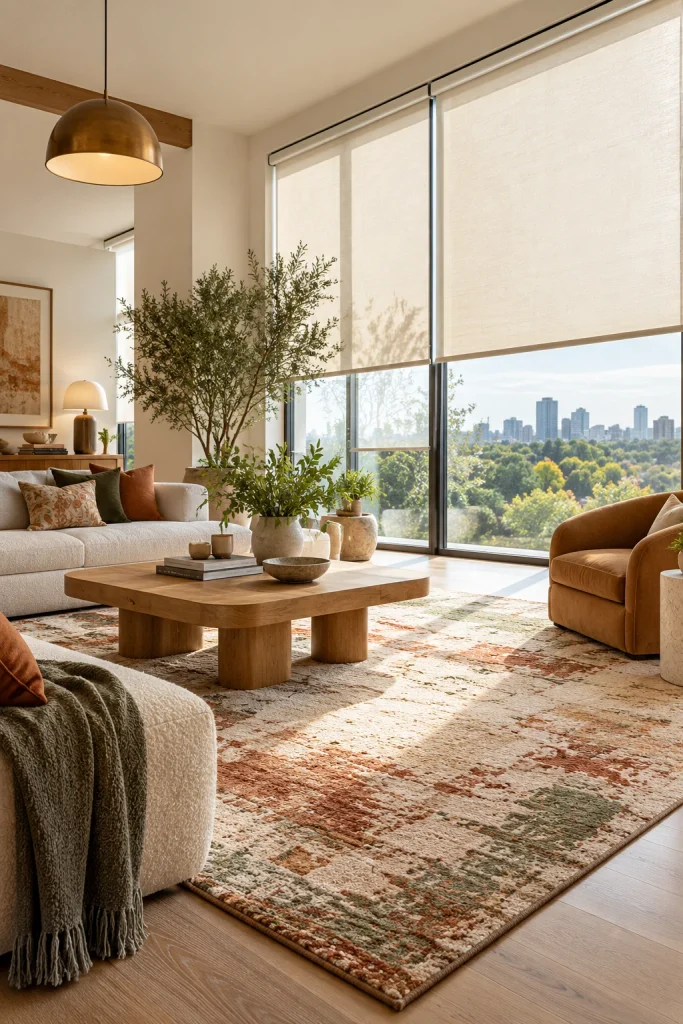
Large windows can become the focal point of a room, but the wrong treatment may make them look visually heavy.
Simple shades or blinds can emphasize the architecture while keeping the room bright and sophisticated.
Simple steps:
- Measure the entire window carefully.
- Choose a treatment that covers the opening evenly.
- Select a light-filtering material for daytime comfort.
- Add floor-length curtains if extra softness is needed.
Tip: For exceptionally wide windows, consider several coordinated blind sections instead of one oversized unit.
4. Add Drama With Black Window Blinds
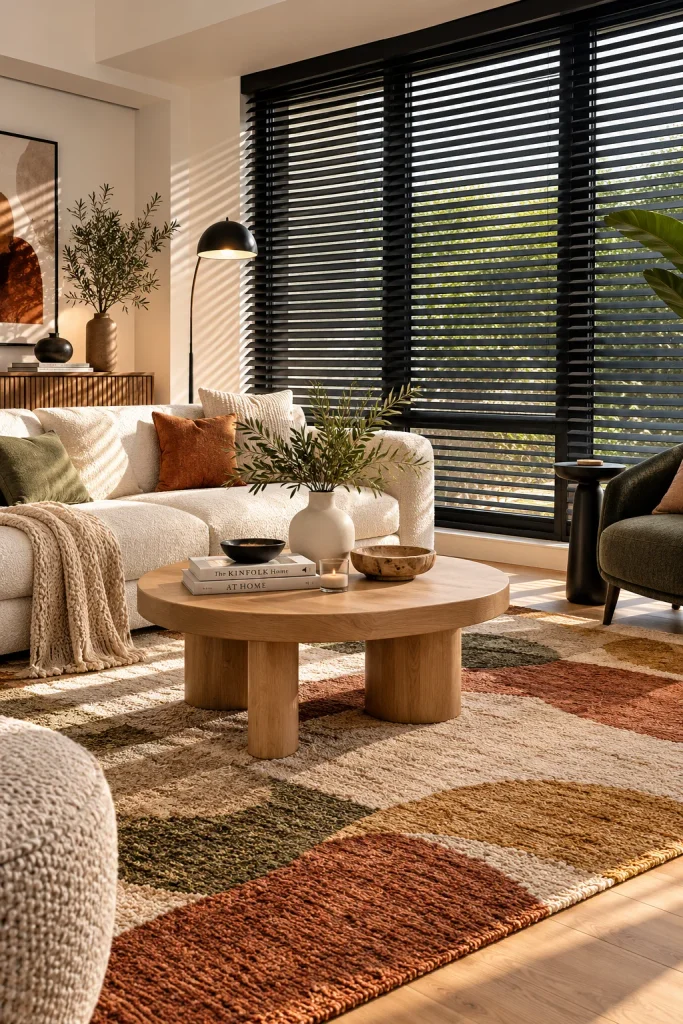
Black blinds can create a bold architectural statement, particularly in contemporary rooms.
They work well against white walls, pale wood, concrete finishes, and muted textiles.
Simple steps:
- Use black blinds against a light-colored wall.
- Repeat black subtly through frames, lighting, or furniture.
- Balance the darker window with lighter textiles.
- Use adjustable slats to prevent the room from feeling too dark.
Tip: Matte black generally creates a softer, more sophisticated effect than highly glossy finishes.
5. Give a Bathroom More Privacy
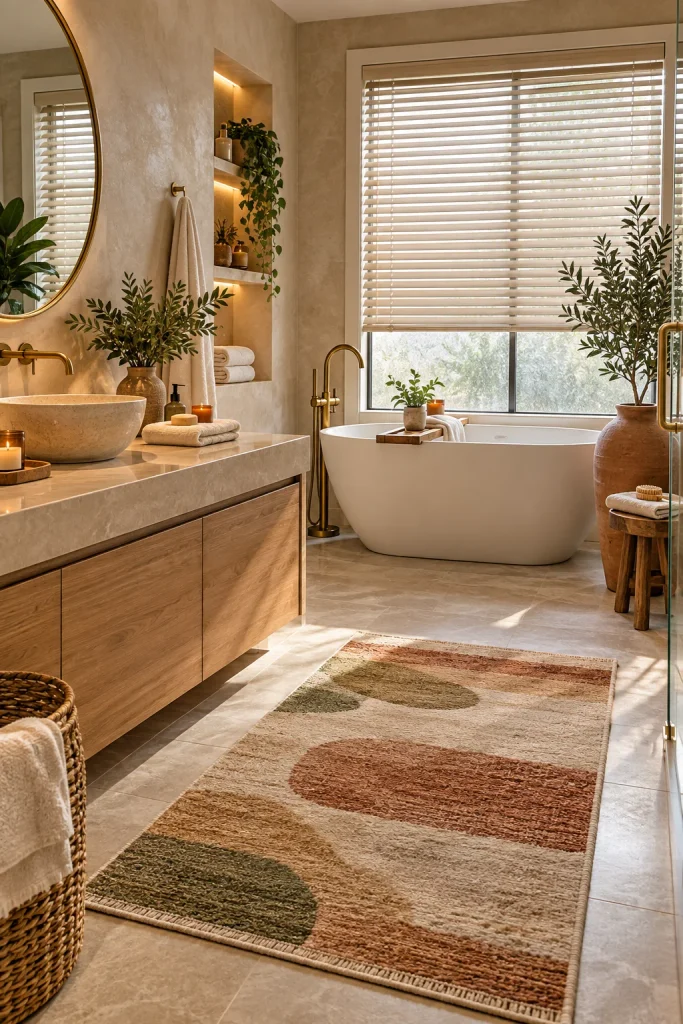
The bathroom needs window coverings that provide privacy while handling moisture and changing temperatures.
Practical materials can still look beautiful, especially when paired with simple contemporary fixtures.
Simple steps:
- Choose moisture-resistant blinds or shades.
- Prioritize privacy around eye level.
- Select a neutral color that complements the tiles.
- Make sure the blind can be cleaned easily.
Tip: Faux-wood finishes can provide the appearance of natural timber while offering better practicality in humid spaces.
6. Try Japanese-Inspired Window Styling
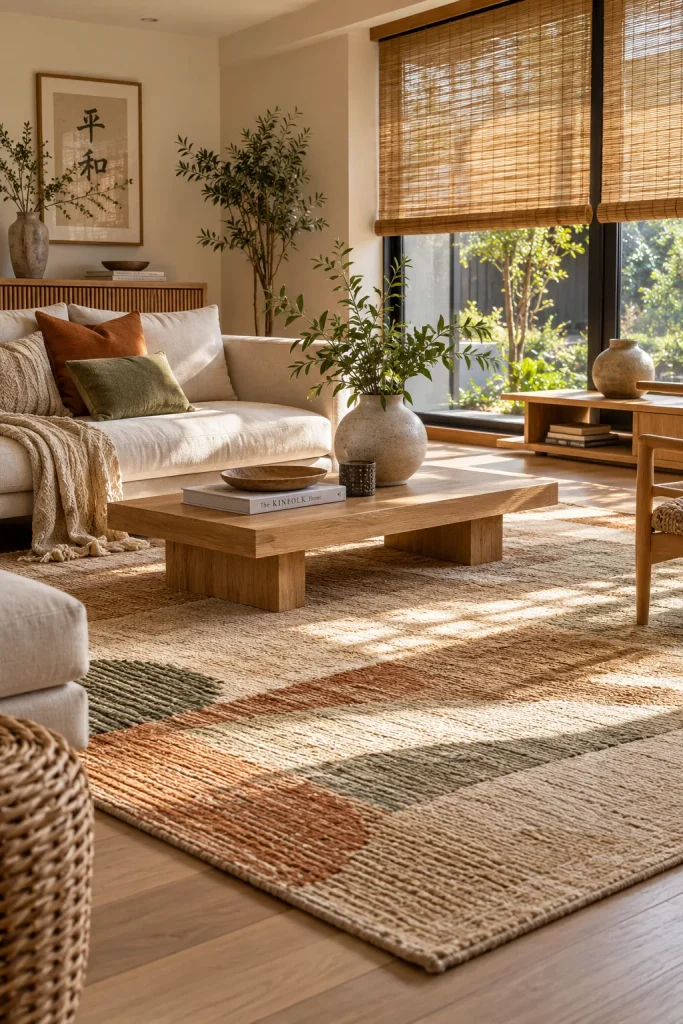
Japanese window treatments are ideal for homeowners who appreciate calm, uncluttered interiors.
Think simple lines, natural materials, restrained colors, and plenty of visual breathing room.
Simple steps:
- Choose neutral shades such as ivory, sand, or light brown.
- Pair them with low-profile furniture.
- Introduce natural wood throughout the room.
- Keep patterns minimal.
Tip: Use one consistent color palette around the window to strengthen the serene aesthetic.
7. Bring Japandi Aesthetics to Your Windows
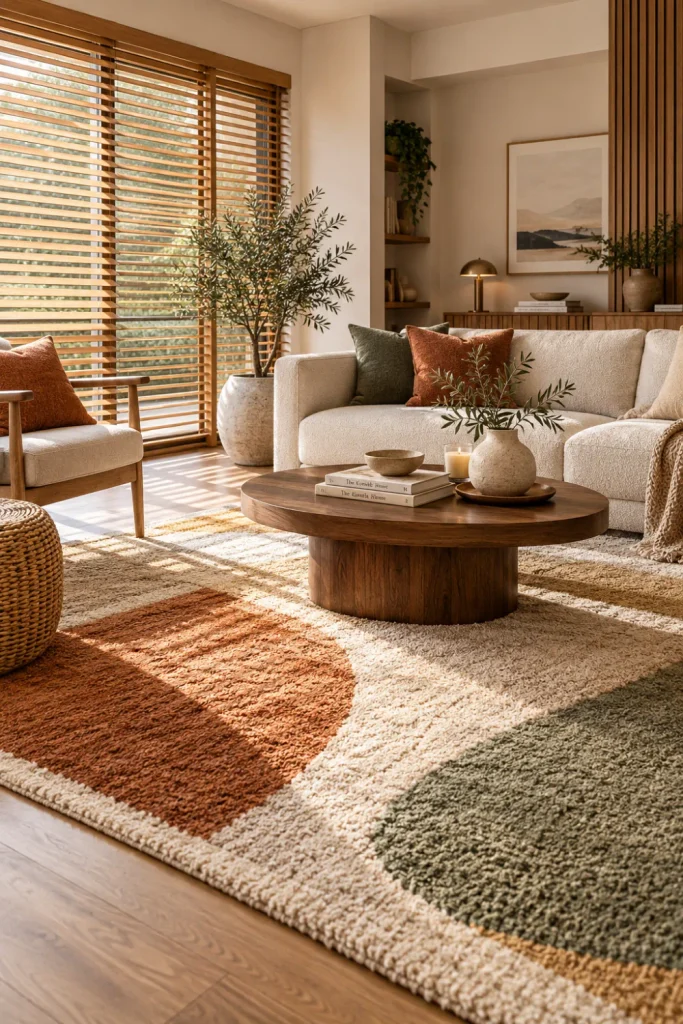
Japandi design combines Japanese simplicity with Scandinavian warmth.
Window blinds are a natural fit because they provide clean lines without competing with organic textures and understated furnishings.
Simple steps:
- Start with white, cream, beige, or natural wood.
- Add warm timber furniture.
- Introduce linen or cotton textiles.
- Keep accessories intentional rather than excessive.
Tip: Natural wood blinds are particularly effective when you want your window to feel connected to the rest of the room.
8. Make Brown Blinds Feel Luxurious
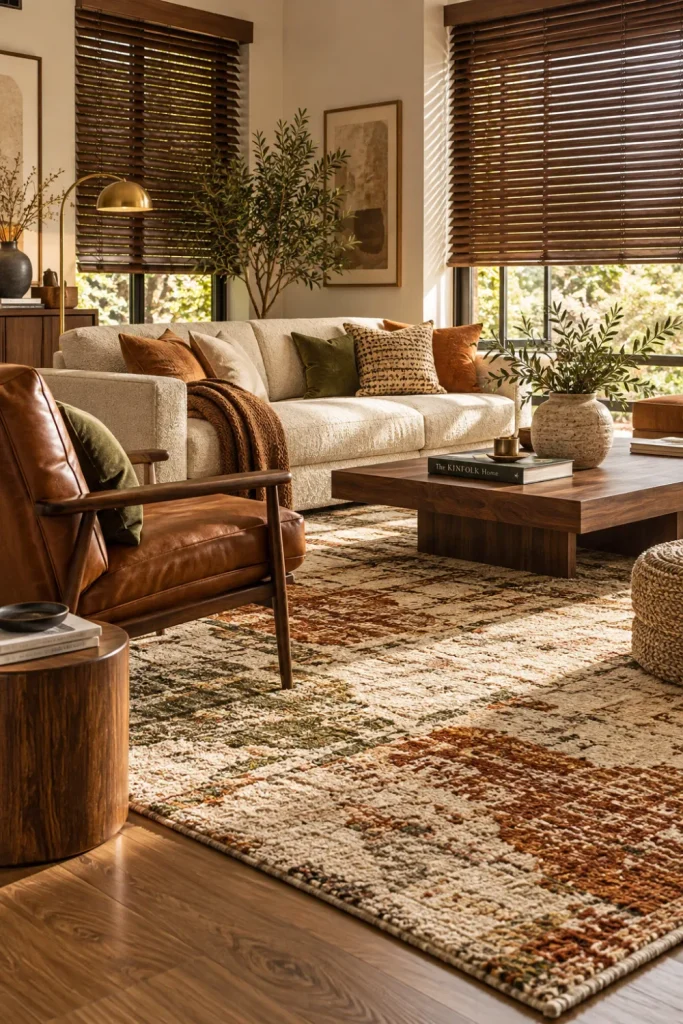
Brown blinds can add depth without the intensity of black. Rich walnut, chocolate, chestnut, and medium wood tones can make a neutral room feel warmer and more sophisticated.
Simple steps:
- Pick a brown shade that complements your flooring.
- Pair it with cream or off-white walls.
- Add brass or bronze accents for subtle elegance.
- Use soft textiles to prevent the room from looking too formal.
Tip: Avoid matching every wood surface exactly; slightly varied tones often create a more natural interior.
9. Frame a Bay Window Beautifully
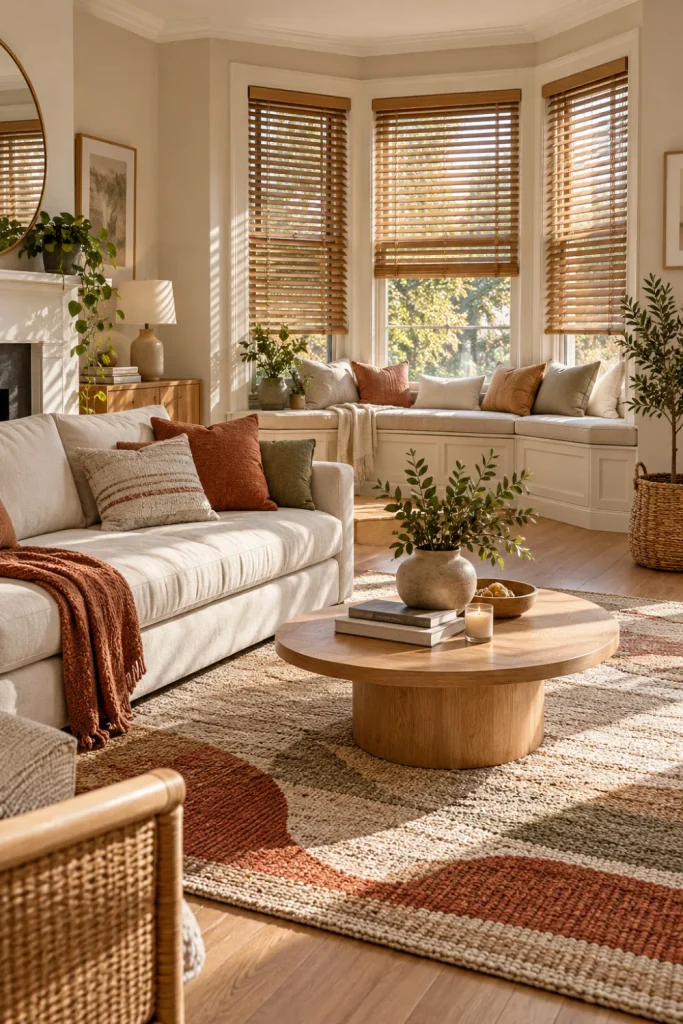
A Bay window already creates architectural interest, so window treatments should enhance rather than hide its shape.
Individual blinds fitted to each section can maintain the character of the feature.
Simple steps:
- Treat each window section separately.
- Keep the blind style consistent across the bay.
- Choose colors that blend with the surrounding walls.
- Add a seating area beneath the window when space allows.
Tip: Inside-mounted blinds can produce a particularly neat finish around complex bay-window angles.
10. Use Vertical Blinds for Contemporary Spaces
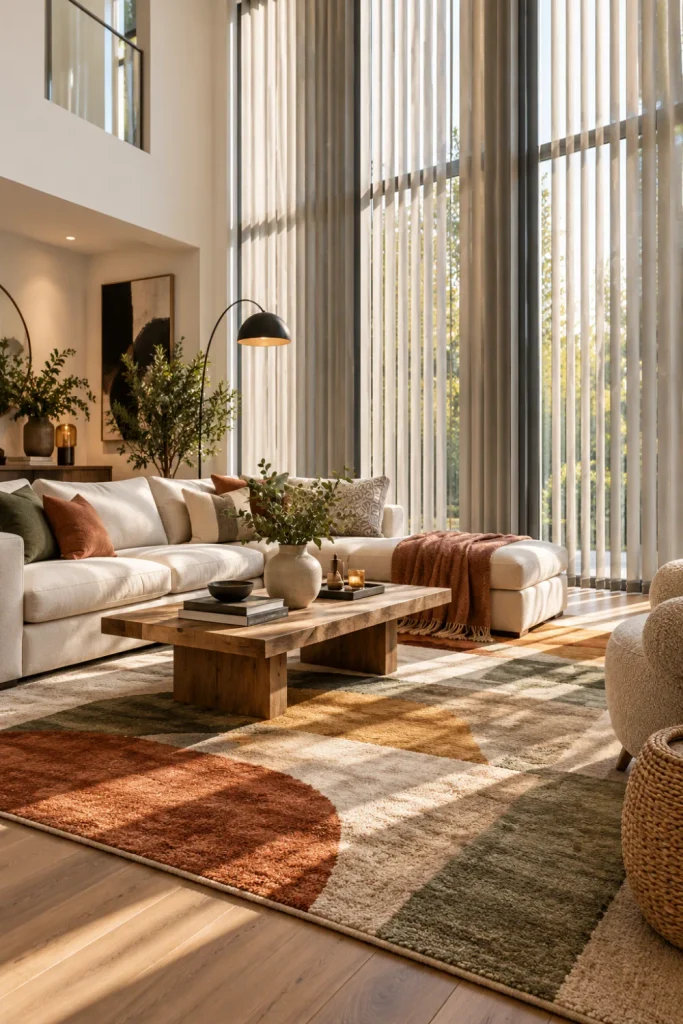
Vertical blinds have evolved beyond their traditional office association.
Modern fabrics, subtle colors, and streamlined rails can make them useful for tall windows and sliding doors.
Simple steps:
- Choose a fabric with a refined texture.
- Select a neutral or architectural color.
- Match the track to the surrounding hardware.
- Keep the rest of the window area uncluttered.
Tip: Vertical blinds are particularly practical where wide openings need flexible light control.
11. Soften Arched Windows Without Hiding Them
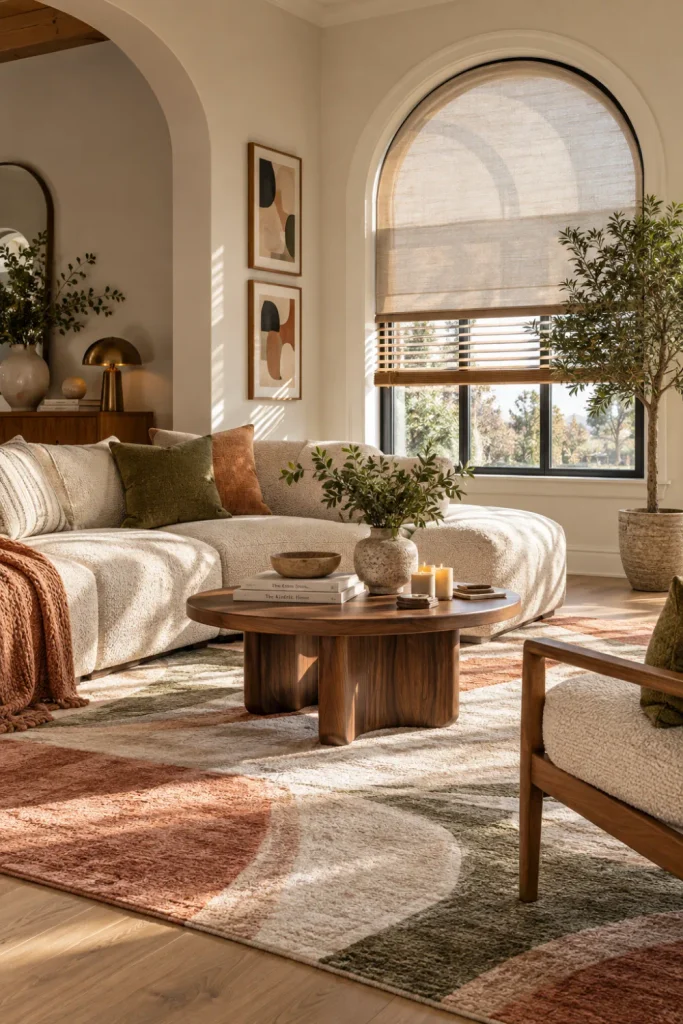
Arched windows can be difficult to dress because of their distinctive shape.
Instead of covering the architecture completely, select a treatment that respects the curve and maintains the window’s visual character.
Simple steps:
- Identify whether the arch needs full or partial coverage.
- Consider custom-made shades for an accurate fit.
- Use simple colors that do not distract from the shape.
- Coordinate the treatment with the room’s architecture.
Tip: If the arch itself is a major design feature, a minimalist treatment can often be more attractive than heavy curtains.
12. Combine Curtains and Blinds for Layered Style
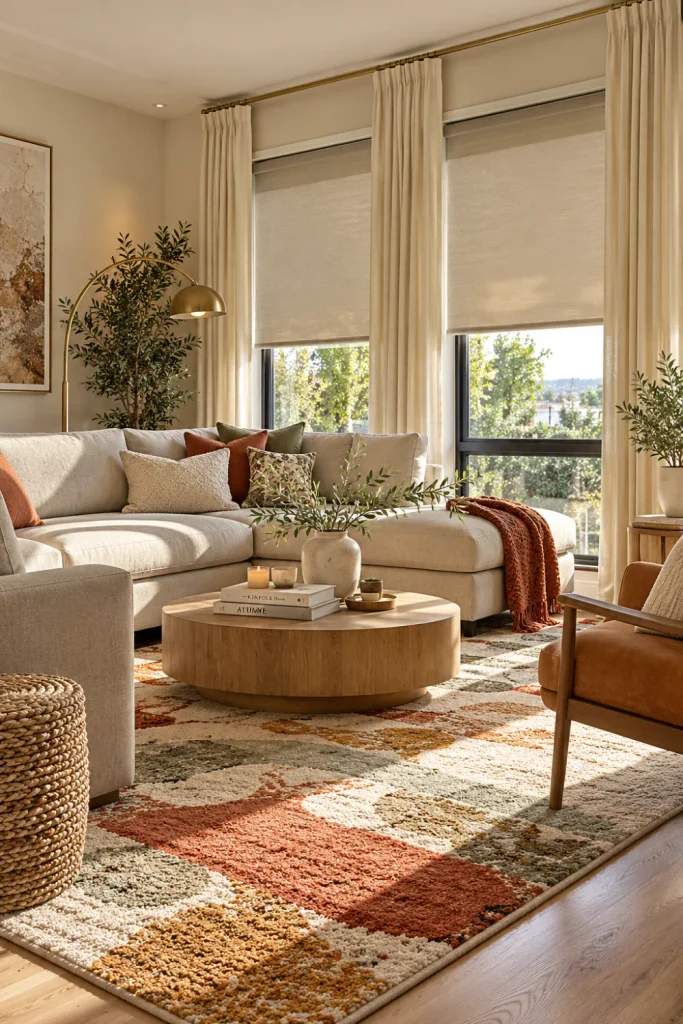
Combining curtains and blinds gives a room both structure and softness.
It is especially useful in bedrooms and living rooms where you may want privacy at night and controlled daylight during the day.
Simple steps:
- Install blinds close to the window.
- Add curtains outside the window frame.
- Choose complementary rather than identical colors.
- Hang curtains high to create a taller appearance.
Tip: For ideas living room modern curtains, pair simple blinds with full-length curtains in linen or another relaxed fabric.
13. Choose White Shades for a Bright Interior
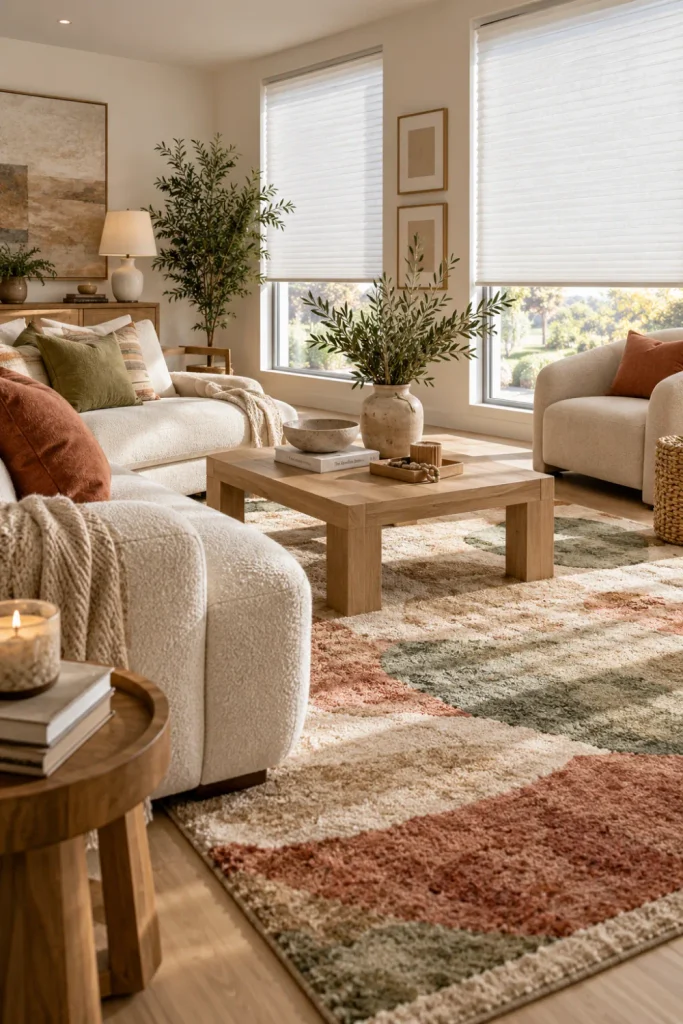
White shades can make a room appear brighter, cleaner, and more spacious.
They are particularly useful in smaller interiors where darker window treatments could visually dominate the space.
Simple steps:
- Choose warm white for cozy interiors.
- Use crisp white for contemporary rooms.
- Coordinate the shade with walls or upholstery.
- Add natural textures to prevent the room feeling sterile.
Tip: Slightly textured white shades can provide more visual interest than completely flat materials.
Final Thoughts: Choose Blinds That Work With Your Room
The best window treatment is not simply the one that looks attractive in a photograph.
It should work with the room’s architecture, lighting, privacy requirements, furniture, and overall aesthetic.
Before choosing blinds, consider how the space is used throughout the day and how much natural light you want to preserve.
Follow these final steps:
- Measure every window accurately before purchasing.
- Decide how much privacy and light control you need.
- Match the material to the room’s conditions.
- Coordinate the blind with your furniture and flooring.
- Consider layering blinds with curtains where appropriate.
- Prioritize quality and easy maintenance.
- Choose a style that complements—not competes with—the architecture.
Whether you prefer wooden warmth, dramatic black blinds, bright white shades, modern vertical designs, or calming Japandi aesthetics, thoughtful window treatments can make an ordinary room feel considerably more finished.
The goal is simple: choose blinds that solve a practical problem while becoming a beautiful part of the room’s design.

13 Stylish Windows Blinds Ideas to Transform Your Home
13 Stylish Windows Blinds Ideas to Transform Your Home with modern styles that add privacy, light control, texture, and elegance to any room. Explore beautiful roller, Roman, bamboo, and layered blinds for bedrooms, living rooms, and kitchens. Save your favorite window treatment ideas and visit the article for more inspiration! #WindowBlinds #WindowTreatmentIdeas #HomeDecor #InteriorDesign #HomeIdeas
Pin it on Pinterest