Creating a sanctuary in your bedroom means finding the right mix of calm and warmth.
Many people think minimalism means having cold, empty spaces.
But by blending simple designs with warm, natural textures, you can craft a restful retreat.
The key lies not just in your decor choices, but also in how you arrange them.
Whether you have a large master suite or a small room, your floor plan shapes the room’s energy.
Here’s a guide to help you master spatial design.
It includes 13 strategies for cozy, minimalist bedroom furniture layouts. This guide will help you optimize your space, promote relaxation, and create beautiful aesthetics.
1. The Symmetrical Anchor
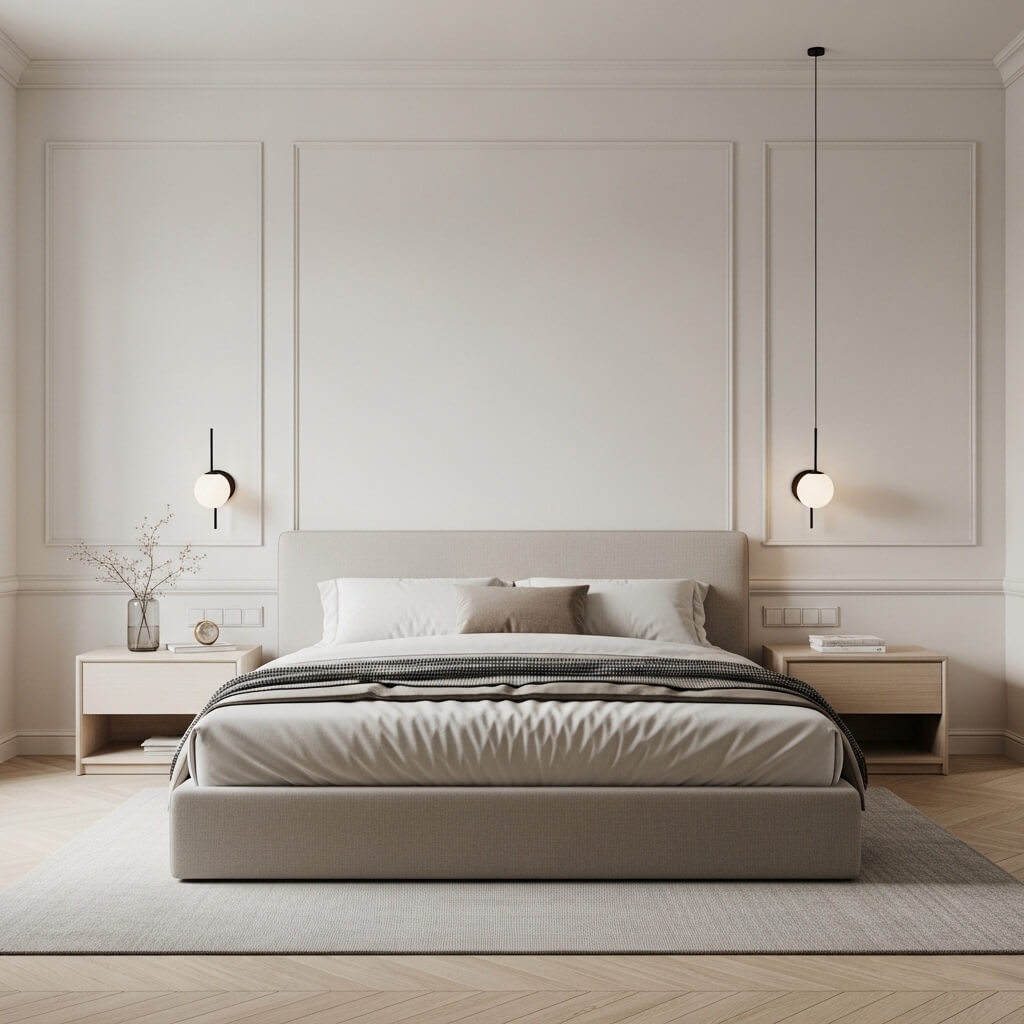
Symmetry calms the human brain, making it key for minimalist design.
To achieve this, center your bed on the main wall.
Place identical, low-profile nightstands on each side, along with matching wall-mounted sconces.
This setup removes visual clutter as you enter the room.
By positioning the largest piece of furniture centrally, the rest of the space feels open. Equal negative space on both sides is vital for a clean, minimalist look.
Soft bedding and warm lighting add a cozy touch.
2. Floating Nightstands for Airy Walkways
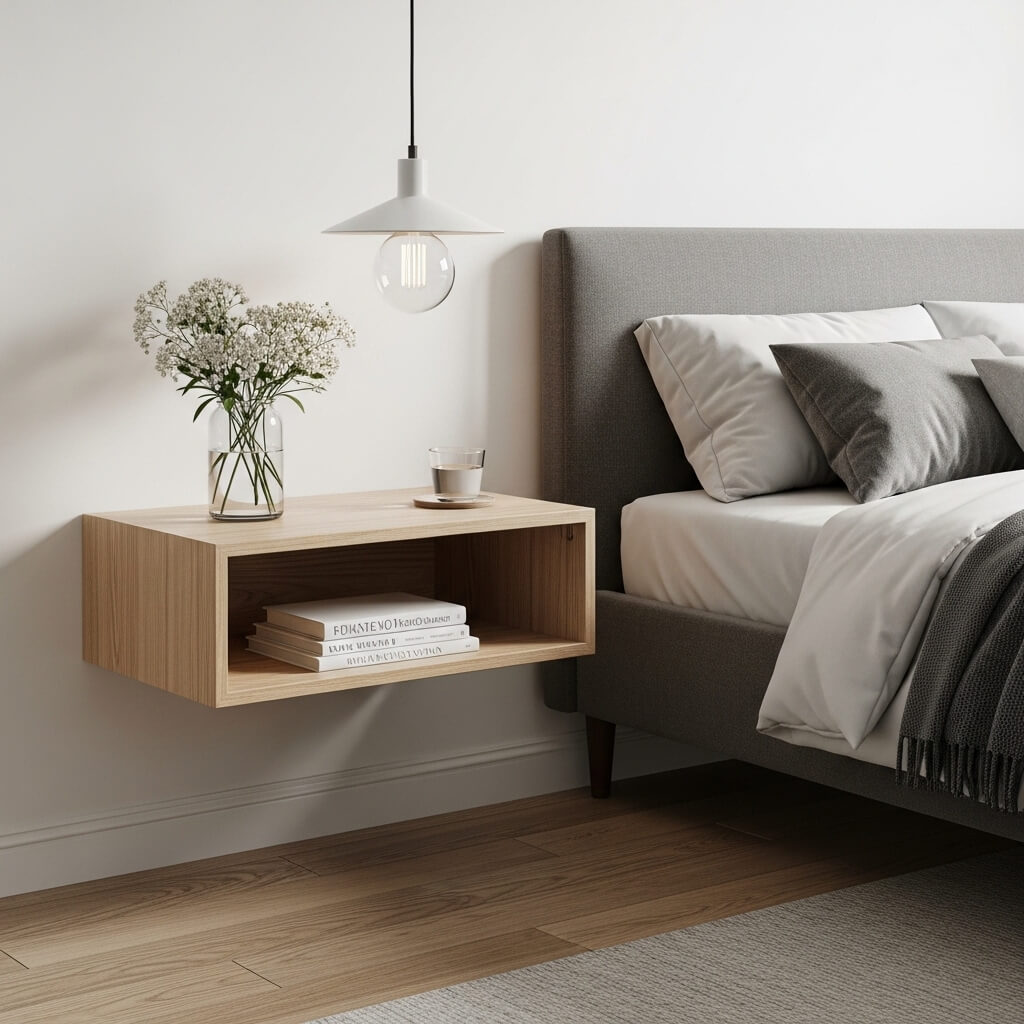
One quick way to make a bedroom feel cramped is cluttered floors.
Bulky nightstands take up valuable space and disrupt your layout.
Replacing them with floating shelves or wall-mounted drawers opens up the floor below.
This swap creates an illusion of a larger room.
You still get enough surface for a book and a glass of water.
Plus, the clear floor space boosts the airy, uncluttered feel that makes a minimalist haven.
3. The Hidden Storage Bed Approach
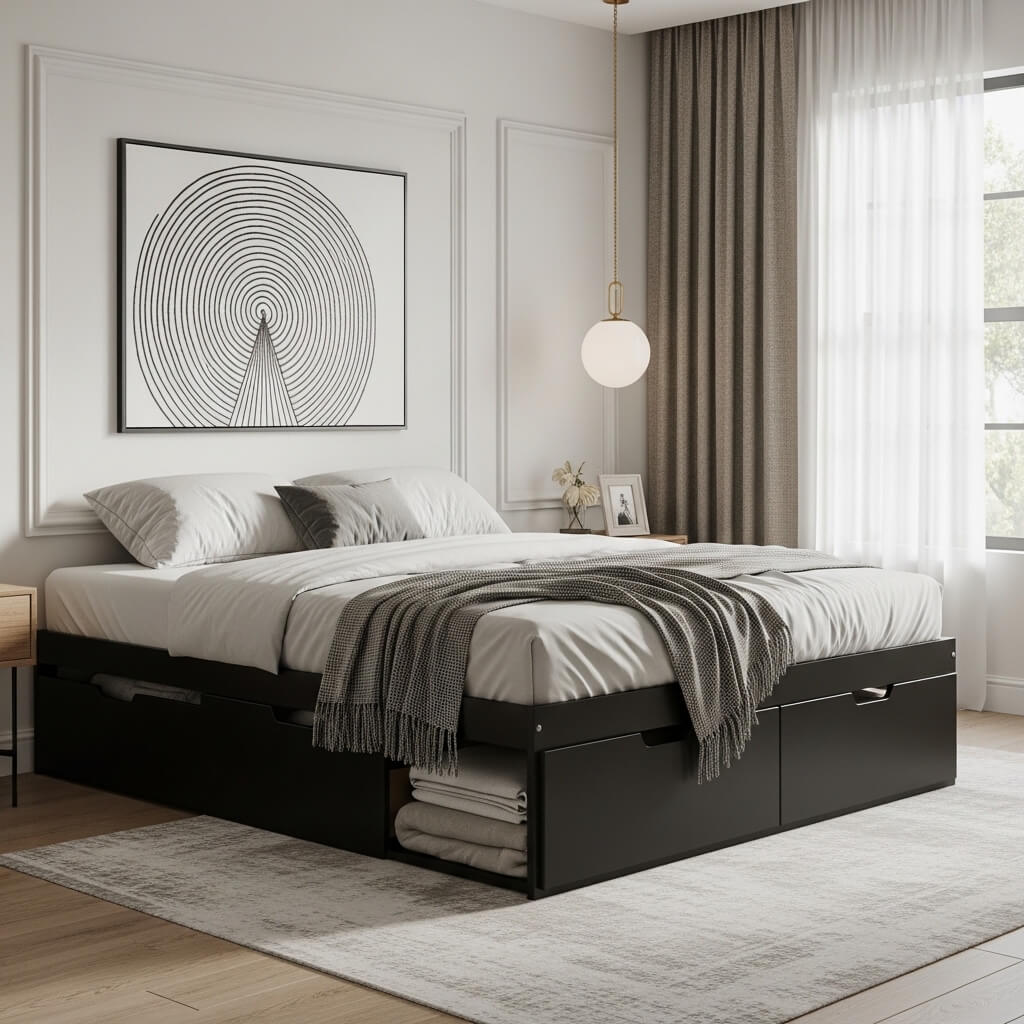
Minimalism thrives on having “a place for everything, and everything in its place.”
But to keep a room cozy, you need extra blankets, throw pillows, and seasonal items.
A bed frame with built-in drawers is the perfect solution.
By storing items beneath the mattress, you can remove a bulky dresser. This opens up your space, letting you keep walls bare or reserved for a stunning piece of wall art.
4. Defining Zones with Textured Rugs
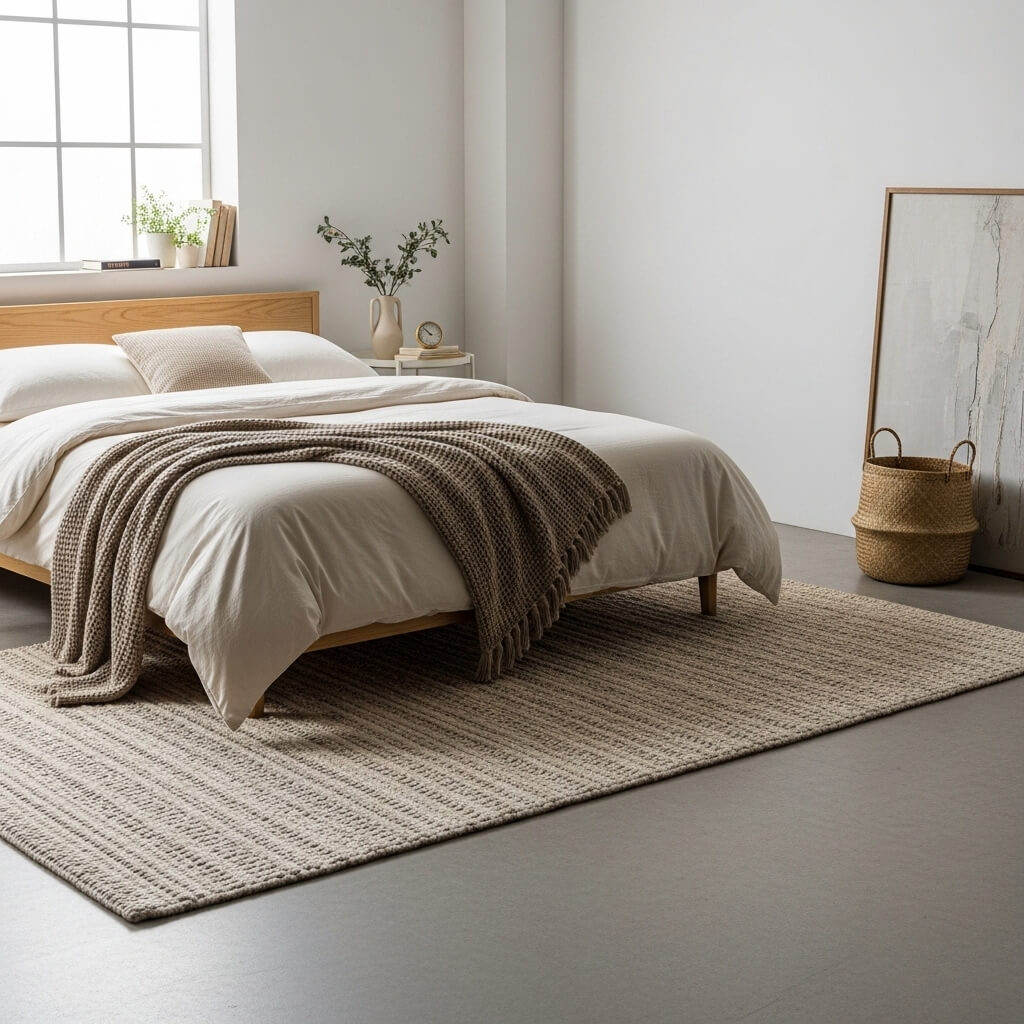
In minimalist spaces, you use visual cues instead of physical barriers to define areas.
A large, plush area rug—maybe with a subtle geometric pattern or a soft weave—placed two-thirds under the bed anchors the sleeping zone.
The warm, textured rug contrasts nicely with bare wood or concrete floors, creating cozy design.
It offers a soft landing for your feet in the morning while visually containing the bed in the layout, adding structure without clutter.
5. The Off-Center Bohemian Drift
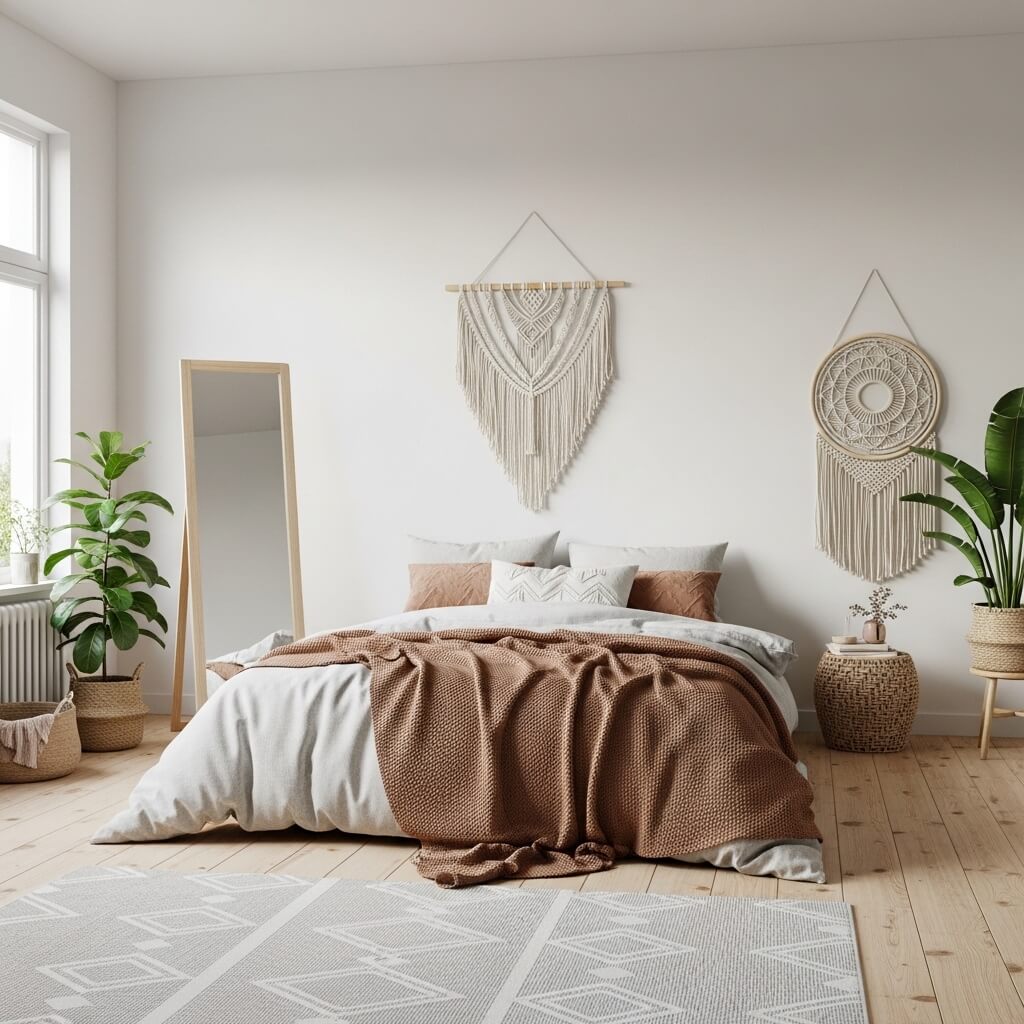
Symmetry is classic, but an off-center layout feels organic and relaxed.
If your room has quirky architecture, an off-center window, or a beautiful corner, embrace it.
Place your bed slightly to one side for a dynamic, asymmetrical look.
Balance the visual weight with a tall indoor plant, a leaning floor mirror, or a hanging macrame piece on the opposite wall.
This method feels less rigid and more lived-in. It allows for natural flow while keeping a curated, minimalist vibe.
6. Window-Facing Bed Placement
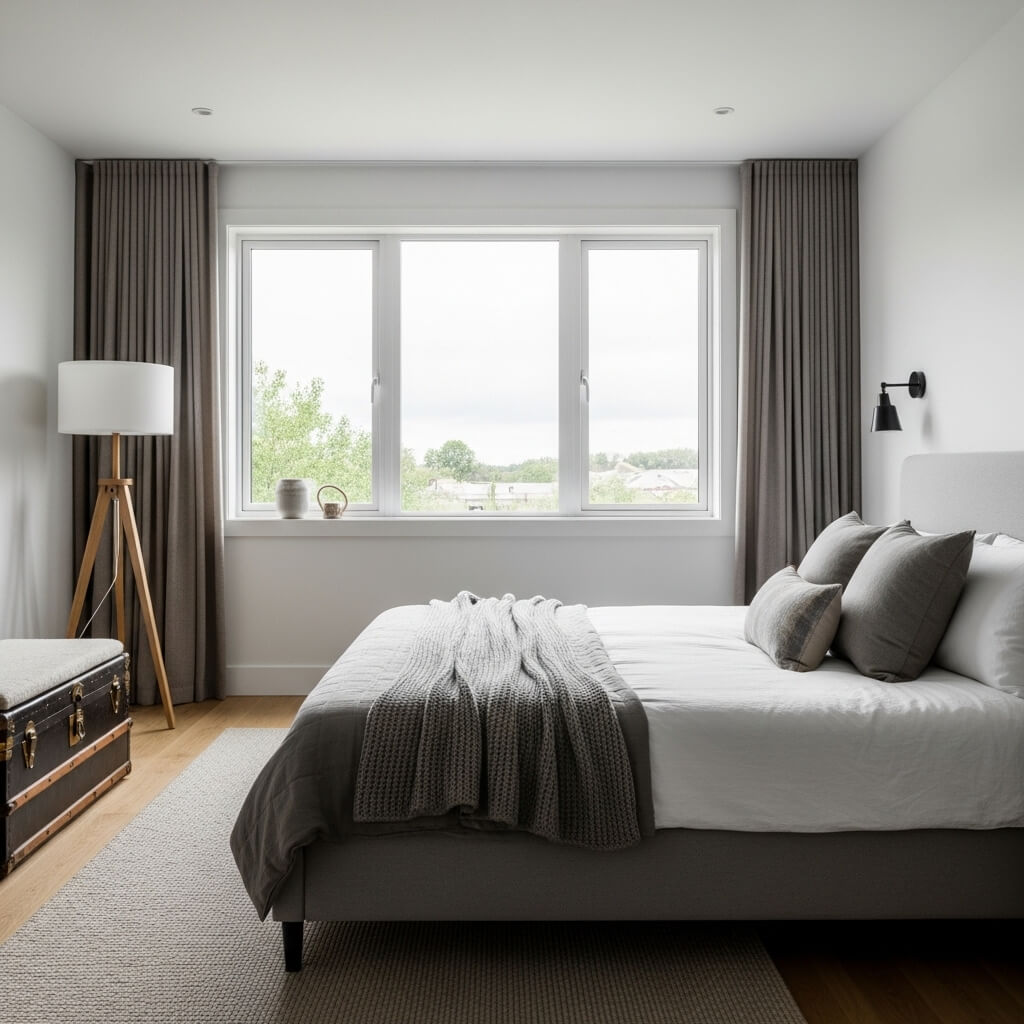
If your bedroom has lovely natural light or a great view, position the bed so its foot faces the main window.
Waking up to sunlight is grounding. To keep it minimalist, make sure the path between the bed and window is clear.
Don’t place benches, trunks, or low chairs in this line of sight.
This open view from the bed to the outdoors enhances the room’s feel and creates a peaceful, airy atmosphere.
7. The Minimalist Reading Corner
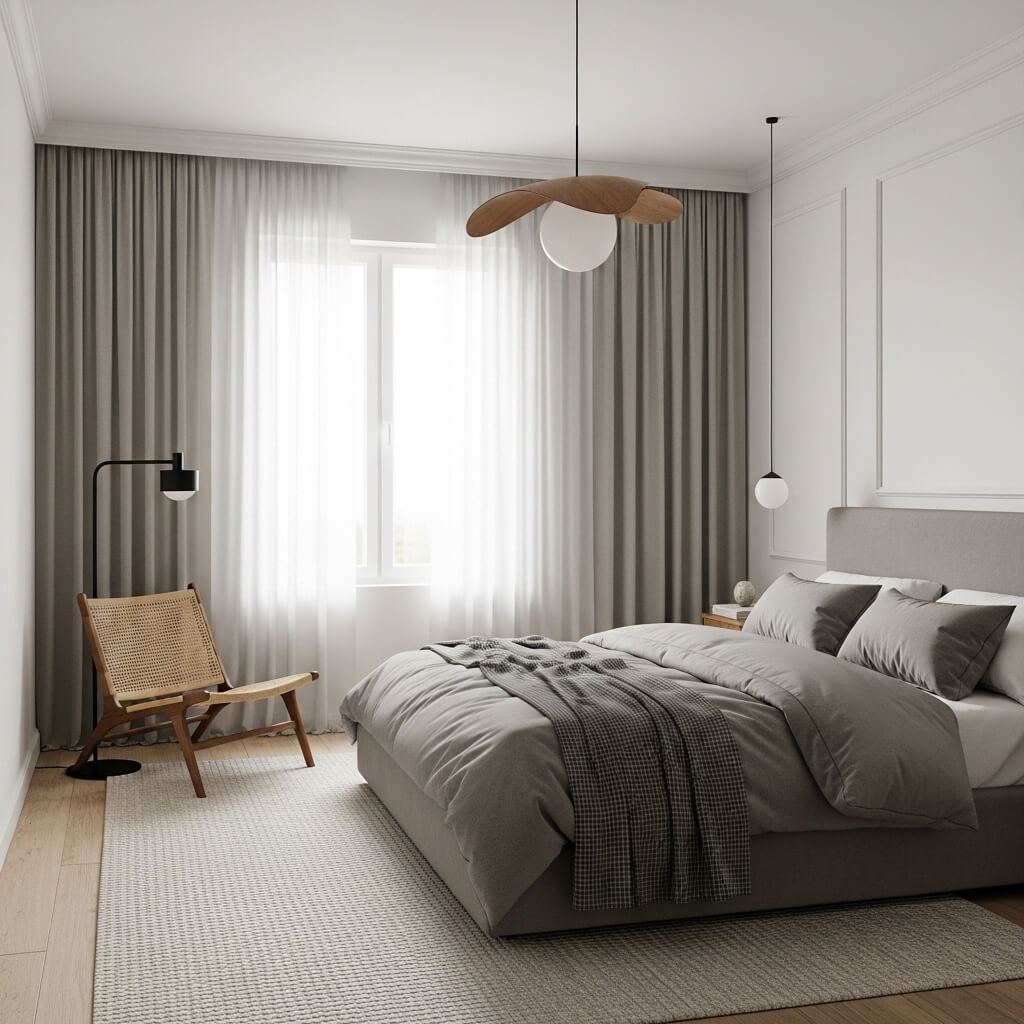
A cozy bedroom does more than provide a sleeping space; it’s a place to relax.
If you have enough room, arrange your main furniture to leave one corner open.
In this space, add one interesting accent chair, like a mid-century modern lounge or a low rattan chair, along with a sleek floor lamp.
Skip the bookshelf or side table to maintain a minimalist look. This creates a welcoming spot for reading or reflecting without blocking the main pathways.
8. Ditching the Traditional Dresser
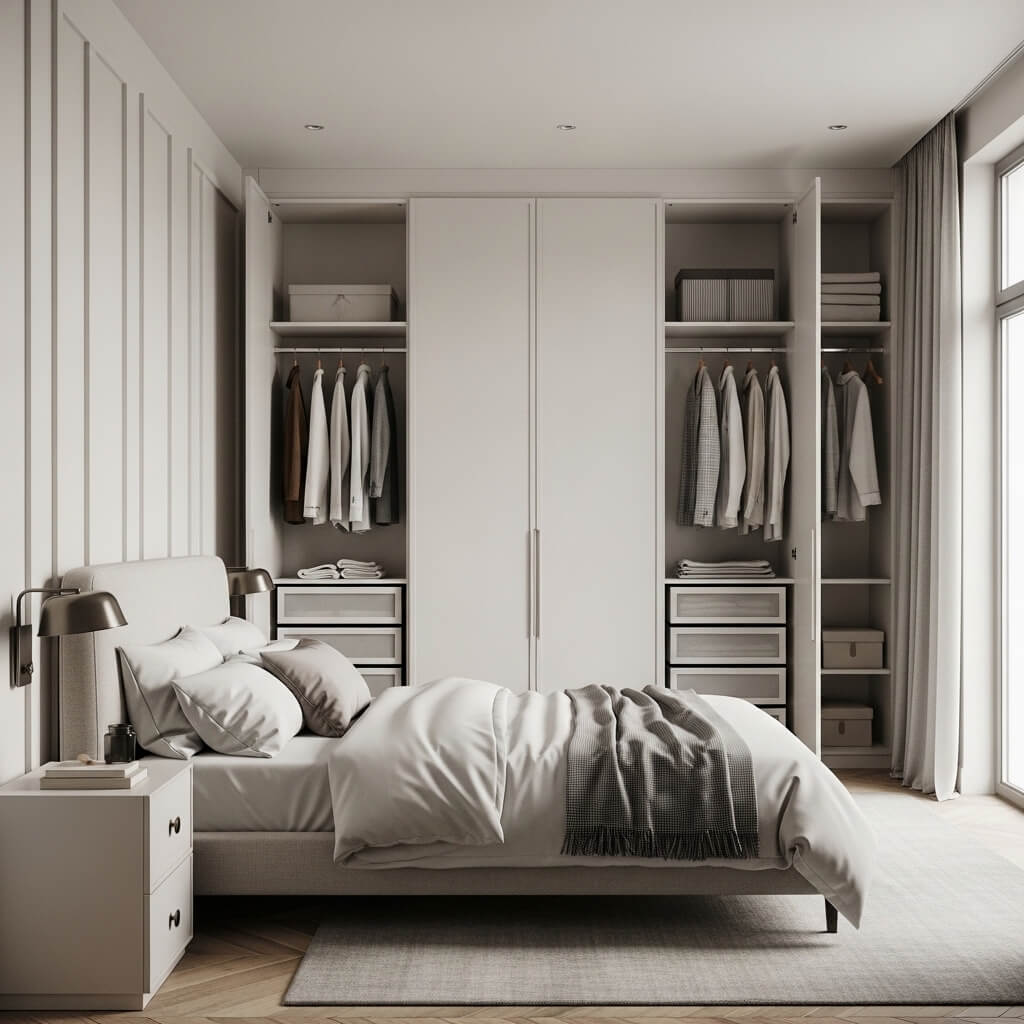
For a bold minimalist layout, question the need for standard bedroom furniture.
If you have enough closet space, consider removing the standalone dresser. Dressers can be bulky and heavy, shaping how the rest of the room is arranged.
By taking it out, you free up a lot of wall and floor space.
This extra area lets you widen the walkways around your bed. It also allows the room’s architecture and natural light to take center stage.
9. Asymmetrical Balance with Lighting
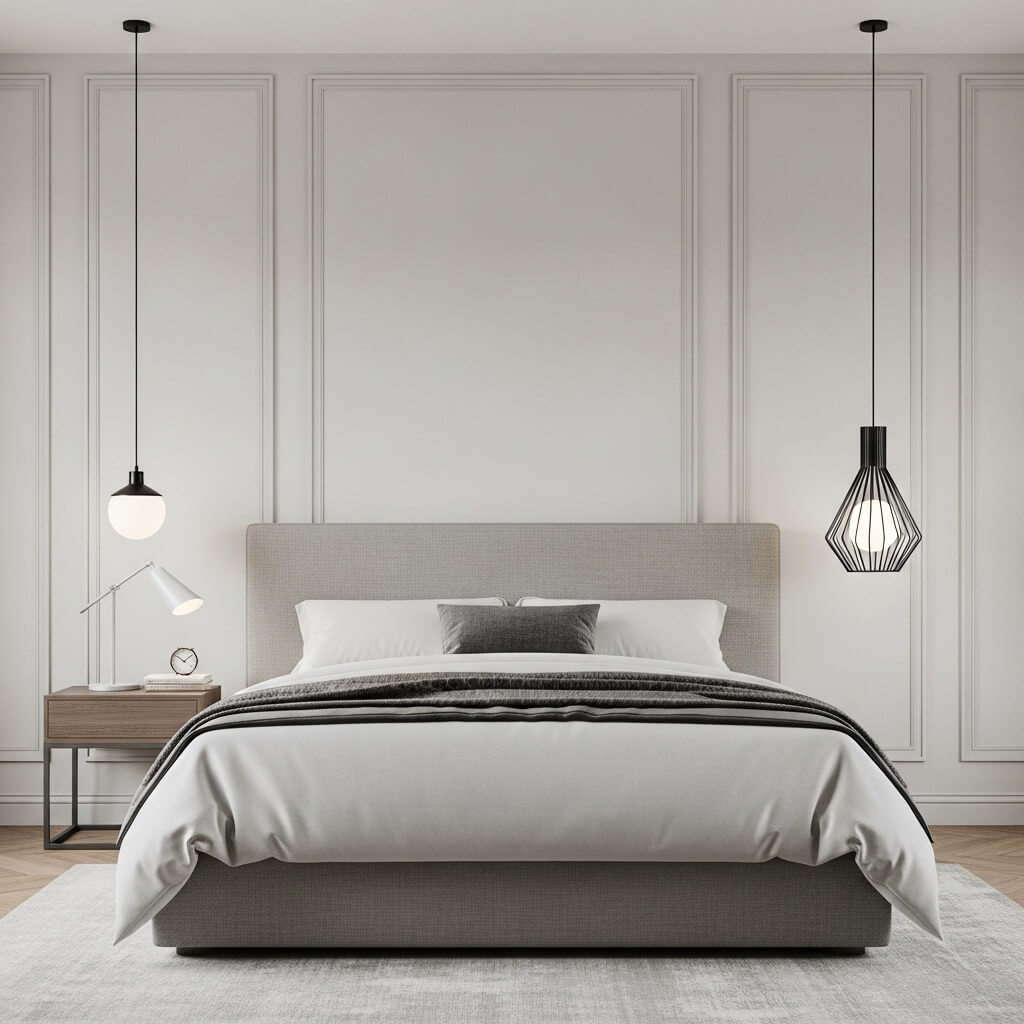
To break away from perfectly matched furniture while keeping a clean look, try asymmetrical lighting.
Place a standard bedside table with a sleek lamp on one side of the bed. Then, use a hanging pendant light or a tall floor lamp on the other side.
This mix creates a layered, custom feel.
It draws the eye upward and adds interest without needing extra furniture. This designer trick brings character and warmth to a minimalist space.
10. Foot-of-the-Bed Bench Anchoring
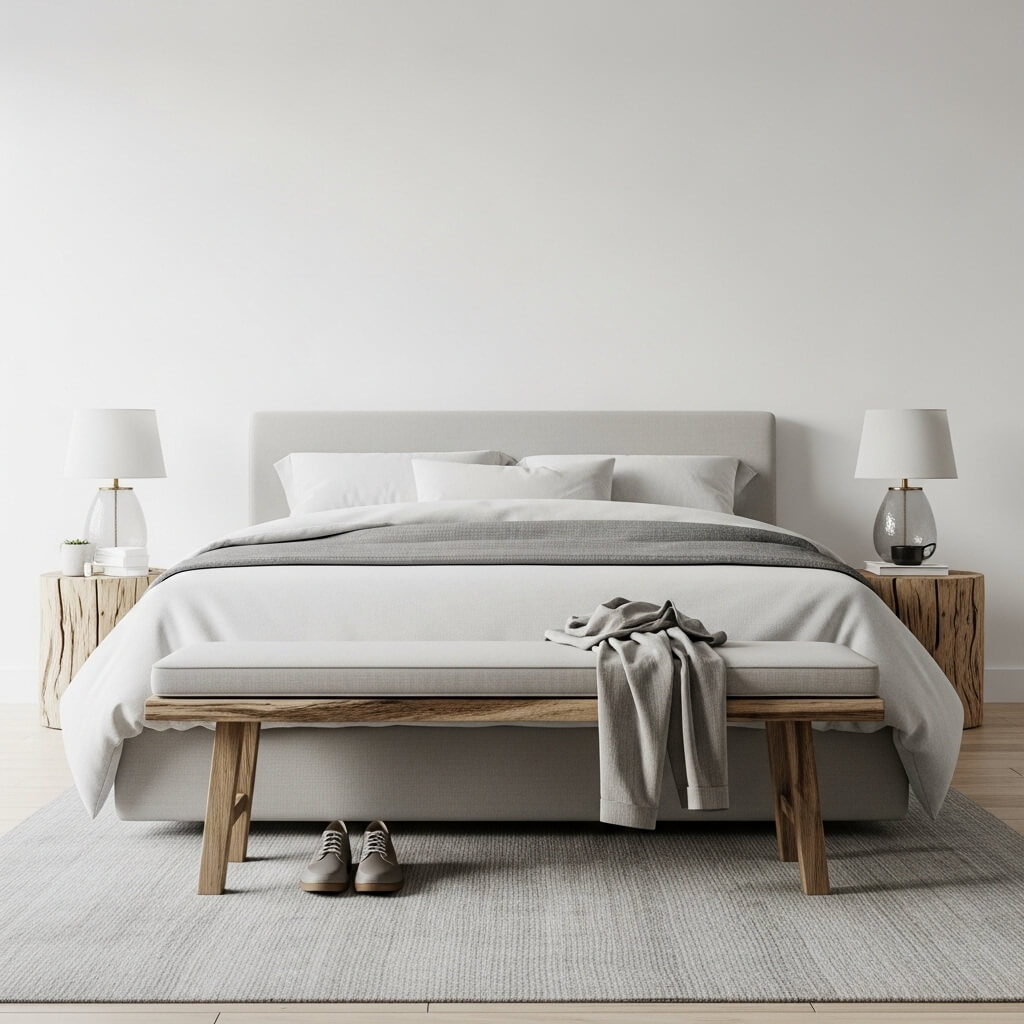
When a room feels too stark, adding one intentional piece at the foot of the bed can ground the layout.
A minimalist bench, like a raw wood slab or a simple upholstered linen piece, serves both form and function. It offers a place to tie your shoes or lay out tomorrow’s clothes.
Also, it visually defines the sleeping area.
This prevents the bed from looking like it’s floating, creating a clean, purposeful line that ties everything together.
11. Creating Pathways (The 3-Foot Rule)
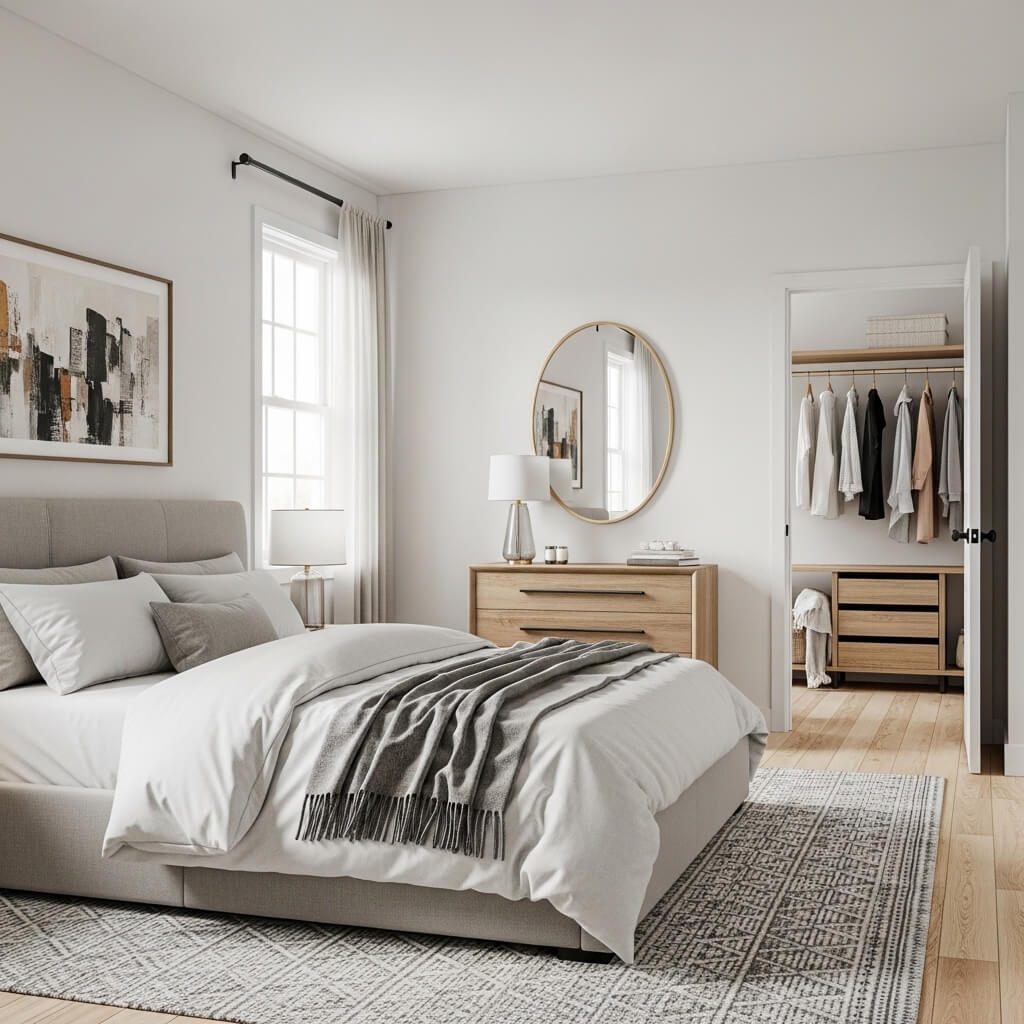
The key to any furniture arrangement is how you move through it.
A cozy layout lets you navigate without bumping your shins.
Follow the 3-foot rule: keep at least 36 inches of walking space around the bed and clear paths to the door and closet.
When you prioritize space, the room feels more luxurious, calm, and minimalist.
12. Strategic Mirror Placement for Depth
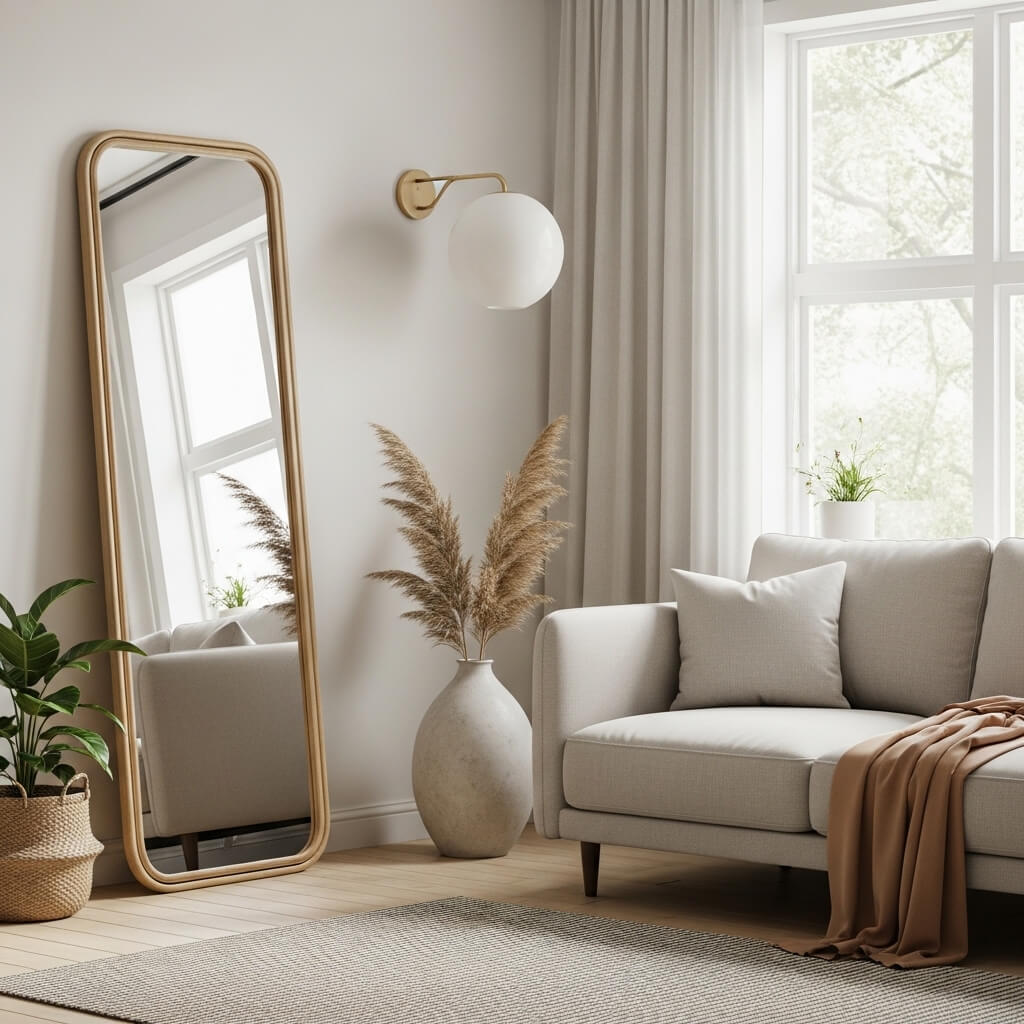
Mirrors are vital in spatial design for a light, uncluttered look. Instead of a bulky standing mirror, choose a large, frameless one or one with a thin, organic frame.
Lean it against a wall by your window or mount it across from a light source.
This arrangement doubles the room’s depth and reflects natural light into every corner. It enhances the cozy feel without adding heavy furniture.
13. Minimalist Nightstand Alternatives
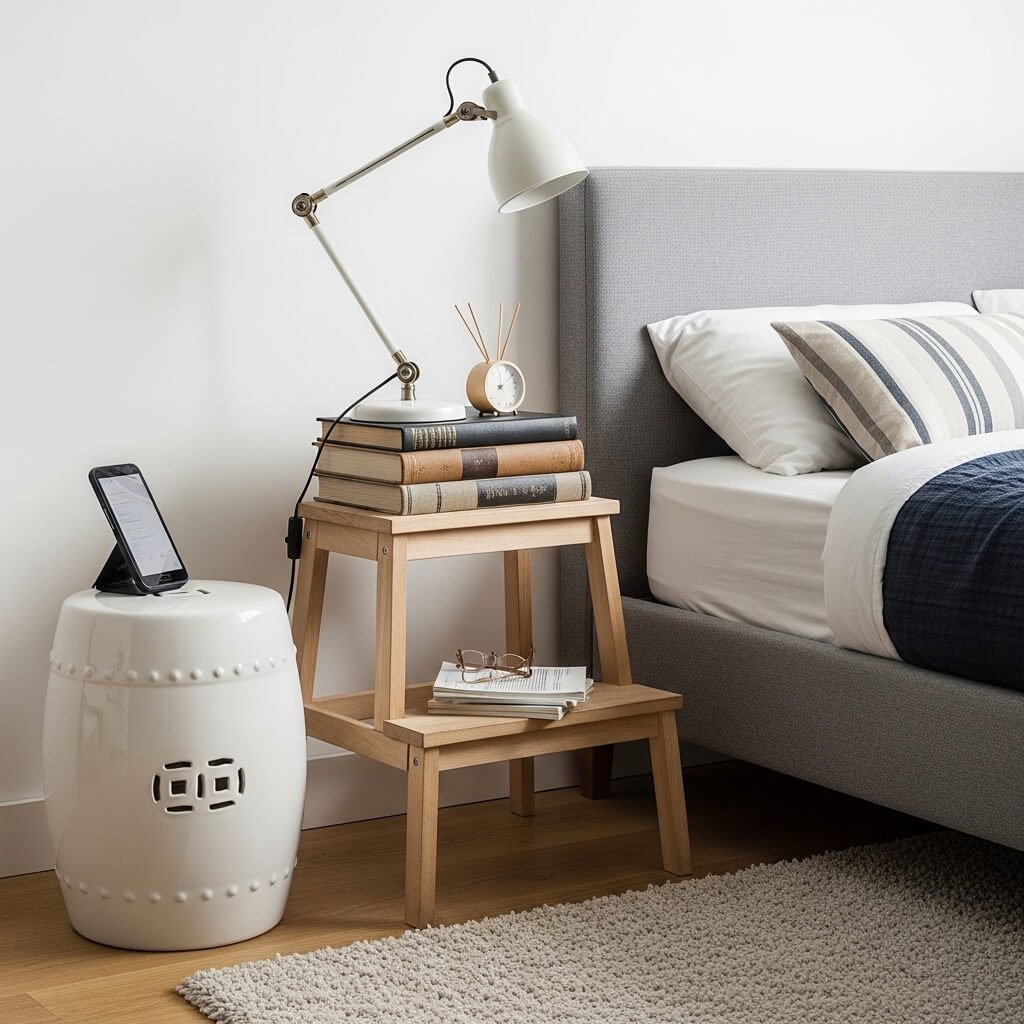
Reimagine your nightstand. Instead of a regular table, use a stack of oversized vintage books, a sleek ceramic stool, or a simple wooden step-stool by the bed.
These unique choices offer space for essentials like a phone and a lamp.
They also add an artistic touch to the room.
This method cuts down on furniture size, keeping your space personal, cozy, and minimalist.
Final Thoughts on Your Restful Retreat
Mastering your bedroom’s layout is key to creating a restful home. Use these cozy layout ideas: arrange furniture minimally. This way, each item has a purpose and every path feels calm. When you remove the excess and focus on placing your bed, lighting, and textures thoughtfully, you create a space that breathes and welcomes you after a long day..