A full wall mirror design can completely change how a room feels, making it look brighter, taller, and more spacious without adding bulky furniture.
Whether you are styling a living room, bedroom, wardrobe, or almirah, the right mirror height, placement, and frame can turn an ordinary wall into a striking feature.
1. Create a Floor-to-Ceiling Mirror Wall
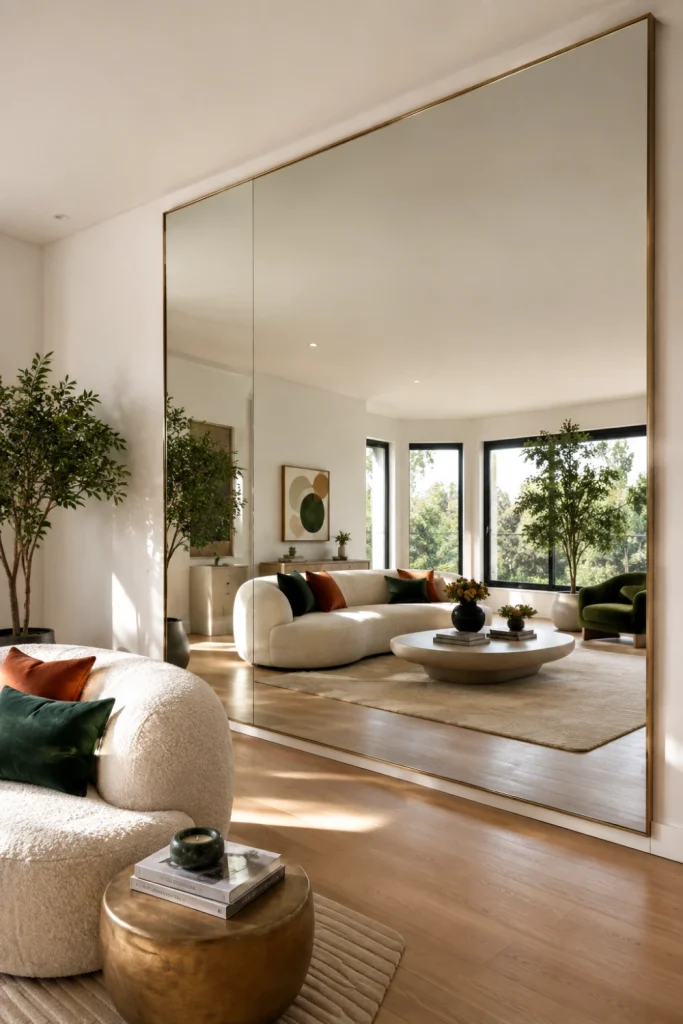
A floor-to-ceiling mirror is one of the easiest ways to make a compact room feel dramatically more open.
It reflects light across the space while creating the visual impression of greater height.
This works especially well behind furniture or along a narrow wall.
Simple steps:
- Choose the widest practical wall for maximum reflection.
- Measure from the floor to the ceiling before ordering the mirror.
- Leave enough clearance around doors, switches, and furniture.
- Use professional mounting hardware for a large mirror.
- Keep nearby décor relatively simple so the reflection does not feel crowded.
Tip: Choose a thin frame or frameless design when you want the wall to appear almost completely mirrored.
2. Make the Living Room Feel Larger
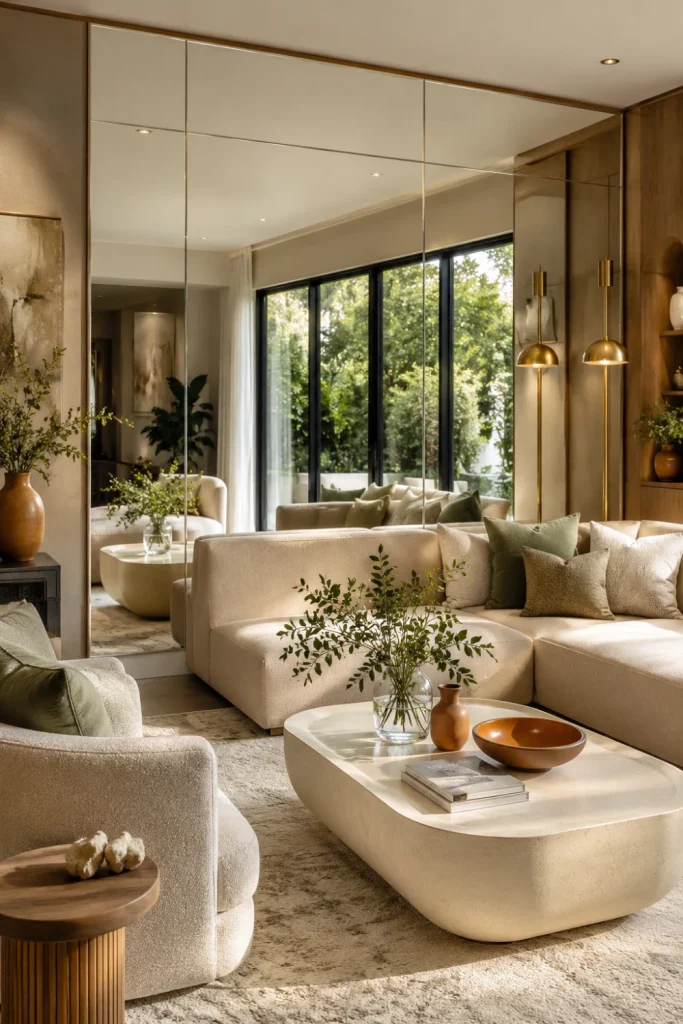
A strategically positioned full wall mirror can become a sophisticated living room feature rather than simply a functional accessory.
Place it opposite a window, doorway, artwork, or attractive architectural detail to multiply visual interest and natural light.
Simple steps:
- Identify the most attractive view in the living room.
- Position the mirror where it can reflect that feature.
- Check the reflection from the main seating position.
- Keep bulky furniture from blocking too much of the mirror.
- Add subtle lighting nearby to enhance the effect after sunset.
Tip: Avoid placing the mirror where it reflects clutter, television cables, or an unattractive corner.
3. Turn a Bedroom Wall Into a Dressing Feature
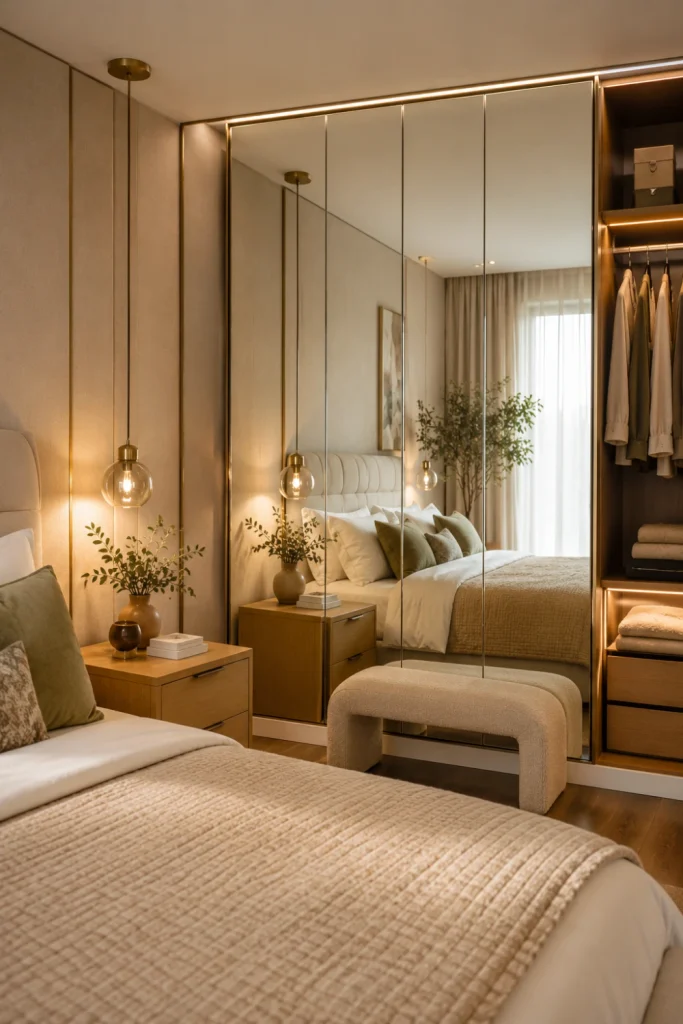
A full wall mirror works beautifully in a bedroom, especially when paired with a dressing area.
Instead of using a small standalone mirror, covering a large section of wall creates a polished appearance while making getting dressed easier.
Simple steps:
- Select a wall close to your wardrobe or dressing area.
- Decide whether you want a framed or frameless finish.
- Make sure the mirror provides a useful full-body view.
- Add a small bench or dressing stool if space permits.
- Use warm lighting around the area for a softer atmosphere.
Tip: Position the mirror where it receives enough light but does not directly reflect harsh overhead lighting.
4. Add Mirrors Around a Wardrobe
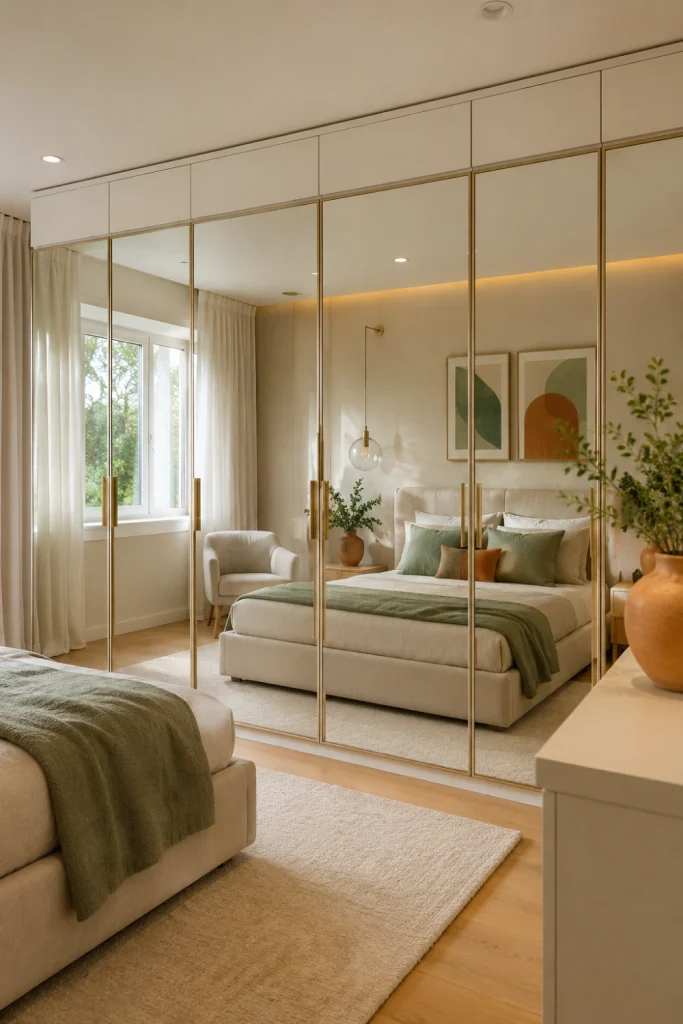
Integrating mirrors into a wardrobe is a smart solution when floor space is limited.
Mirrored wardrobe doors combine storage and dressing functions while helping a bedroom look less visually crowded.
Simple steps:
- Measure each wardrobe door accurately.
- Decide whether to cover the entire door or only selected panels.
- Choose safety-backed mirror material where appropriate.
- Match the frame or trim with the bedroom’s existing finishes.
- Check that the doors can still open and close comfortably.
Tip: Full-height mirrored wardrobe doors generally create a stronger spacious effect than small decorative mirror panels.
5. Use an Almirah With Full Mirror Panels
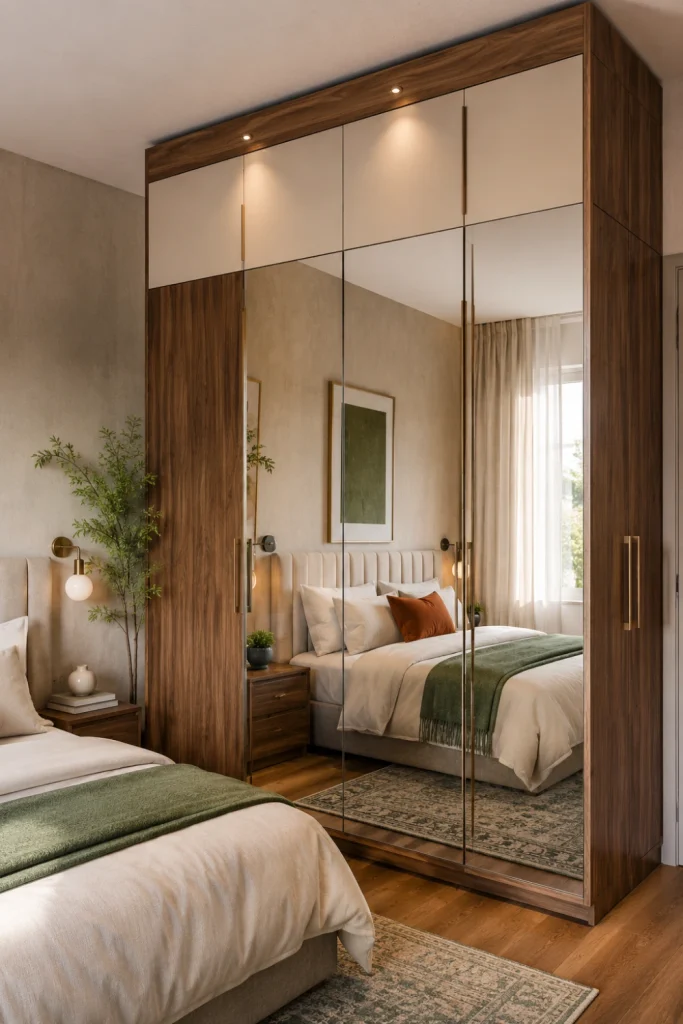
An almirah can become part of the room’s décor when its doors feature full-length mirror panels.
This idea is particularly useful in bedrooms where every piece of furniture needs to perform more than one function.
Simple steps:
- Select an almirah with a sturdy door structure.
- Decide how much of each door should be mirrored.
- Keep handles slim to maintain a clean appearance.
- Coordinate the surrounding furniture with the mirror finish.
- Leave enough walking space in front for comfortable use.
Tip: If a completely mirrored almirah feels too bold, combine mirror panels with wood, laminate, or matte-colored sections.
6. Choose the Right Mirror Height
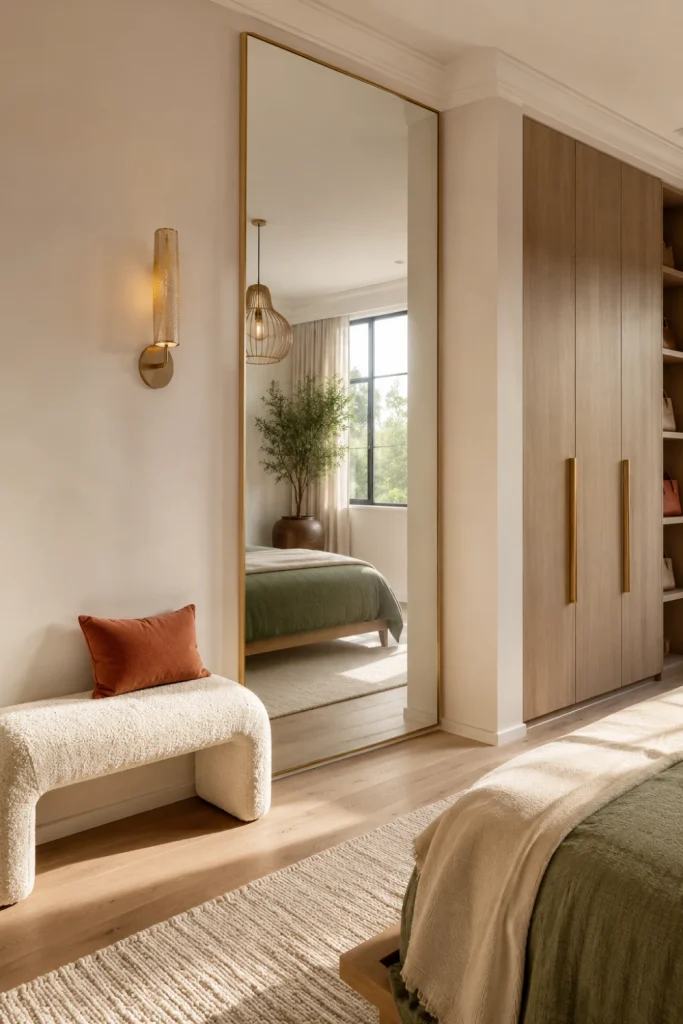
Mirror height matters more than many people realize.
A beautiful design can lose its impact if it is positioned too low, too high, or at an inconvenient height.
Full-wall installations should balance visual proportions with everyday functionality.
Simple steps:
- Measure the wall height from floor to ceiling.
- Consider the height of nearby furniture.
- Decide whether the mirror should begin at floor level.
- Check sightlines from standing and seated positions.
- Account for skirting boards and architectural details.
Tip: For a full-body dressing mirror, prioritize a height that lets you see your entire reflection comfortably rather than following a decorative measurement alone.
7. Combine Mirrored Panels With Wall Texture
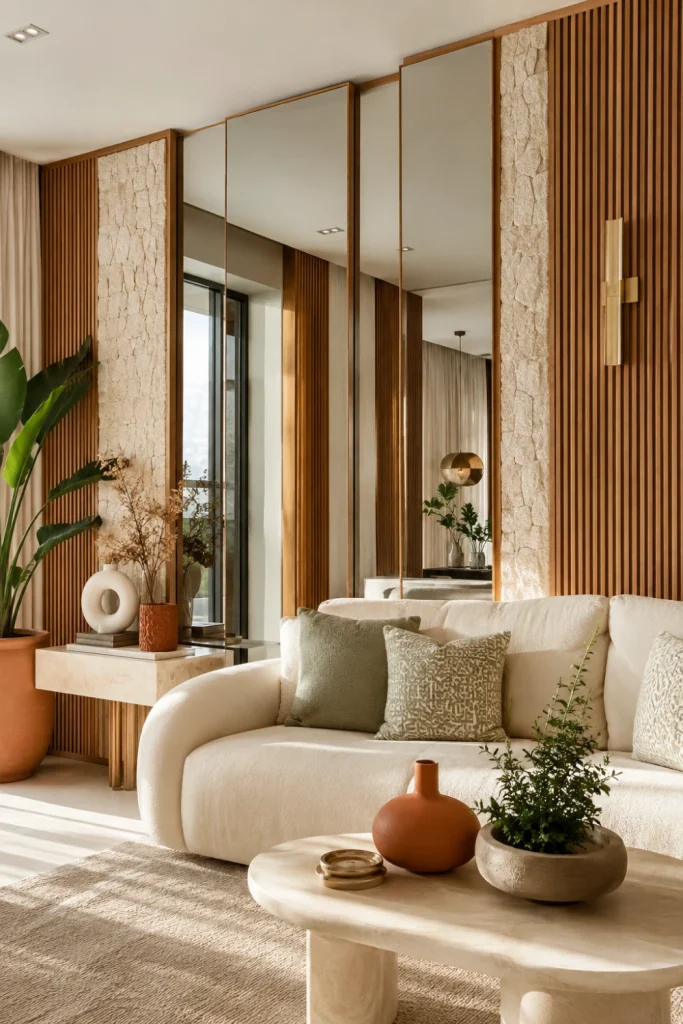
Full wall mirrors do not have to cover every inch of a wall.
Alternating mirror panels with wood slats, stone-look surfaces, fluted details, or painted sections can create a layered feature wall with more personality.
Simple steps:
- Select one dominant wall material.
- Choose mirror sections that complement its texture.
- Keep panel proportions consistent.
- Use matching vertical or horizontal lines for visual order.
- Test the arrangement before permanently installing it.
Tip: Vertical mirror panels can emphasize ceiling height, while wider horizontal arrangements can make a wall feel broader.
8. Make a Narrow Room Look Wider
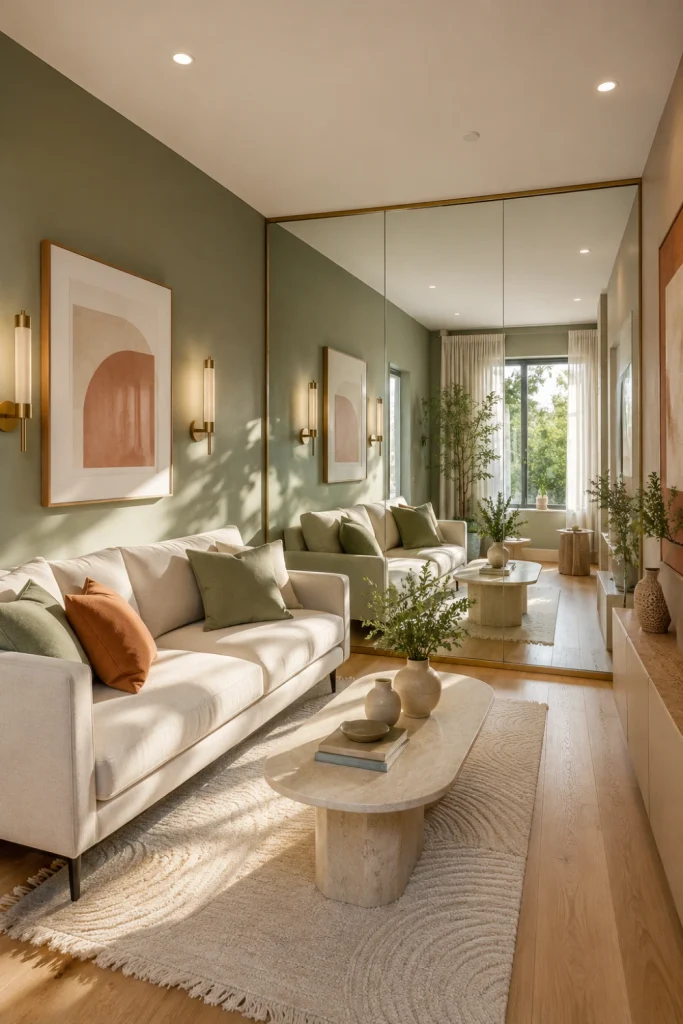
A narrow bedroom, hallway, or living area can benefit enormously from carefully placed full-wall mirrors.
The goal is not simply to add reflection but to visually push the wall outward.
Simple steps:
- Identify the longest uninterrupted wall.
- Use a broad mirror installation on that surface.
- Keep furniture arrangements relatively streamlined.
- Reflect a bright or visually interesting part of the room.
- Avoid filling the opposite side with excessive décor.
Tip: A wide frameless mirror usually creates a stronger illusion of expanded space than several small decorative mirrors.
9. Frame the Mirror for a Luxury Look
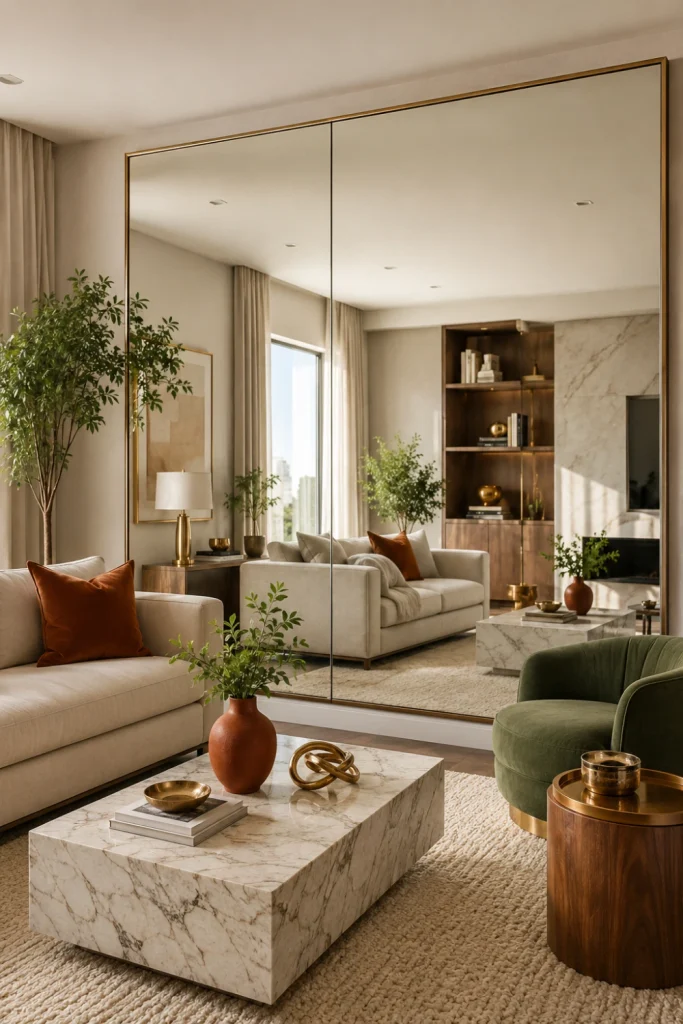
The frame can completely change the personality of a full wall mirror. Slim metallic edges can feel contemporary, while dark wood, natural timber, or decorative molding can introduce warmth and character.
Simple steps:
- Identify the dominant finishes already used in the room.
- Select a frame that complements rather than competes with them.
- Keep the frame proportionate to the mirror’s size.
- Repeat the frame finish in one or two smaller décor pieces.
- Check how the frame looks under both natural and artificial lighting.
Tip: When the room already contains several strong finishes, a minimal frame usually creates the most cohesive result.
10. Build a Mirror Behind the Bed
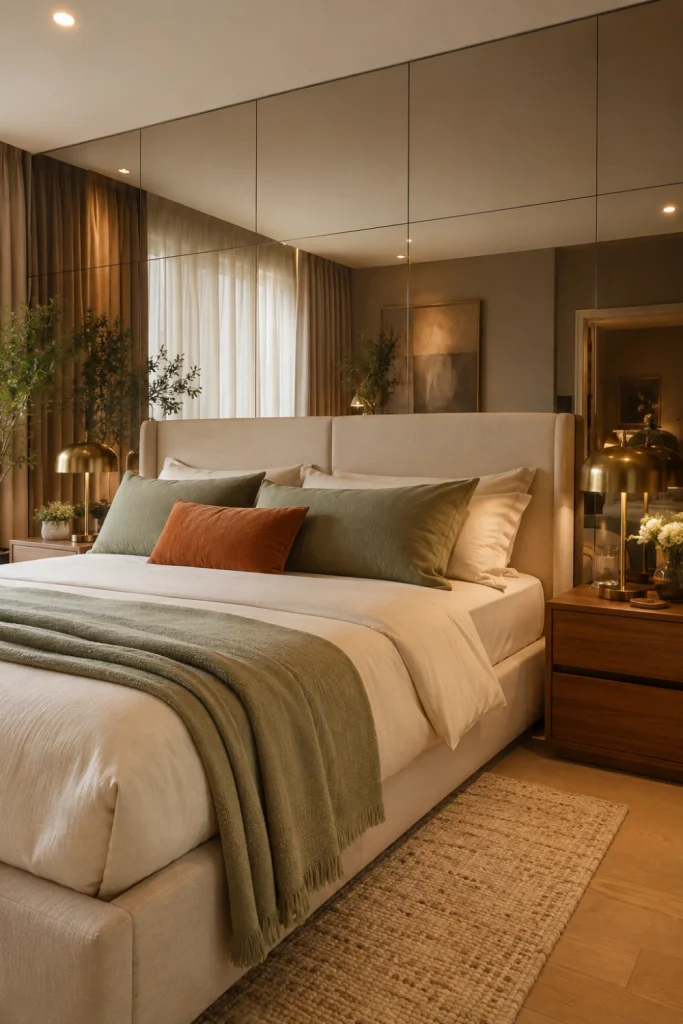
A mirrored wall behind the bed can serve as a dramatic bedroom focal point.
Instead of relying on a large headboard, the reflective surface becomes the backdrop while making the room appear deeper.
Simple steps:
- Measure the wall behind the bed.
- Decide whether the mirror should cover the complete wall or a central section.
- Use furniture placement to anchor the reflective surface.
- Add soft bedside lighting for depth.
- Keep bedding colors relatively coordinated with the room.
Tip: If you prefer a calmer bedroom, consider tinted, antique, or lightly smoked mirror finishes instead of highly reflective glass.
11. Use a Statement Mirror in the Entryway
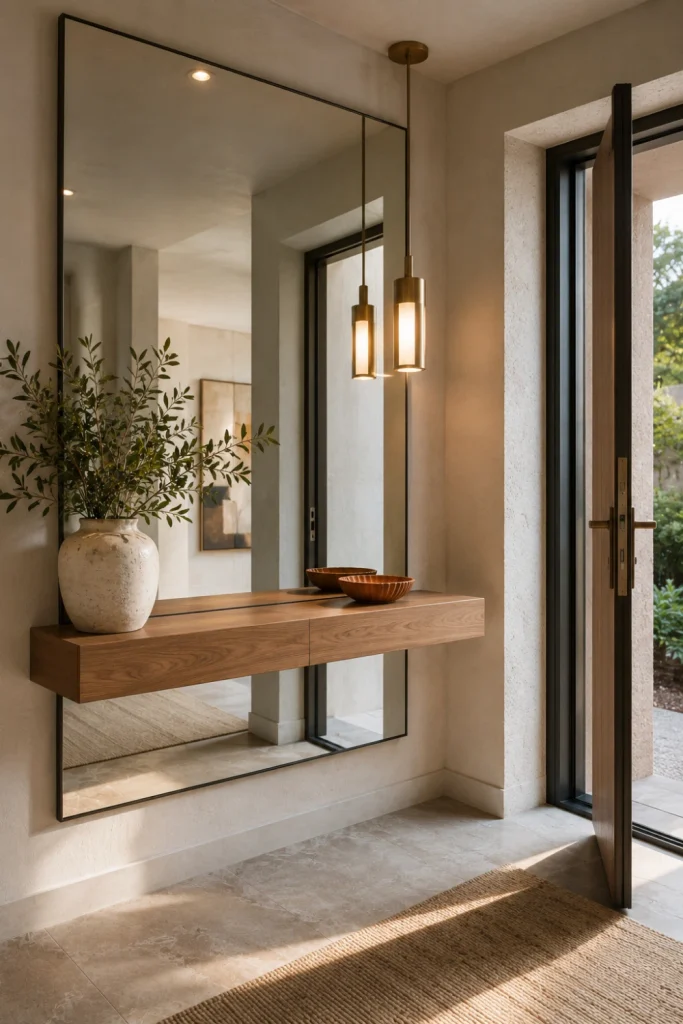
An entrance wall is an excellent location for a full wall mirror because it combines practical and decorative value.
It gives you a final appearance check while making a compact entry feel brighter and more welcoming.
Simple steps:
- Choose a wall that does not interfere with door movement.
- Install the mirror at a comfortable viewing height.
- Add a slim console or floating shelf if space allows.
- Keep the surrounding accessories minimal.
- Use an attractive light fixture to enhance the reflection.
Tip: A mirror opposite the entrance can make the area feel more open, but check what it reflects before committing to the placement.
12. Divide a Large Mirror Into Elegant Panels
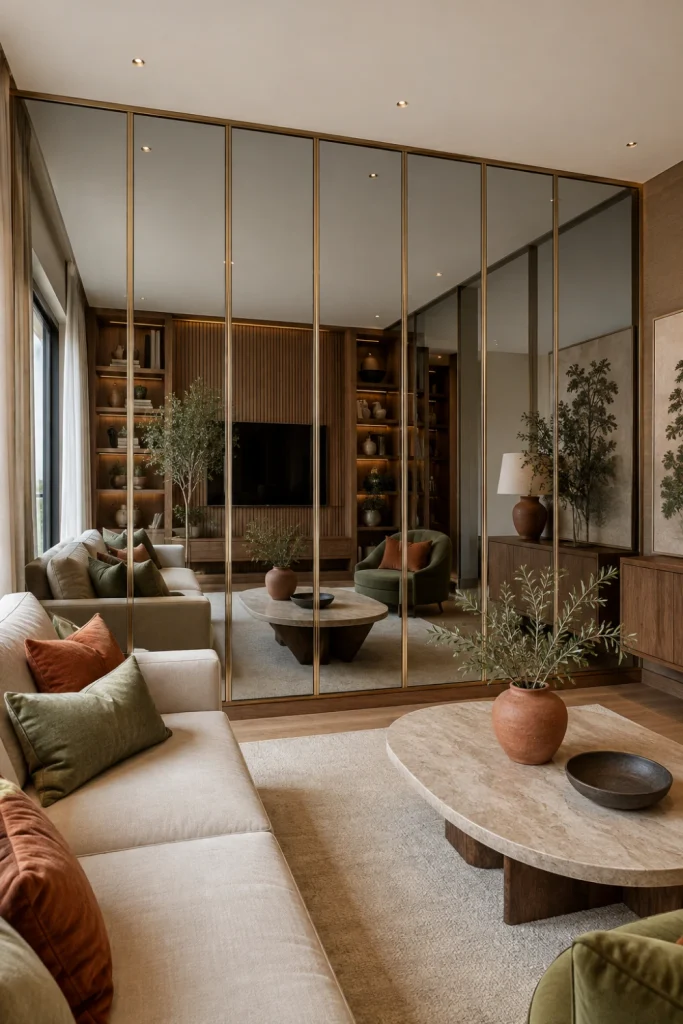
One enormous sheet of mirror is not the only way to achieve a full wall effect.
Dividing the surface into carefully aligned panels can introduce architectural detail while making installation and visual organization easier.
Simple steps:
- Determine the total wall dimensions.
- Select equal or intentionally varied panel widths.
- Align the panel divisions with existing architectural lines.
- Choose subtle gaps or decorative framing between sections.
- Confirm that all panels are securely supported.
Tip: Symmetrical panels tend to produce a more sophisticated appearance, particularly in formal living rooms and bedrooms.
13. Soften the Mirror With Natural Décor
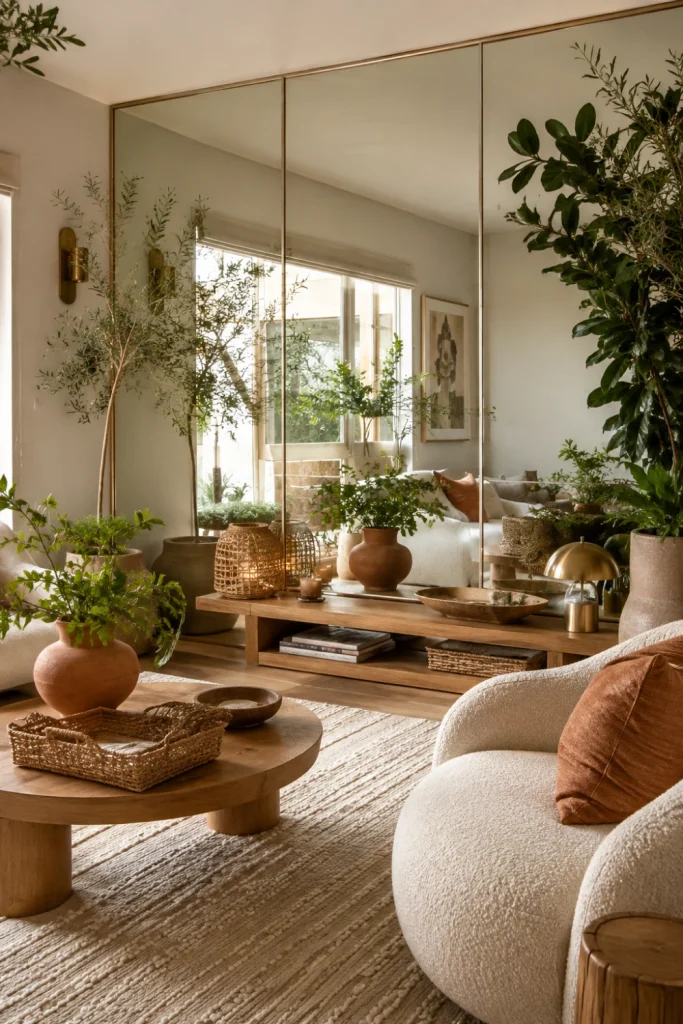
A large mirrored wall can sometimes feel overly sleek. Plants, woven textures, timber, soft fabrics, and warm lighting can balance the reflective surface and make the room feel more inviting.
Simple steps:
- Add one or two natural textures near the mirror.
- Place greenery where its reflection adds visual depth.
- Introduce warm-toned textiles around the room.
- Avoid covering too much of the mirror with accessories.
- Keep the overall palette coordinated.
Tip: Use plants strategically rather than filling every reflected area; the mirror should enhance the room rather than amplify visual clutter.
Final Thoughts
The best full wall mirror design is not necessarily the largest or most dramatic option.
It is the one that works with your room’s proportions, lighting, furniture, and daily needs.
Before installation, always measure the wall carefully, decide what the mirror will reflect, consider the ideal height, and choose secure mounting methods.
Whether you are upgrading a living room, bedroom, wardrobe, or almirah, thoughtful placement can make the space feel brighter, taller, and considerably more polished.