Designing a bedroom that is both calming and functional can be tricky.
In small or square rooms, deciding where to place the bed and desk is hard. Square layouts offer little help for arranging furniture.
Medium-sized rooms, usually 10×10 to 12×12 feet, can look nice but often lack space for larger pieces.
If you want a stylish and functional space that stands out on Pinterest, you’re in the right place.
This guide shares the best strategies for your home.
Here’s your ultimate resource for 13 bedroom layout ideas for square and medium spaces with desks. It includes styling tips, traffic flow insights, and design secrets to enhance your area.
1. The Classic Symmetrical Anchor with a Corner Workspace
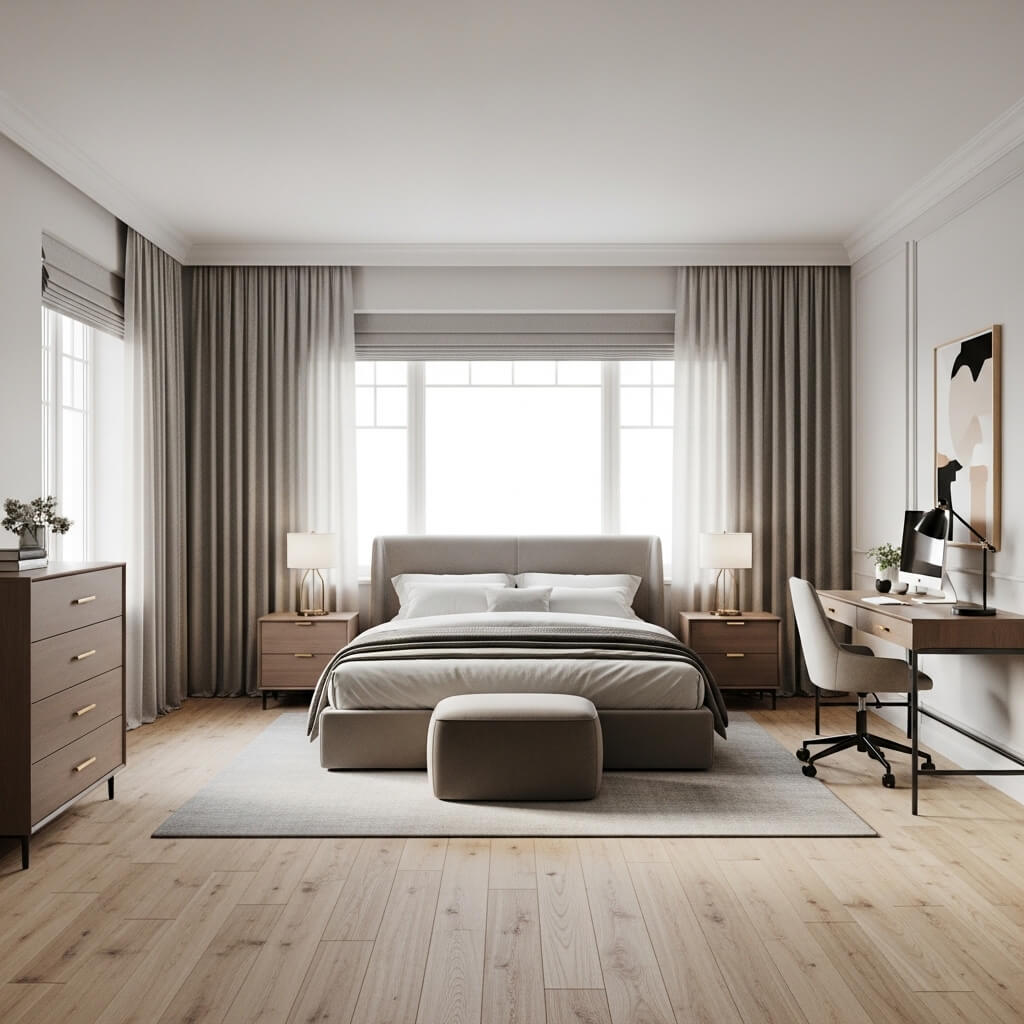
A square room thrives on symmetry, which brings calm and order.
The Layout: Place your bed in the center of the wall opposite the door. This creates a strong focal point when you enter. Add matching nightstands on each side of the bed. Position your desk in one corner of an adjacent wall, facing the wall or slightly angled out.
Why it Works: Centering the bed allows for equal walking space on both sides. This balance is crucial in a square room to prevent a lopsided feel. The corner desk uses “dead space” that often collects clutter.
Styling Tip: To connect the desk to the room, pick a chair that matches the bed frame’s textiles or wood tones. A warm throw over a sleek chair ties the two areas together nicely.
2. The Foot-of-the-Bed Command Center
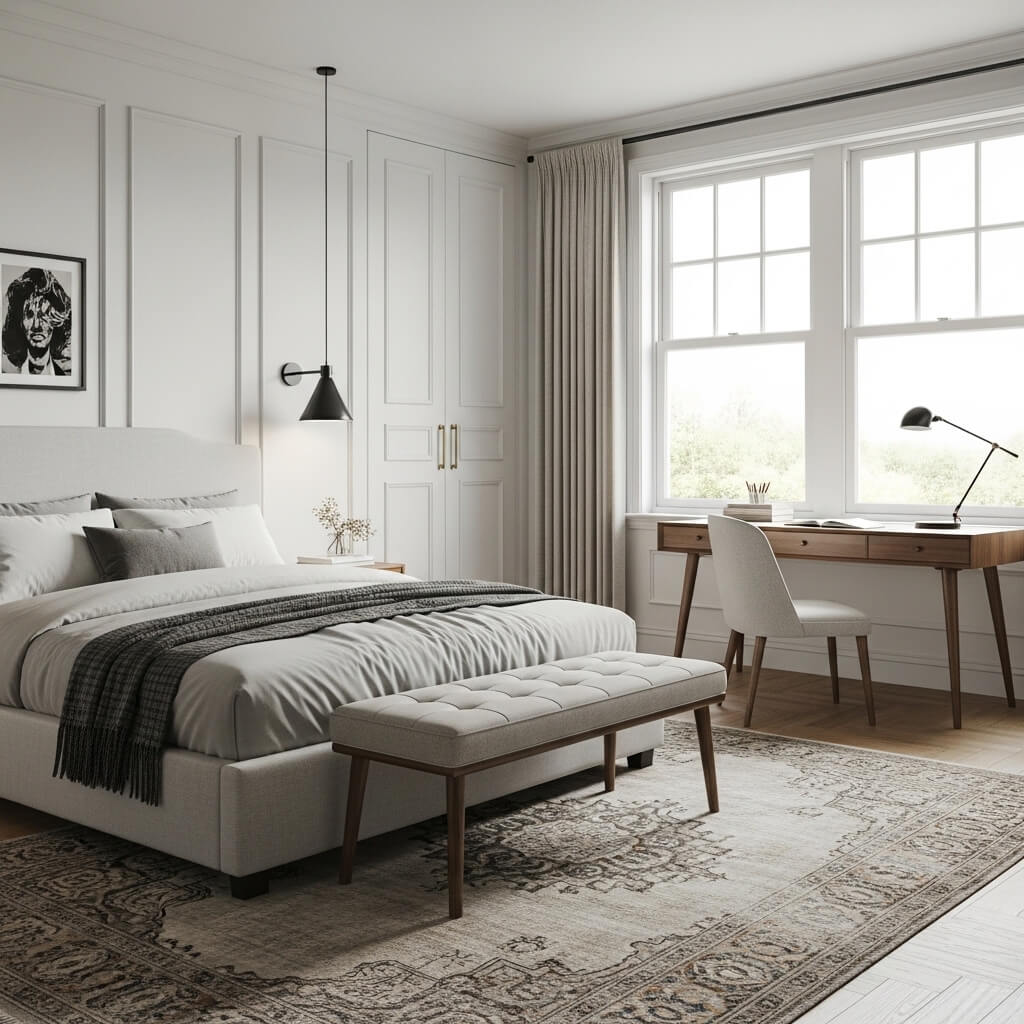
This is a smart, space-saving idea for medium rooms with limited wall space from windows, closet doors, and radiators.
The Layout: Place the bed against your main wall. Instead of a bench or ottoman at the foot, use your desk. The desk can face the bed, allowing you to see the headboard while you work, or it can face the room.
Why it Works: This setup groups larger furniture together. It keeps the room’s edges clear for dressers, bookshelves, or easy movement.
Styling Tip: Choose a desk with a finished back, so it can float in the room. A sleek, minimalist writing desk with slim legs works best. This way, it won’t block the view at the end of the bed. Add a textured jute or vintage rug under the bed, extending past the desk to tie everything together.
3. The Window Gazer’s Layout
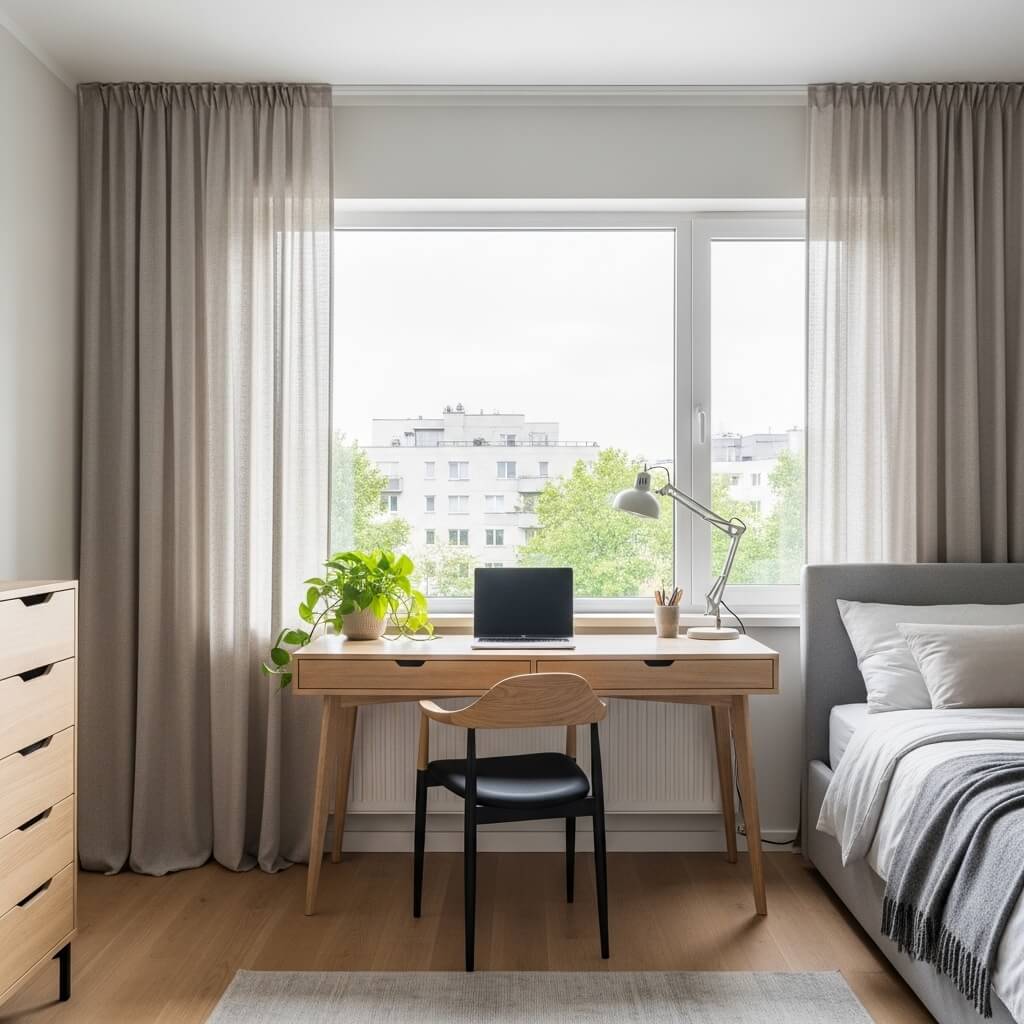
If you spend hours at your desk, natural light boosts your mood and productivity.
The Layout: Center your desk under the largest window. Place the bed on an adjacent wall, keeping at least three feet between the bed and the desk chair.
Why it Works: This layout lets natural light flow through the room. Your workspace gets bright morning sun, while the bed is in a cozier, dimmer spot.
Styling Tip: Use sheer linen curtains to soften the light and reduce glare on your laptop. Keep desk decor minimal, like a small potted pothos plant, so the window stays the main focus.
4. The Nightstand Double-Duty
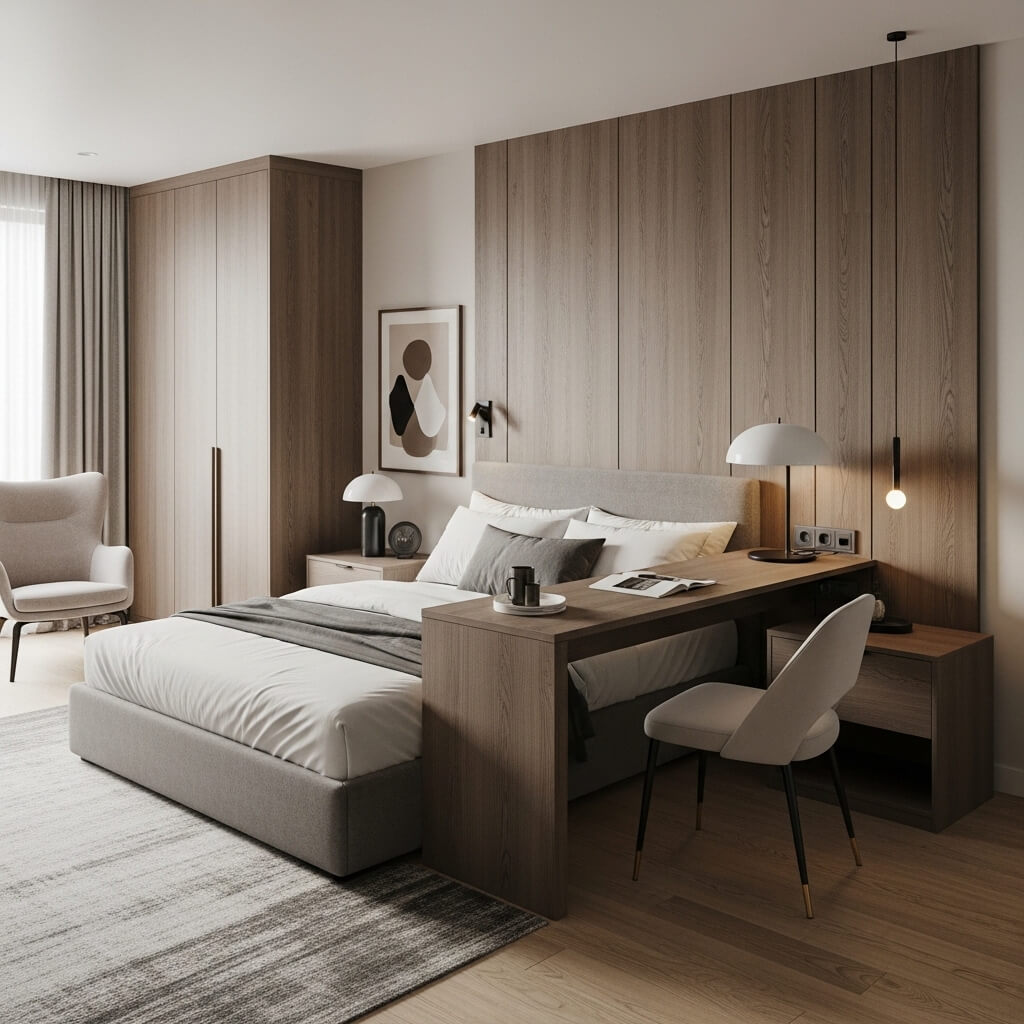
In a medium-sized room, separate zones may not work. Multi-functional furniture is essential for smart design.
The Layout: Position your bed against the main wall. Place a standard nightstand on one side. On the other, set up a desk that matches your mattress height. This desk can also serve as a nightstand.
Why it Works: You save space using a bed and a desk instead of a bed, two nightstands, and a desk. This keeps the opposite walls clear for wardrobes or a comfy reading chair.
Styling Tip: Balance the look. If your desk is wide on the left, pick a slightly wider nightstand on the right. Add a stylish lamp to the desk for both reading and working.
5. The Parallel Divide
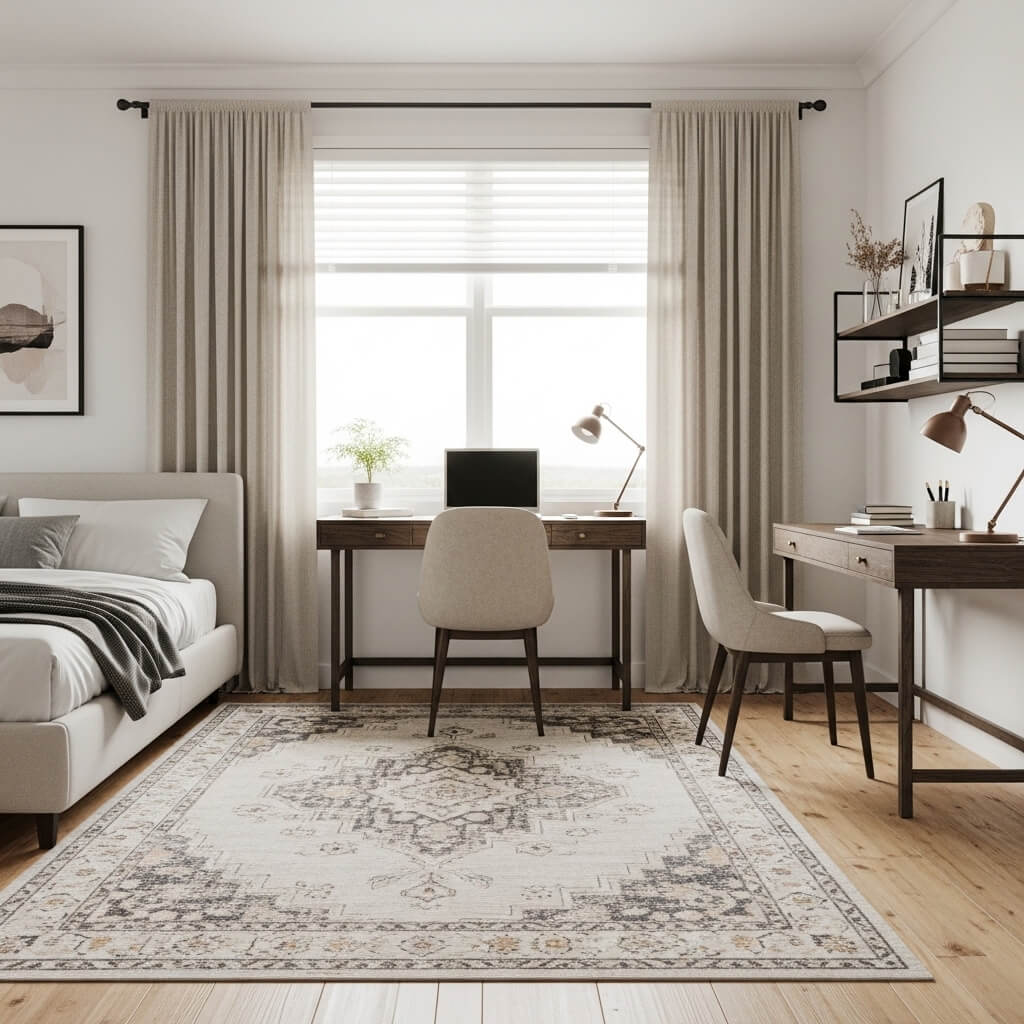
For medium, rectangular rooms, a clean layout helps energy flow smoothly.
The Layout: Place the bed against one long wall. Position the desk on the opposite wall, parallel to the bed. Why it Works: This setup creates a clear path down the center. It keeps the “sleep zone” separate from the “work zone.” Your back faces the bed while you work.
Styling Tip: Use a large area rug in the center to connect the two zones. A boho-chic patterned rug in muted earth tones adds warmth and texture between the furniture.
6. The “Cloffice” (Closet Office) Integration
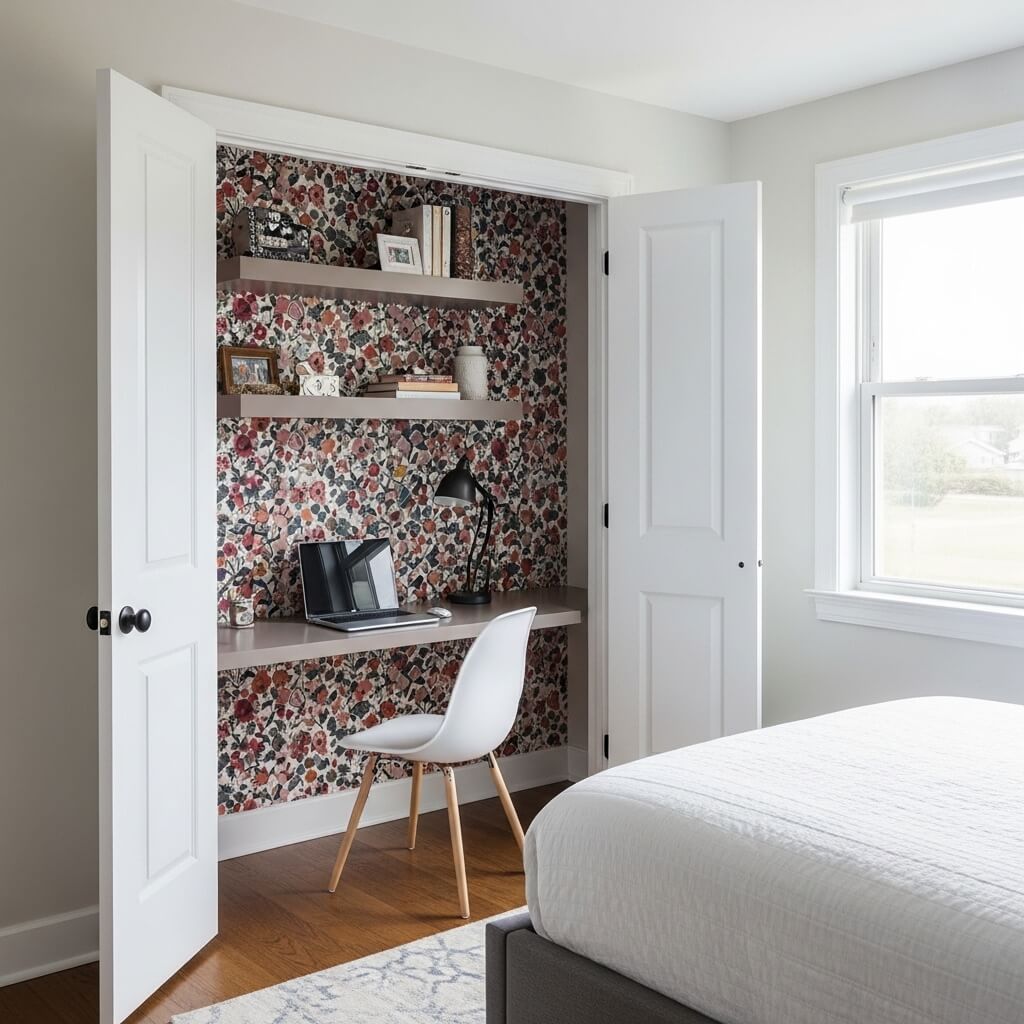
If your square room has a large or oddly placed closet that you don’t need for clothes, use that space wisely.
The Layout: Start by taking off the closet doors. Then, install a custom or floating desk inside the closet alcove. Add floating shelves above the desk for extra storage. This lets your bed fit anywhere in the main room without clashing with the desk.
Why it Works: This setup takes the desk out of the room’s footprint, which is important in a square room. You can also paint the closet’s interior an accent color, adding a unique touch.
Styling Tip: Use peel-and-stick wallpaper inside the closet to add character to your workspace. A bold floral design or a clean geometric pattern can make this nook stand out beautifully.
7. The Floating Minimalist
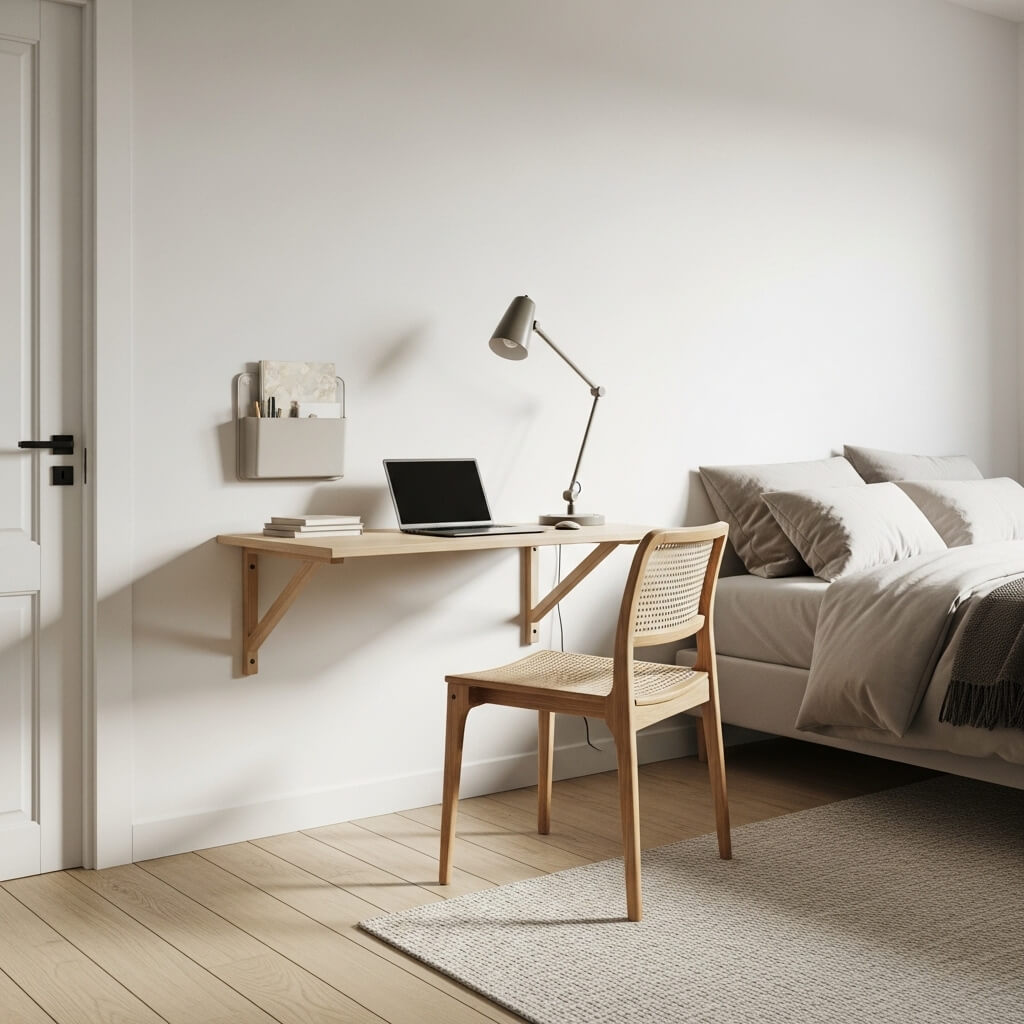
Sometimes, the issue isn’t just how much space a desk takes up. It’s also about how heavy it looks. This can make a room feel cramped.
The Layout: Choose a wall-mounted floating desk instead of a freestanding one. Place it near the door, with the bed centered on the opposite wall.
Why it Works: Keeping the floor visible under the desk makes the room seem larger. It cuts down on clutter from desk legs and creates a light, open space.
Styling Tip: Pair the floating desk with a lightweight chair, like a curved wood stool or one with an open rattan back. Keep the desk organized by using wall-mounted pockets for pens and papers.
8. The Room Divider Zone
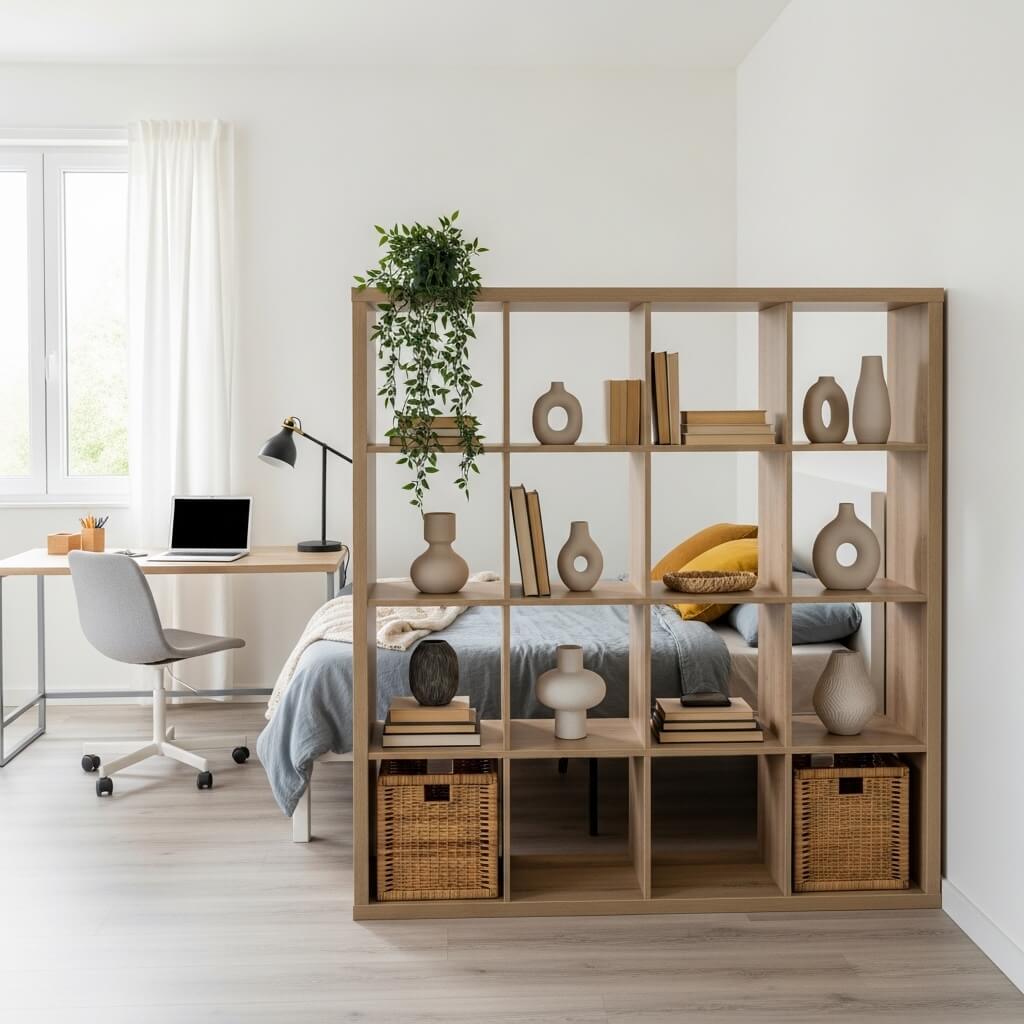
If your medium room feels like two spaces, dividing them can boost your work-life balance.
The Layout: Position your bed in the back half of the room. Add a freestanding, open-back bookcase (like a classic cube shelf) at the foot of the bed or to the side. Place the desk on the other side of the bookcase.
Why it Works: This setup creates a physical and psychological barrier. When you’re in bed, you won’t see your laptop or to-do list. At your desk, you’re in a clear “office.” Open-back shelving lets light flow through the room.
Styling Tip: Curate the open shelves with care. Mix books, trailing plants, sculptural ceramics, and woven baskets for a beautiful partition on both sides.
9. The L-Shaped Corner Wrap
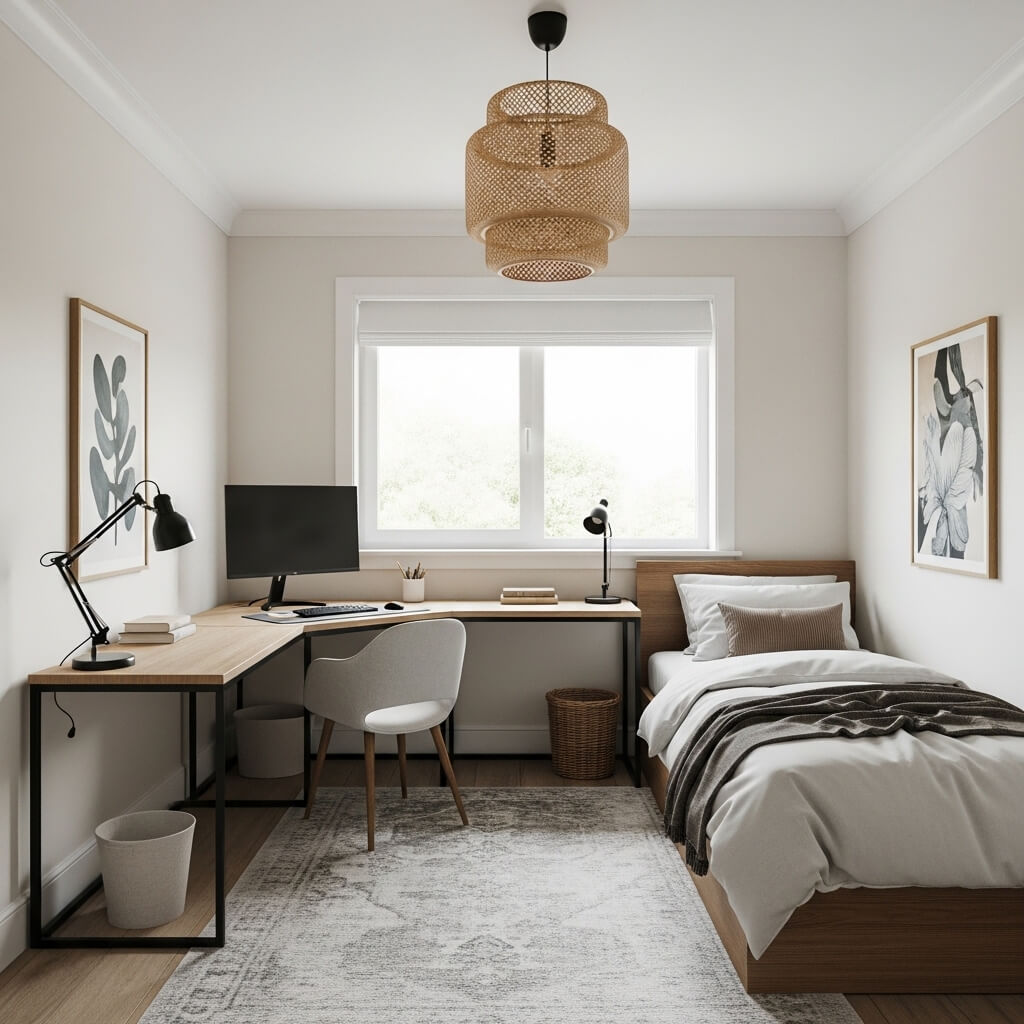
Maximize every inch of a square room by hugging the perimeter.
The Layout: Use an L-shaped corner desk. Fit it snugly into the corner farthest from the door. Place your bed on the adjacent wall. This keeps the center of the room open.
Why it Works: L-shaped desks provide plenty of surface area for monitors, sketchpads, or books. They don’t intrude into the room’s middle. This layout suits heavy-duty studiers or remote workers.
Styling Tip: Since this setup pushes everything to the edges, add a large, plush rug in the center. A striking ceiling light fixture, like a woven basket chandelier or a sleek pendant, can draw the eye upward and enhance the space.
10. The Statement Wall Alignment
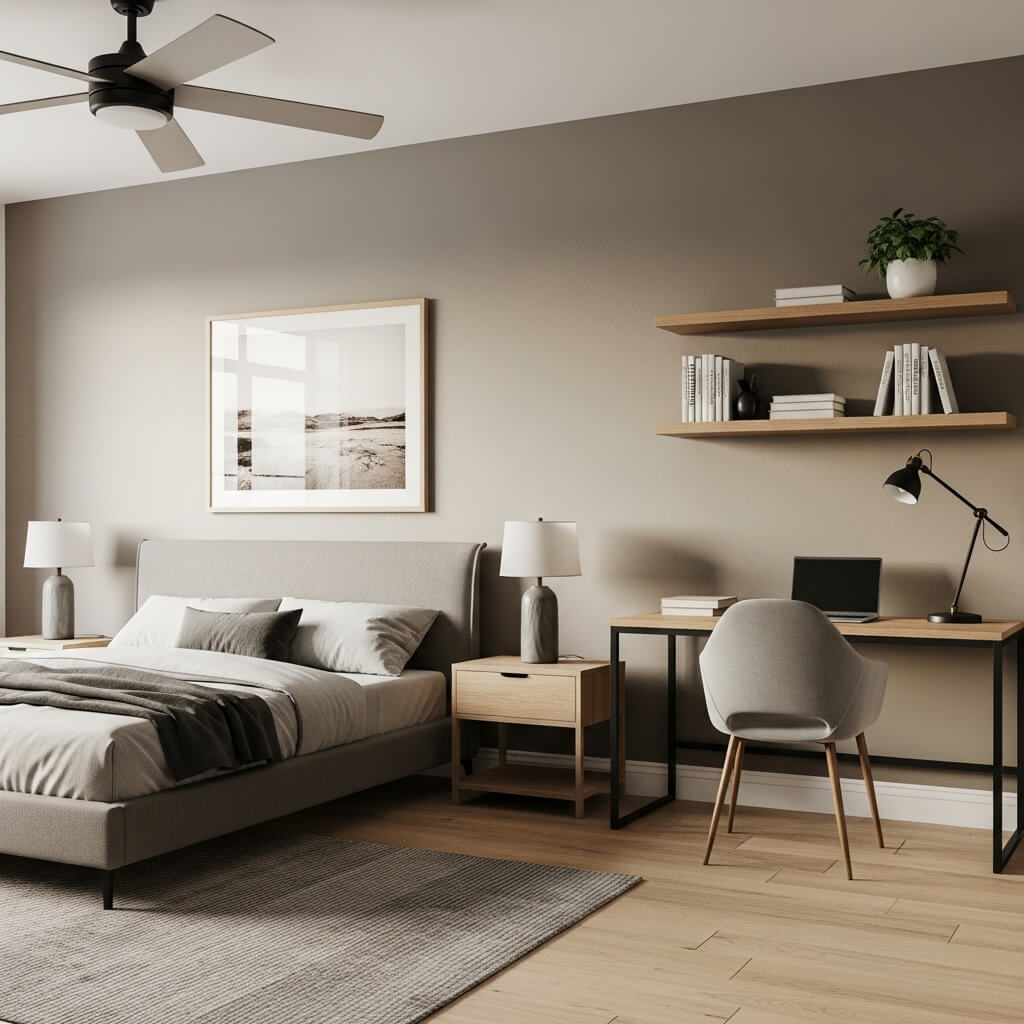
Keep all your heavy visual elements on one continuous plane.
The Layout: Place the bed and desk side by side on the longest wall. Leave two to three feet between the nightstand and desk.
Why it Works: Aligning the main furniture on one wall keeps the rest of the room open. This gives a spacious, gallery-like feel.
Styling Tip: Unify the wall with a rich accent color or textured limewash. To separate the areas, hang a large framed art piece over the bed and add floating wood shelves above the desk.
11. The Alcove Embrace
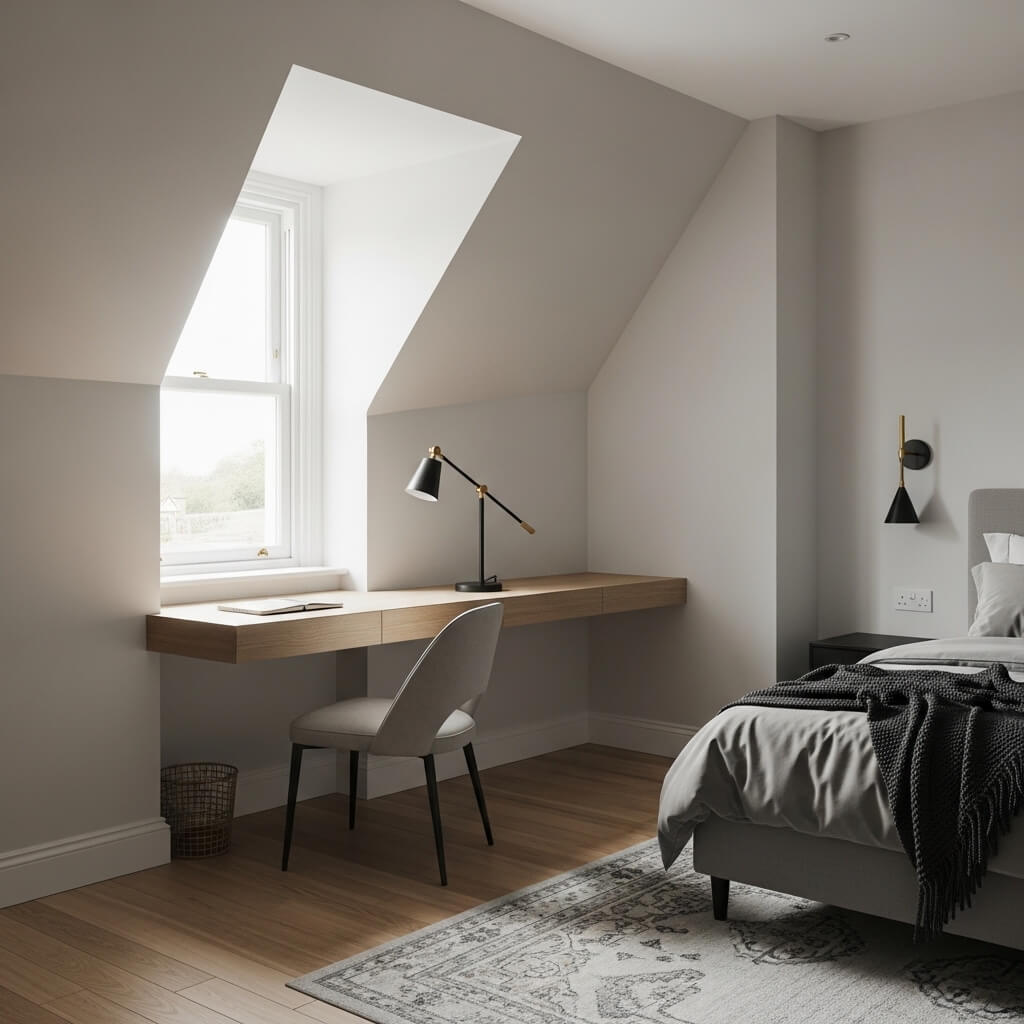
Many medium-sized bedrooms in older homes or apartments have unique features. You might see an alcove, a recessed window, or a slanted ceiling.
The Layout: Embrace the alcove instead of fighting it. Fit a desk snugly into that niche. Place the bed in the main area of the room.
Why it Works: This turns a design flaw into a useful feature. It keeps the desk from blocking walking paths.
Styling Tip: Add a sleek wall sconce in the alcove for task lighting. This saves desk space and adds style. A warm brass or matte black fixture brings elegance.
12. The Hideaway Drop-Down
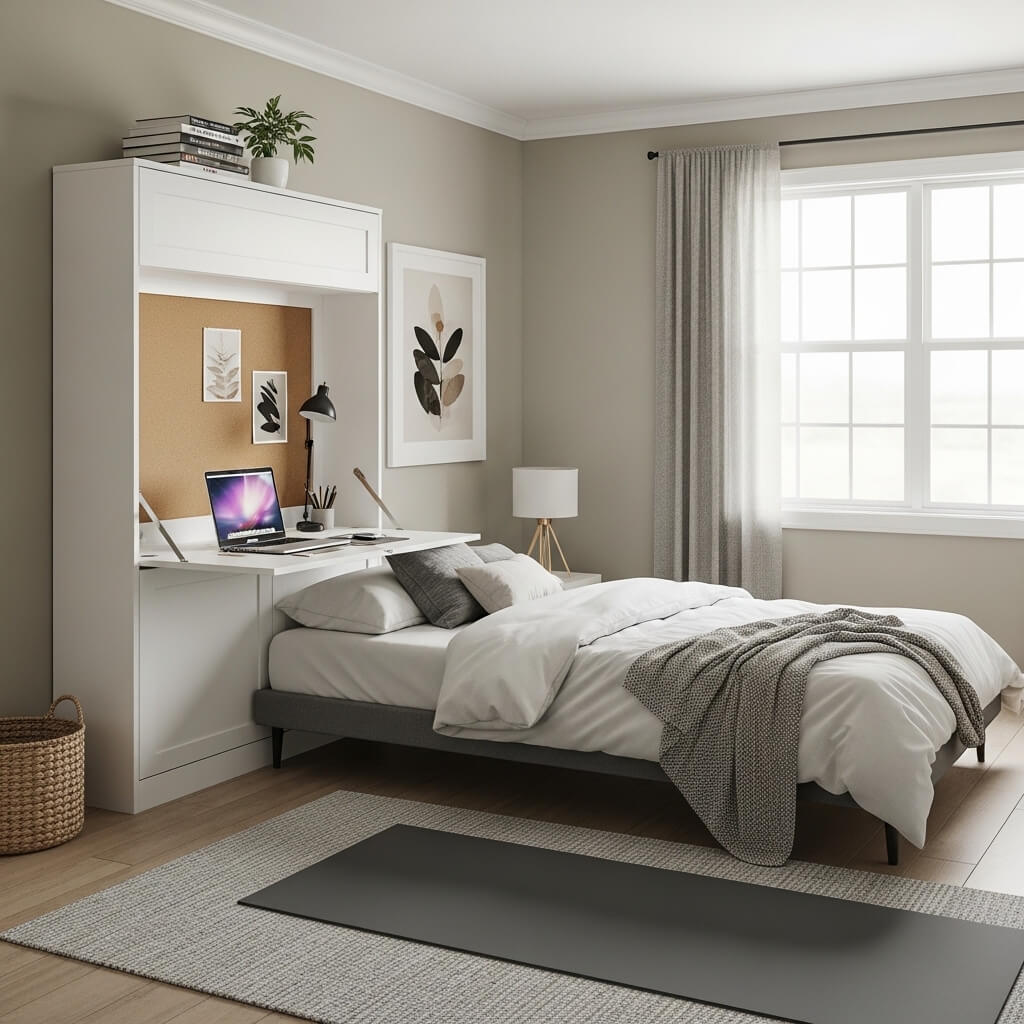
If you need a desk sometimes but want your bedroom to stay a bedroom most of the time, this is ideal for you.
The Layout: Install a fold-down Murphy desk on the wall. When closed, it looks like a simple cabinet or framed art. You can place the bed in a centered layout.
Why it Works: This setup offers great flexibility. A square room feels more spacious with the desk folded away. You’ll have room for a yoga mat or just to relax.
Styling Tip: Choose a drop-down desk with a corkboard or art on the underside. When closed, it enhances your wall decor.
13. The Cozy Nook Layering
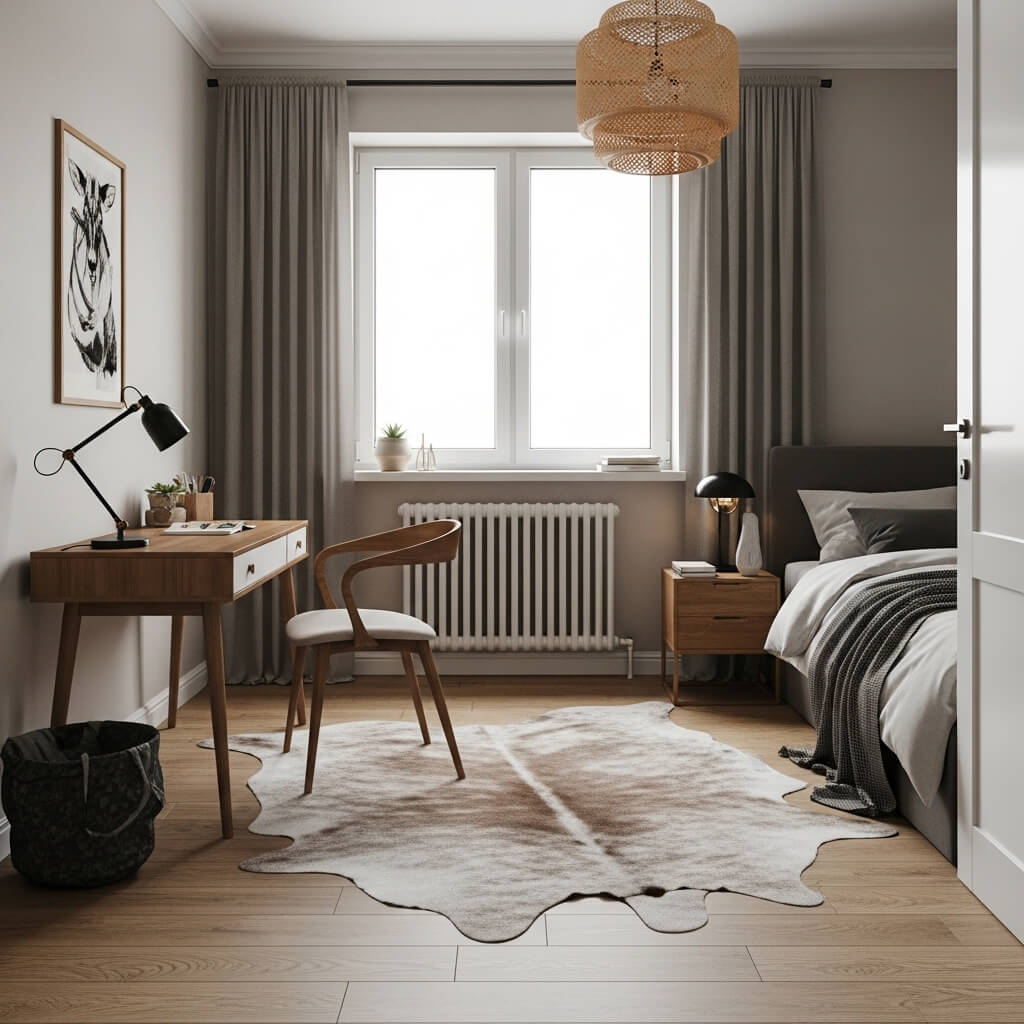
This layout creates a “room within a room” using smart textile layering.
The Layout: Tuck the desk into a corner by the window. Place the bed on the opposite side. The key is zoning with textiles. Add a round or asymmetrical cowhide or faux-fur rug under the desk chair.
Why it Works: In a square room, circular or organic shapes break up harsh angles. The rug visually separates the office nook from the sleeping area without walls or bookcases.
Styling Tip: Warmth is essential. Pair an organic-shaped rug with a warm wooden desk and a chair with curved lines. This counters the boxy feel of a square bedroom.
Pro-Tips for Combining Sleep and Productivity in One Room
Make these 13 bedroom layouts shine on Pinterest and in real life by following these design rules.
1. Control Cable Clutter
Cables can ruin your bedroom’s look.
- The Fix: Use cable trays under your desk. Cover visible cords with matching cord covers or place a basket on the floor to hide power strips.
2. Master Your Lighting Strategy
Layered lighting is key for a bedroom with a desk. Don’t rely on just one overhead light.
- Ambient Lighting: Use a warm, dimmable overhead light for general brightness.
- Task Lighting: Add a focused desk lamp. Choose styles in brass or matte black for a stylish touch.
- Accent Lighting: Include soft bedside lamps or wall sconces with warm bulbs (2700K to 3000K) to help you relax.
3. Harmonize Your Color Palette
When your work and sleep areas share space, their colors should match.
- Stick to a cohesive palette. If your bedding features soft sage greens and warm terracottas, use those colors in your desk area with your mousepad, artwork, or plant pots.
- Avoid sharp contrasts between the two spaces.
4. Choose Your Desk Chair Wisely
Bulky black office chairs don’t belong in a serene bedroom.
- Opt for dining or accent chairs that offer good back support with beautiful fabrics. Consider boucle, linen, velvet, or natural cane. If you need an ergonomic chair, choose soft, neutral colors like cream, taupe, or soft grey instead of industrial black mesh.
Conclusion: Crafting Your Perfect Dual-Purpose Space
Transforming a square or medium bedroom into a workspace and cozy retreat is easy.
Use these 13 layout strategies to improve flow, utilize dead space, and create an intentional look.
The right layout supports your daily habits. If you need morning light, put your desk by the window.
For better sleep, consider adding a room divider.
Would you like me to suggest specific color palettes or decor items, like rugs and lighting, that match a minimalist or boho-chic style for one of these layouts?