In a world that pulls at our attention, the bedroom should offer peace.
If you are creating content or designing a space for deep rest, a calm, grounded look is key.
People want homes that lower stress, driving interest on visual platforms. This style is vital for any effective home interiors strategy.
To create a truly restful space, you need more than just a made bed.
You need a blend of minimalist style and soft, boho-chic warmth.
It’s about making a room that feels like a deep breath when you enter.
If you’re ready to design a tranquil space, here’s your guide to the 13 “zen bedroom retreat” essentials.
These tips will turn an ordinary bedroom into a stunning, shareable sanctuary.
1. Ground the Space with an Earthy, Minimalist Palette
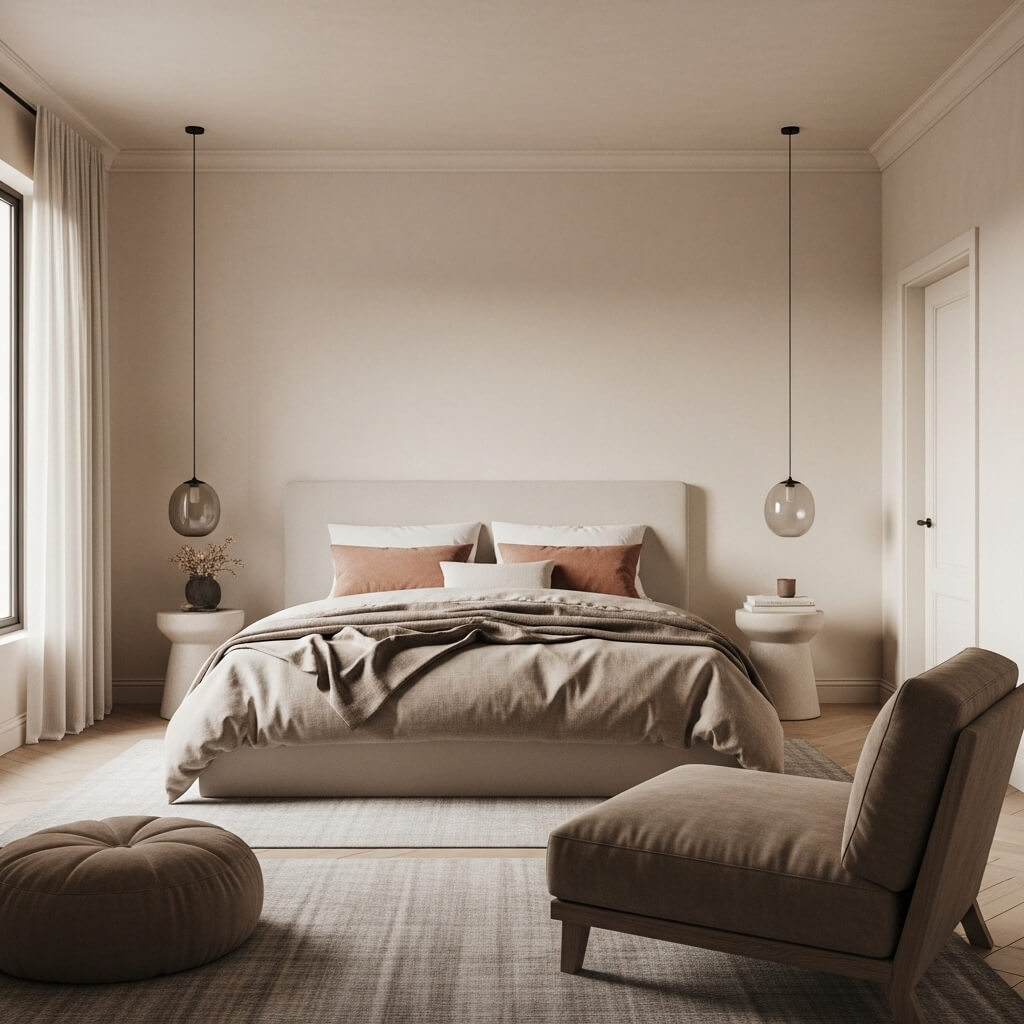
The color scheme sets the tone for a calming retreat. Bright, high-contrast colors stimulate the brain.
This is the opposite of a zen environment.
- The Core Tones: Start with soft, muted earth tones. Use warm plaster whites, sandy beiges, pale sage greens, and muted terracotta.
- The Visual Impact: These colors mimic nature, telling your nervous system to unwind. A monochromatic look—painting walls, trim, and ceiling in the same soft beige—creates a seamless, cocoon-like feel that shines in photos.
2. The Low-Profile, Japandi-Style Bed
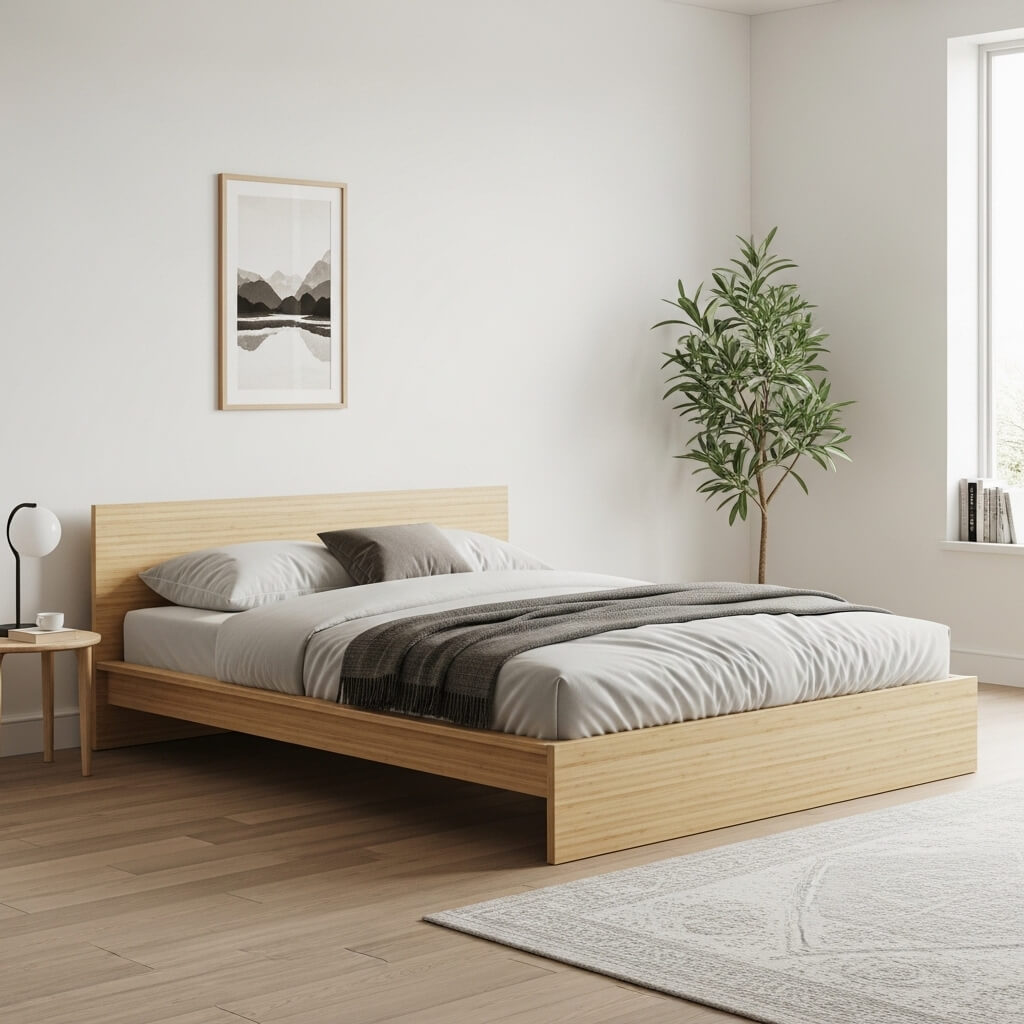
Eastern design philosophies suggest sleeping closer to the earth is grounding.
- The Furniture: Skip tall headboards and heavy box springs. Choose a simple, low-profile wooden platform bed in light ash, bamboo, or pale oak.
- The Illusion of Space: Lowering the visual weight of the bed makes ceilings feel higher and rooms more expansive. This is a hallmark of minimalist design.
3. Embrace Organic, Boho-Chic Textures
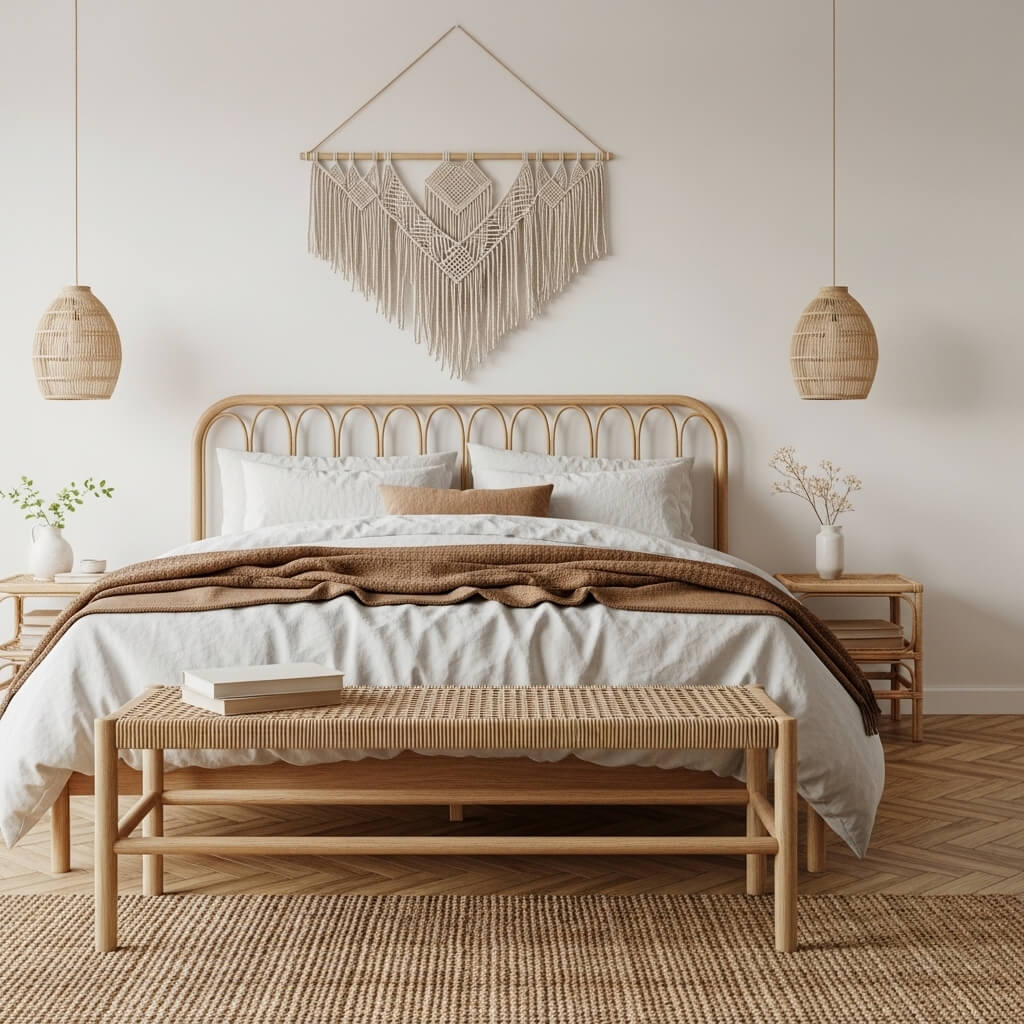
A minimalist room can feel cold. To create a retreat vibe, add warmth with natural materials.
- The Elements: Use woven rattan, cane webbing, jute, and raw linen. A woven bench at the foot of the bed or a jute rug over hardwood floors adds a relaxed touch.
- The Balance: These textures soften sharp lines of minimalist furniture, creating a welcoming, nature-inspired atmosphere.
4. Cultivate Symmetrical Harmony
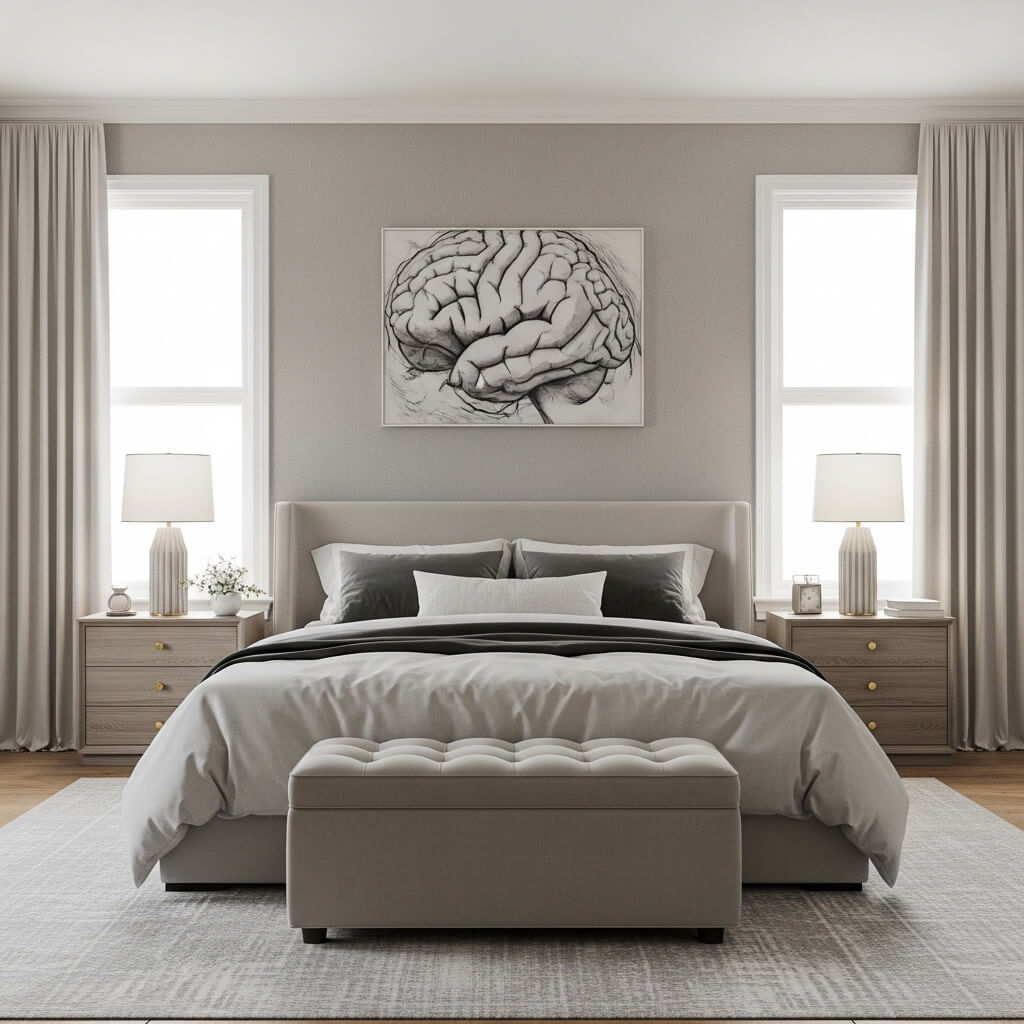
Our brains crave order. Visual clutter leads to mental clutter. Symmetry brings immediate calm.
- The Layout: Center the bed on the main wall. Flank it with matching nightstands and lamps.
- The Aesthetic: This balanced setup draws the eye to the room’s center, fostering a sense of stability. Symmetrical shots are also popular on platforms like Pinterest for their pleasing look.
5. Master the Art of Diffused, Sensory Lighting
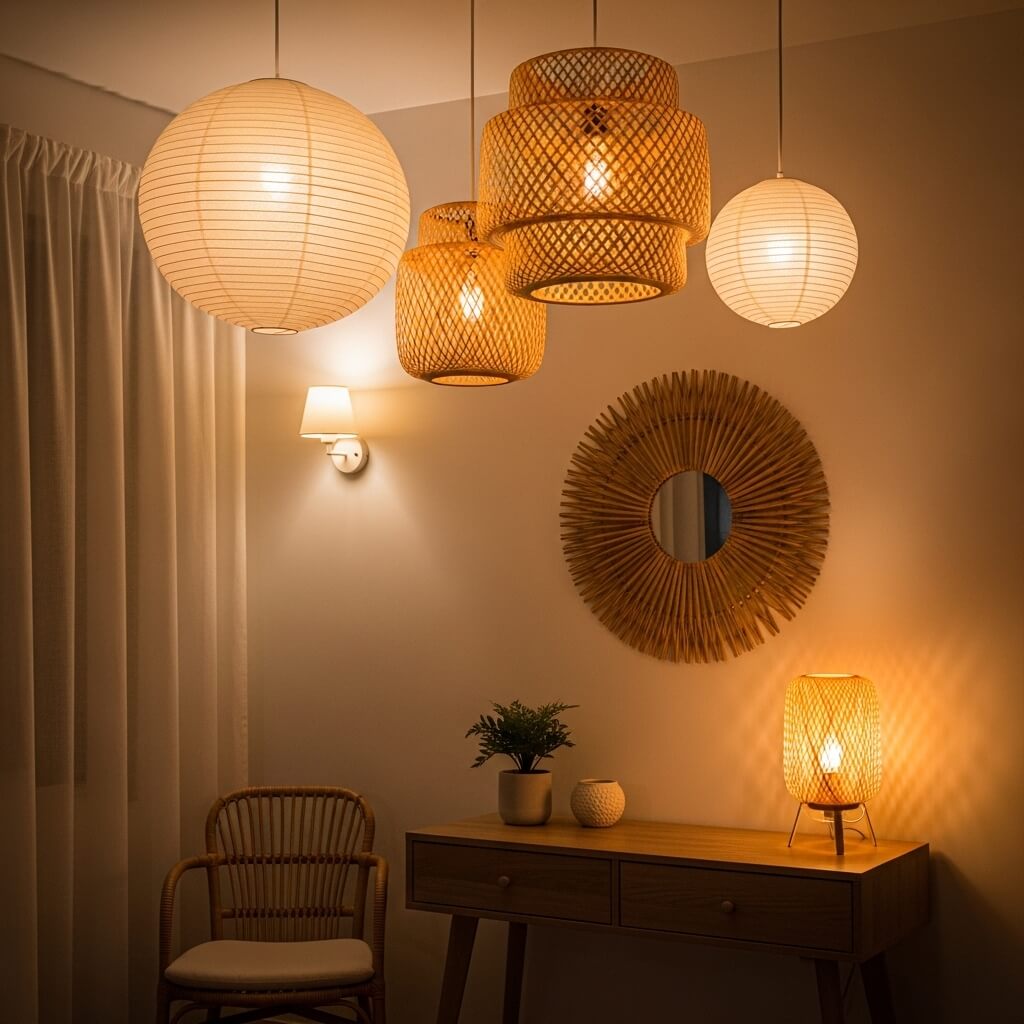
Harsh lighting disrupts a zen vibe. Your lighting should be layered and soft.
- The Fixtures: Replace exposed bulbs with oversized paper globe lanterns or woven bamboo pendants. These diffuse light into a warm, soft glow.
- The Glow: Use ambient wall sconces and low-wattage table lamps with warm LED bulbs (2700K or lower). This mimics the soothing glow of sunset, signaling rest.
6. Establish a Strict “No-Tech” Boundary
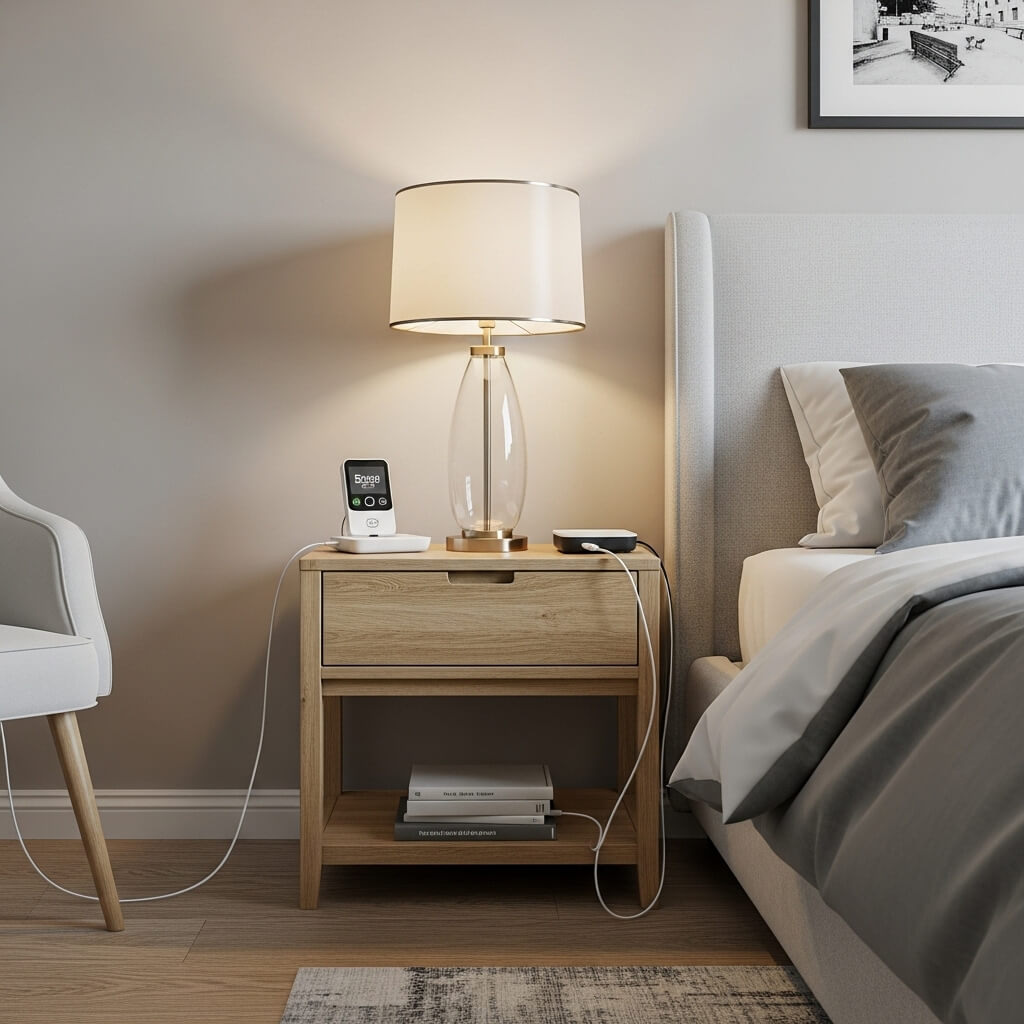
To be a true retreat, the space must disconnect from the outside world. The glow of screens disrupts peace.
- The Execution: Remove the TV and charging cables from nightstands. Set up a charging station elsewhere.
- The Result: Without digital distractions, the bedroom becomes a space for rest and intimacy. A room without screens looks cleaner and more refined.
7. The Essentialist Nightstand
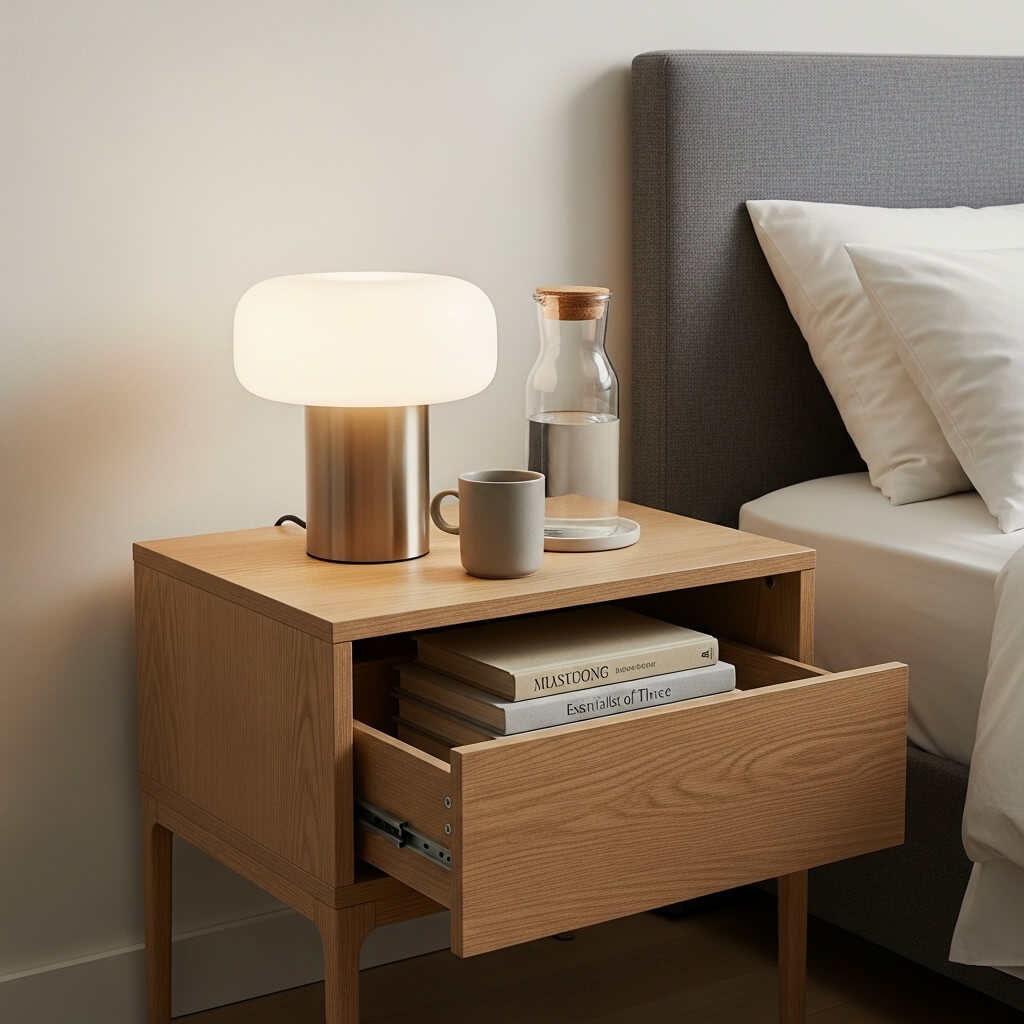
A nightstand should hold only what you need for sleep and a gentle morning wake-up.
- The Rule of Three: Limit the surface to three items: a sleek lamp, a carafe of water, and one book.
- Hidden Storage: Keep other items tucked in a closed drawer. An immaculate surface encourages mindfulness and keeps the space looking pristine.
8. Introduce Purifying Biophilic Elements
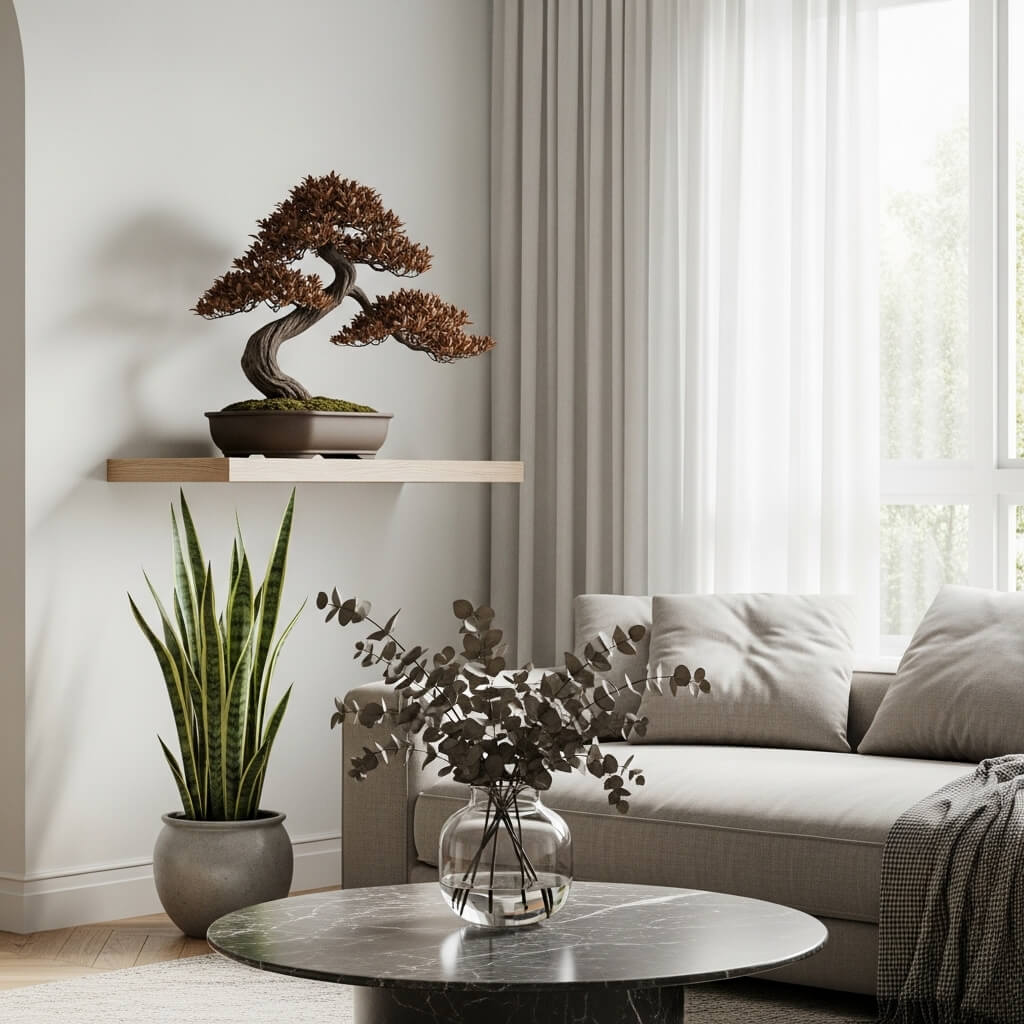
Bringing nature indoors is essential for zen design. Plants add life and oxygen.
- The Selection: Avoid chaotic jungles. Choose a few low-maintenance plants like a bonsai tree, a snake plant, or a vase with dried eucalyptus.
- The Benefit: These elements serve as living art, purifying the air while supporting the earthy aesthetic.
9. Layer Breathable, Imperfect Linens
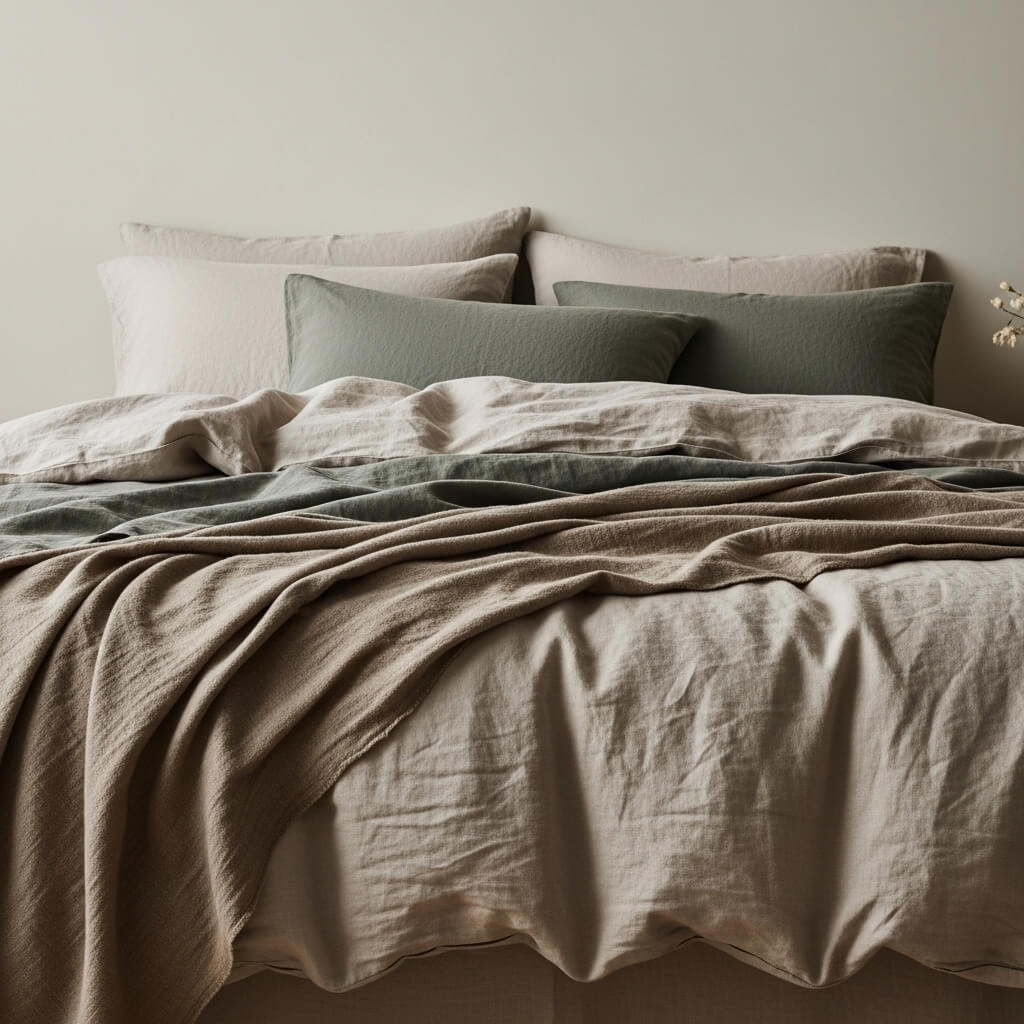
The bed should look effortlessly comfortable, inviting you to relax.
- The Fabric: Use 100% organic stonewashed linen or high-quality percale cotton. Linen’s slightly crinkled texture looks good even when the bed isn’t perfectly made.
- The Styling: Stick to a neutral palette. Layer a darker beige or sage throw over a soft oat-colored duvet. The “perfectly undone” look defines relaxed living.
10. Incorporate Aromatherapy as Invisible Decor
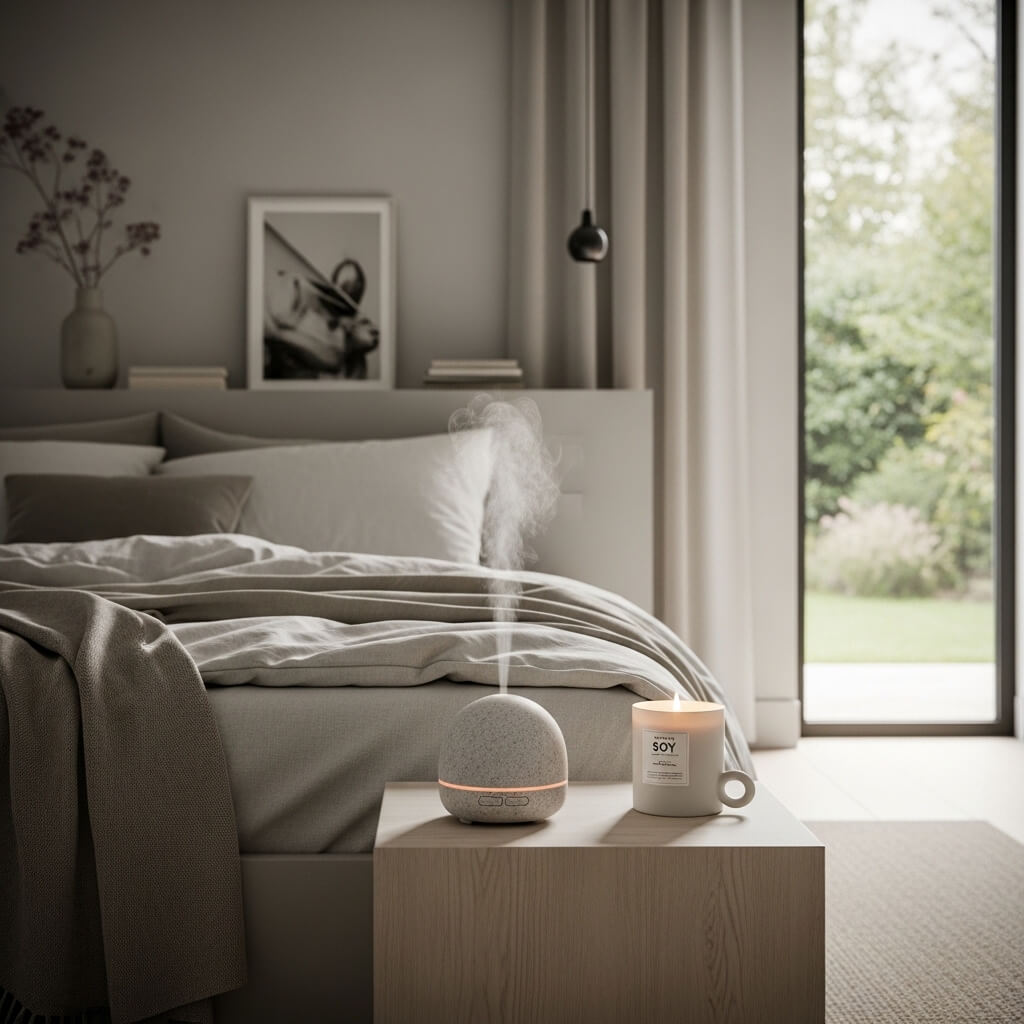
A true retreat engages all senses. The room’s scent is as important as its look.
- The Scent Profile: Choose grounding scents like sandalwood, cedar, lavender, or subtle eucalyptus.
- The Delivery: Use a minimalist stone essential oil diffuser or a high-quality soy candle. This enhances the space, transforming it into a sanctuary.
11. Implement “Invisible” Storage Solutions
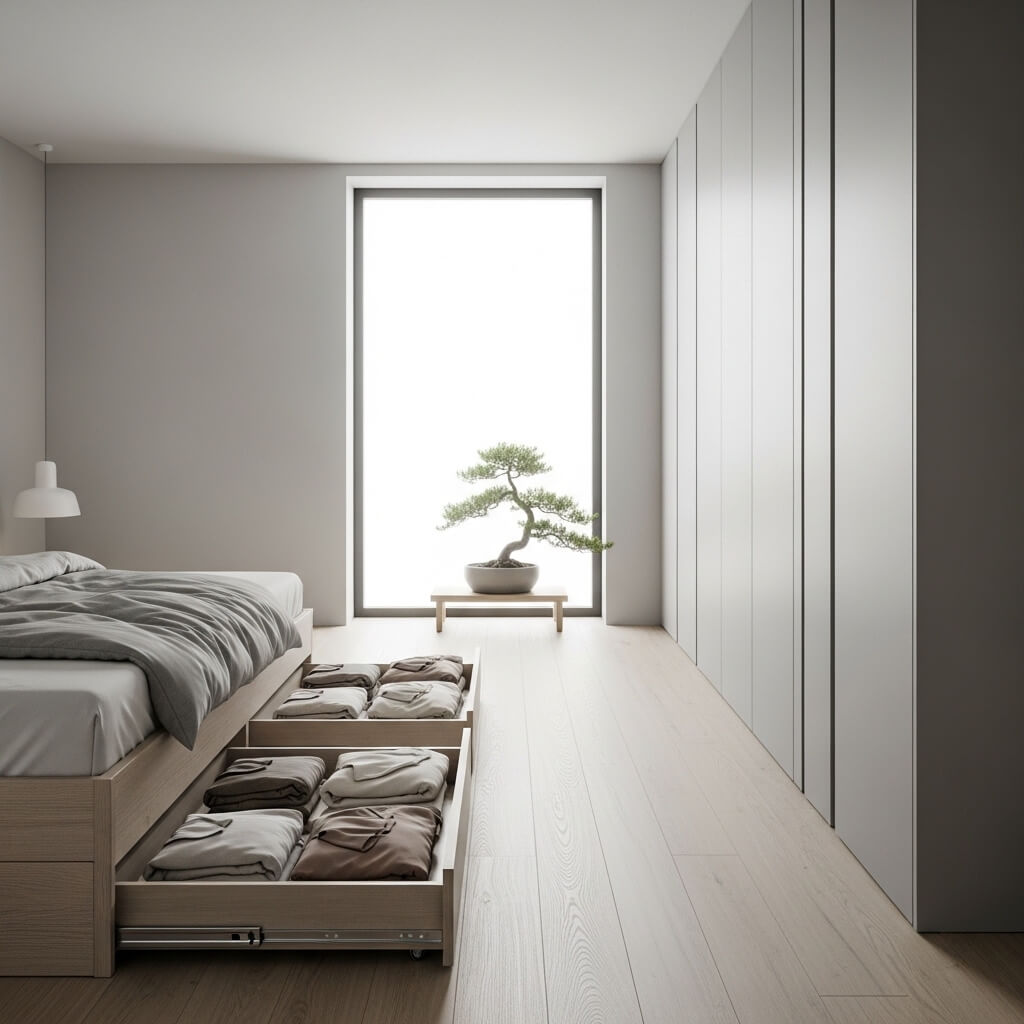
In a zen space, everything should have a designated home, ideally out of sight.
- The Strategy: Use under-bed rolling drawers for off-season clothing. If renovating, opt for flat-front built-in wardrobes that blend with the walls.
- The Impact: Removing visual clutter from clothing racks and open shelving allows your mind to relax fully.
12. Soften the Architecture with Sheer Window Treatments
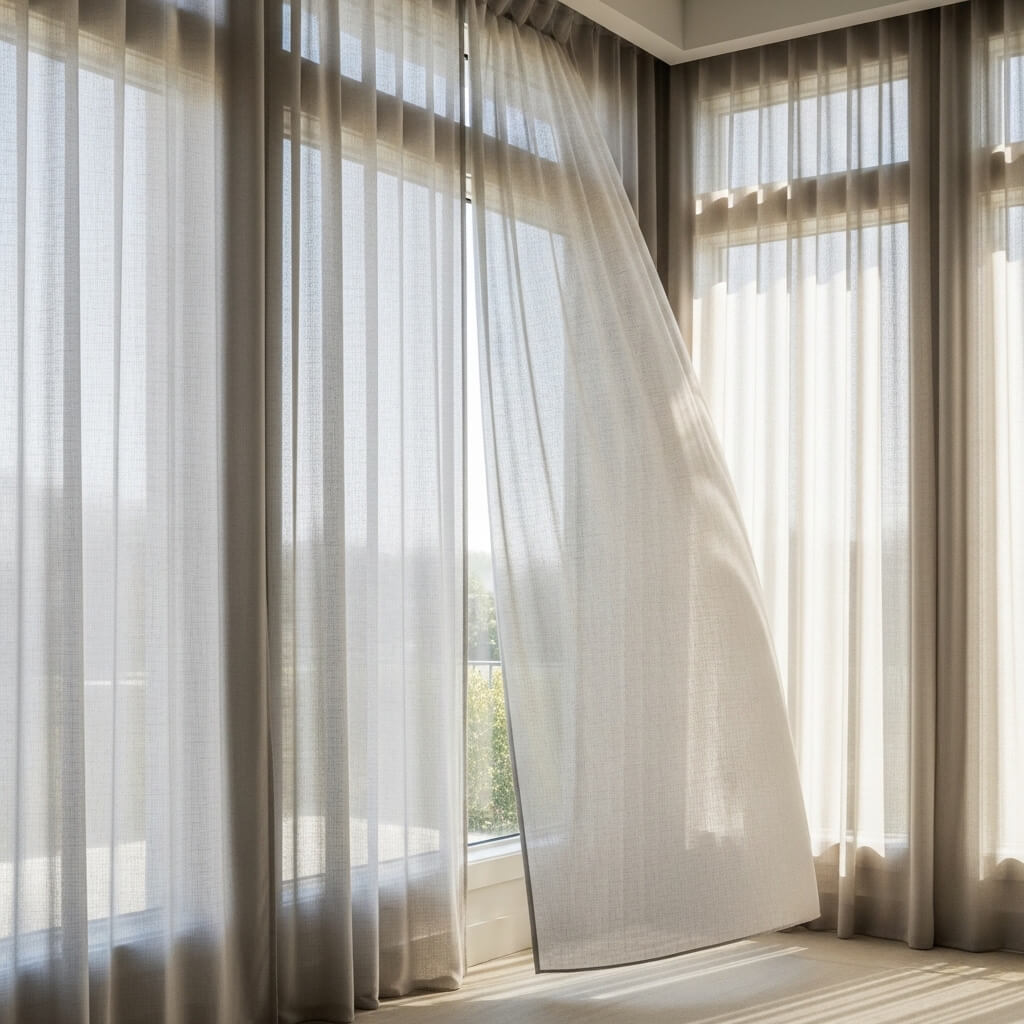
Natural light is important, but it should be softened to maintain peace.
- The Approach: Avoid heavy drapes. Install floor-to-ceiling, ultra-sheer linen curtains.
- The Effect: Sheer linen diffuses sunlight into a gentle wash, providing privacy while keeping the atmosphere light and airy.
13. Create a Dedicated Mindfulness Corner
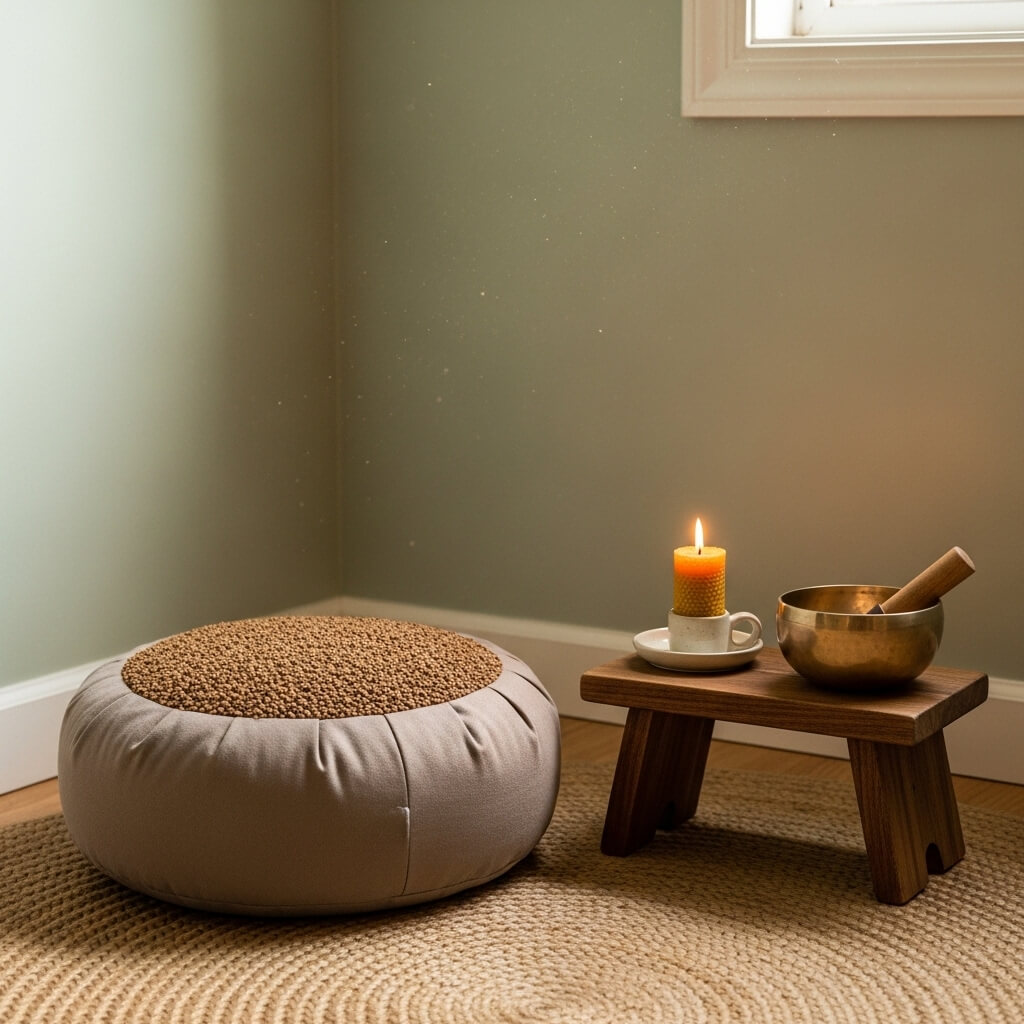
If space allows, dedicate an area for reflection or meditation.
- The Setup: A simple floor cushion (Zafu) in a quiet corner next to a low stool works well.
- The Details: Add a single candle or small singing bowl on the stool. This shows intention and creates a space for slowing down.
The Minimalist-Boho Zen Formula: Quick Reference
To keep your design visually appealing, remember this balance:
Design ElementThe Zen ApproachWhy It WorksColor BasePlaster whites, soft sage, warm oats.
Calms the nervous system; is photogenic.FurnitureLow-profile, light wood, clean lines.Grounds the room; makes ceilings feel taller.
TexturesLinen, rattan, jute, matte ceramic.
Adds warmth to minimalist spaces.Decor LimitCurated; embraces negative space.Prevents clutter; highlights key pieces.