The blend of global design ideas has created a calming aesthetic that many desire today.
By removing excess and focusing on natural materials, intention, and craftsmanship, you create a space that is not only beautiful but also restful.
This hybrid style combines the cozy, functional warmth of Scandinavian “Hygge” with the elegant, imperfect minimalism of Japanese “Wabi-Sabi” and Zen philosophy.
The result is an interior design that features warm wood, clean lines, and a strong connection to nature. It communicates softly rather than loudly.
For interior design creators aiming to attract high-quality traffic from Pinterest, understanding this aesthetic is key.
It draws in an audience seeking a more peaceful home life.
Whether you run a zen home blog or gather dream home ideas, this style deeply resonates with modern readers.
Here is a guide with 13 ideas for creating a modern Japandi Scandinavian Zen interior that transforms any space into a serene sanctuary.
The Core Philosophy of Japandi and Zen Architecture
Before exploring the specific architectural and decorative elements, it is vital to understand the underlying principles driving this aesthetic.
It is not just about buying a specific chair; it is about cultivating an atmosphere.
- Function meets Form: Scandinavian design insists that everything must have a purpose and be accessible, while Japanese design dictates that even the most functional items should be beautiful and elegantly crafted.
- Wabi-Sabi: This Japanese concept embraces the beauty of imperfection and the natural cycle of growth and decay. In interior architecture, this translates to raw, living materials that age gracefully over time, like solid wood and natural stone.
- Hygge: The Danish concept of coziness and comfortable conviviality. It softens the sometimes austere edges of pure minimalism with tactile warmth, ensuring the space feels like a home, not a museum.
13 Key Elements of Japandi, Scandinavian, and Zen Interior Architecture
1. Acoustic Slatted Wood Wall Paneling
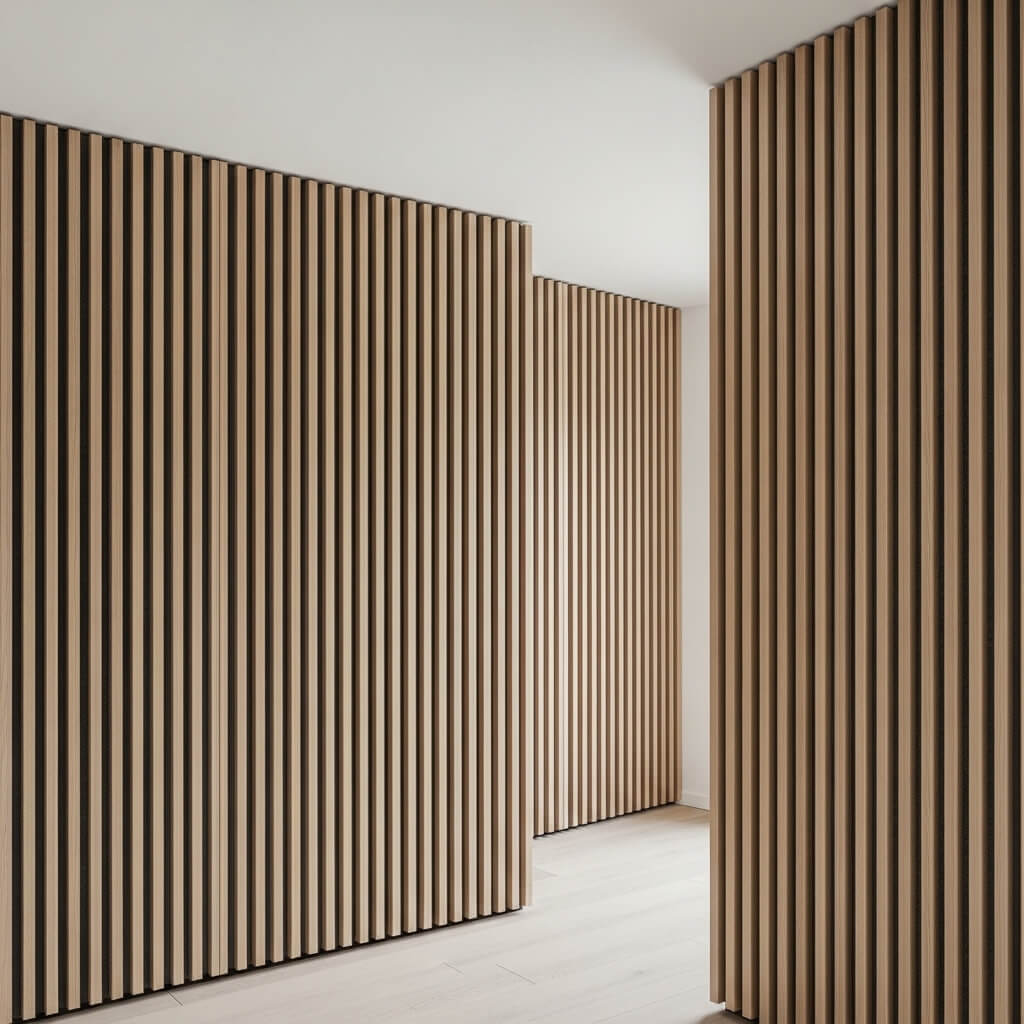
One of the most striking architectural features in modern Japandi design is the use of vertical wooden slats.
Installed as wall paneling or room dividers, these slats create a rhythmic, linear texture that draws the eye upward, making ceilings appear higher.
Made from light, cozy woods like white oak, ash, or birch, these panels often feature an acoustic felt backing.
This not only adds immense visual warmth to a minimalist room but also physically dampens sound, creating the hushed, quiet atmosphere essential to a Zen space.
2. Low-Profile, Grounded Furniture
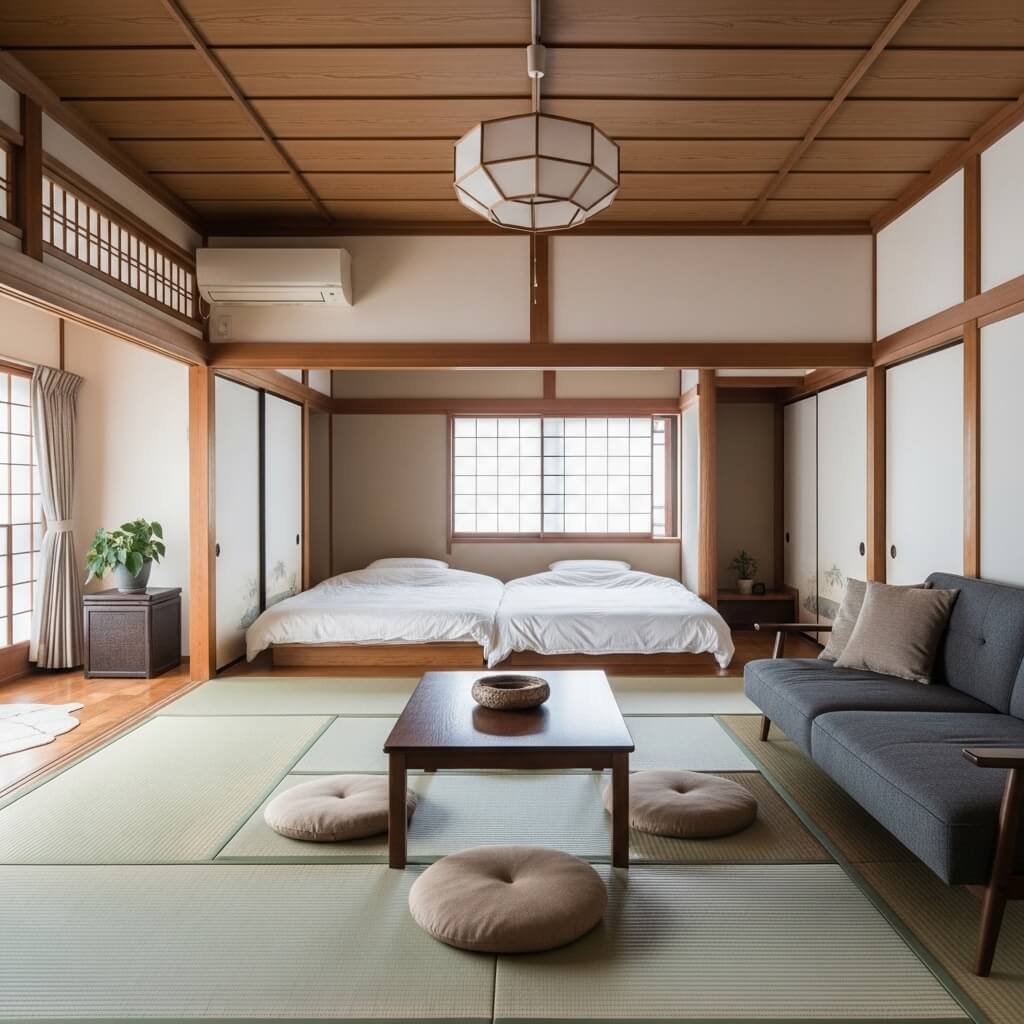
In traditional Japanese interiors, living happens closer to the floor.
Modern Japandi architecture embraces this by incorporating low-profile furniture.
Platform beds without box springs, low-slung sofas with deep seating, and floor cushions around a low coffee table physically ground the space.
By keeping the furniture low, you maximize the empty space between the furniture and the ceiling, making the room feel incredibly spacious, airy, and unburdened by heavy visual weight.
3. Shoji-Inspired Architectural Partitions
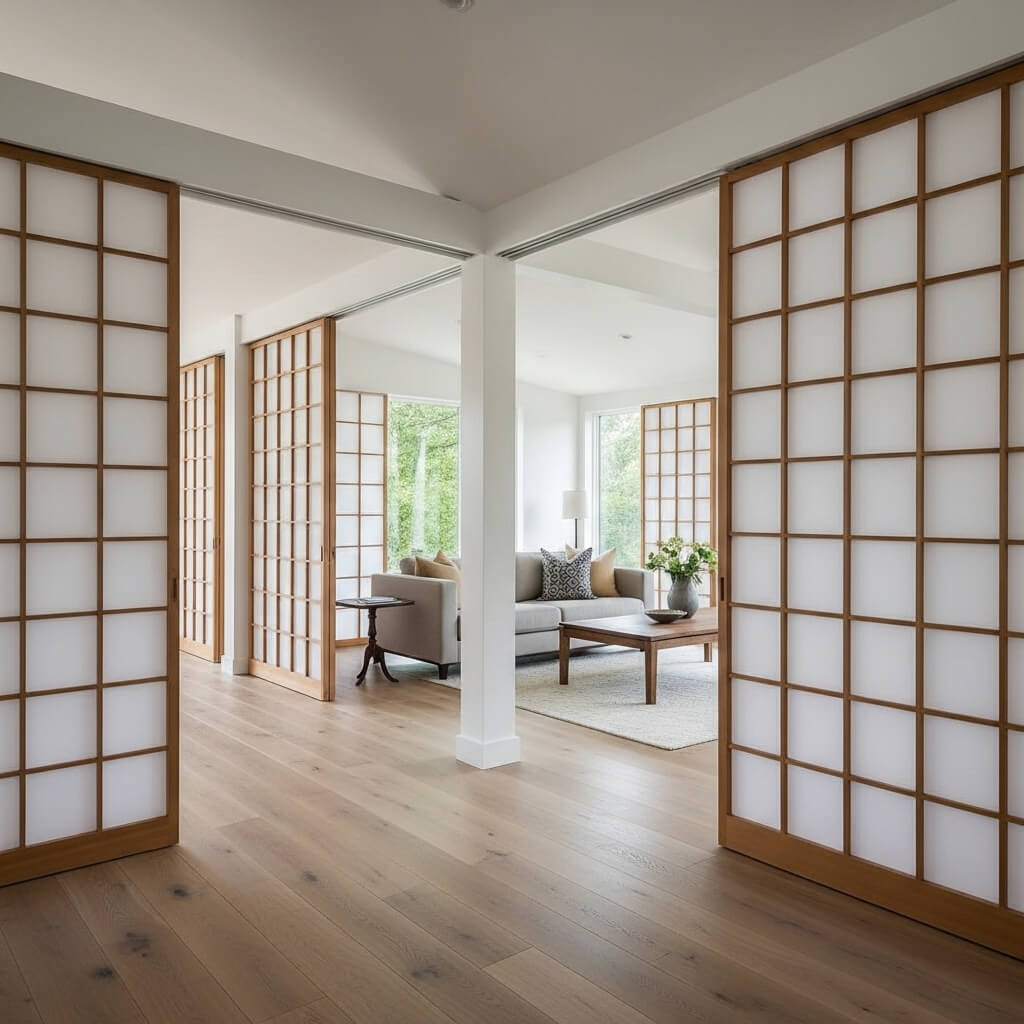
Open-concept living is modern, but it can sometimes feel cavernous and lack intimacy.
To define zones without building solid, light-blocking walls, Japandi architecture utilizes modern interpretations of traditional Japanese shoji screens.
Instead of fragile rice paper, these might feature frosted glass or taut linen set inside minimalist wooden grid frames.
These sliding screens allow natural light to diffuse beautifully through the home while providing the option for privacy and defined cozy spaces.
4. Raw, Imperfect Textures (Wabi-Sabi Elements)
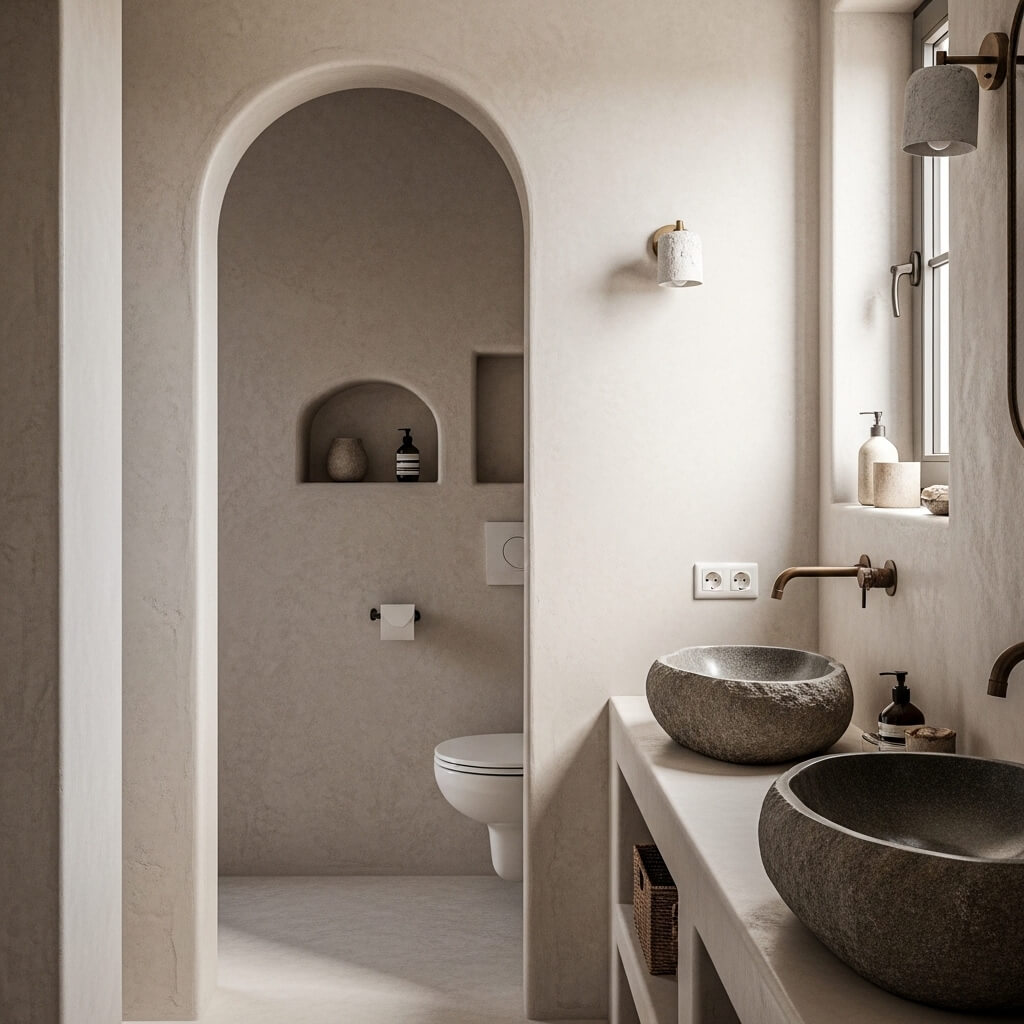
Minimalism can easily feel sterile if everything is perfectly polished and factory-made.
To counteract this, introduce wabi-sabi through your architectural finishes.
Swap perfectly smooth drywall for hand-troweled lime wash, Roman clay, or Venetian plaster.
These treatments give the walls a subtle, cloudy texture and an earthy depth that changes as the sunlight moves across the room throughout the day.
Complement these walls with raw, unglazed ceramics and organically shaped stone sinks.
5. Abundant “Cozy Wood” Tones
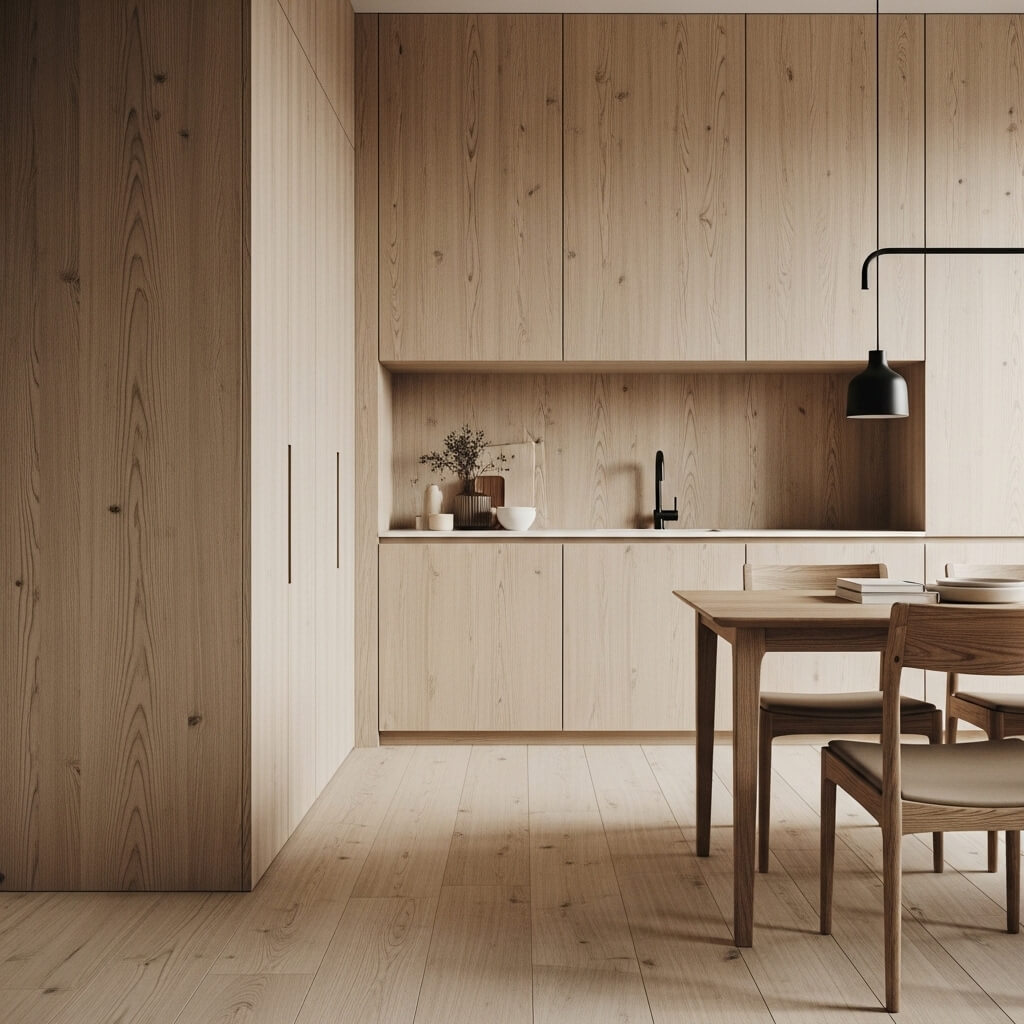
Wood is the undisputed hero of Scandinavian and Zen interiors.
However, the type of wood matters immensely.
Avoid dark, heavy woods like mahogany or glossy cherry, which lean traditional. Instead, focus on light-reflecting, cozy woods: white oak, beech, ash, and pale walnut.
Use these woods consistently across flooring, cabinetry, and furniture.
A matte finish is crucial—the wood should look and feel as close to its natural, raw state as possible, allowing the grain to act as the primary pattern in the room.
6. Built-In, Flush Cabinetry
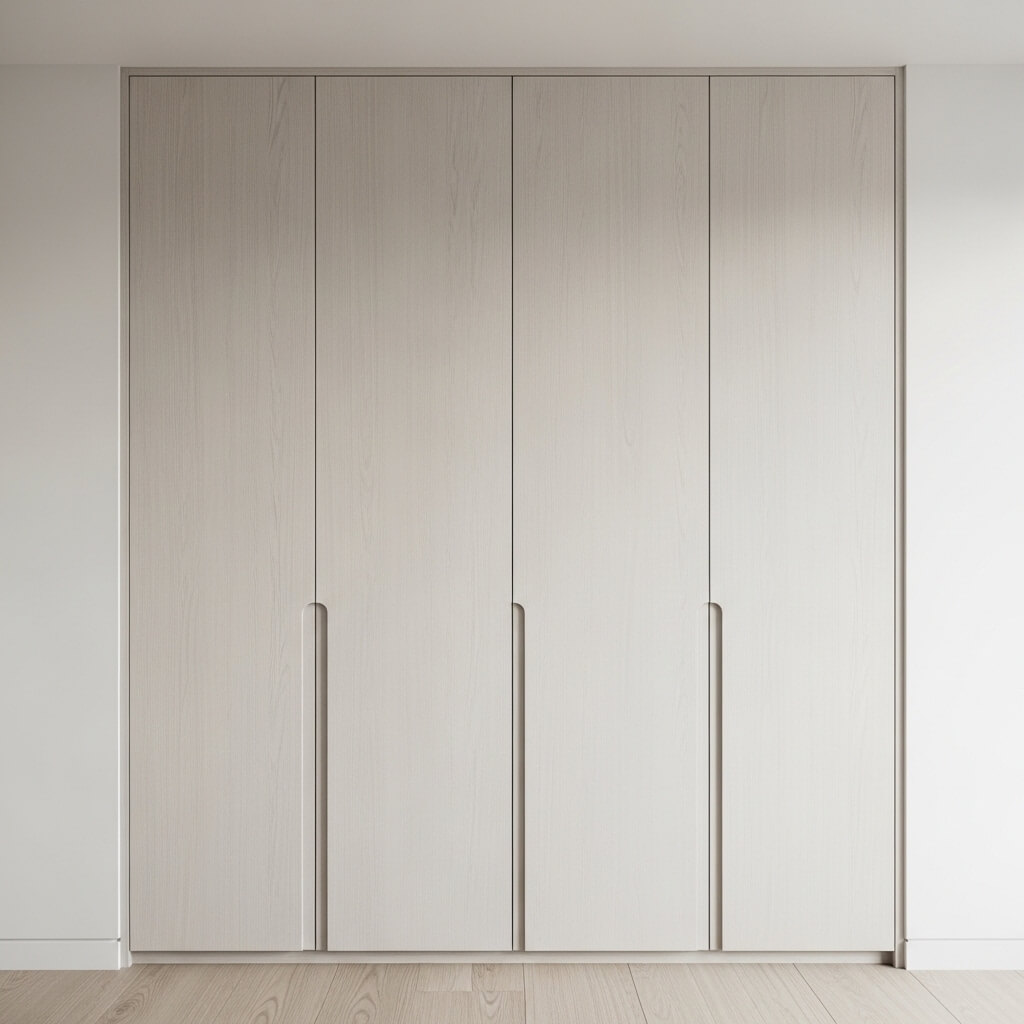
To achieve the pristine, uncluttered look of minimalist interior architecture, storage must be completely integrated into the home’s bones.
Standalone wardrobes and bulky dressers disrupt the visual flow.
Instead, rely on floor-to-ceiling built-in cabinetry that matches the wall color or features a seamless wood veneer.
Omit traditional hardware entirely; opt for push-to-open mechanisms or integrated, routed finger pulls.
When closed, the storage should look like a sleek architectural wall rather than a piece of furniture.
7. Biophilic Design and Indoor Trees
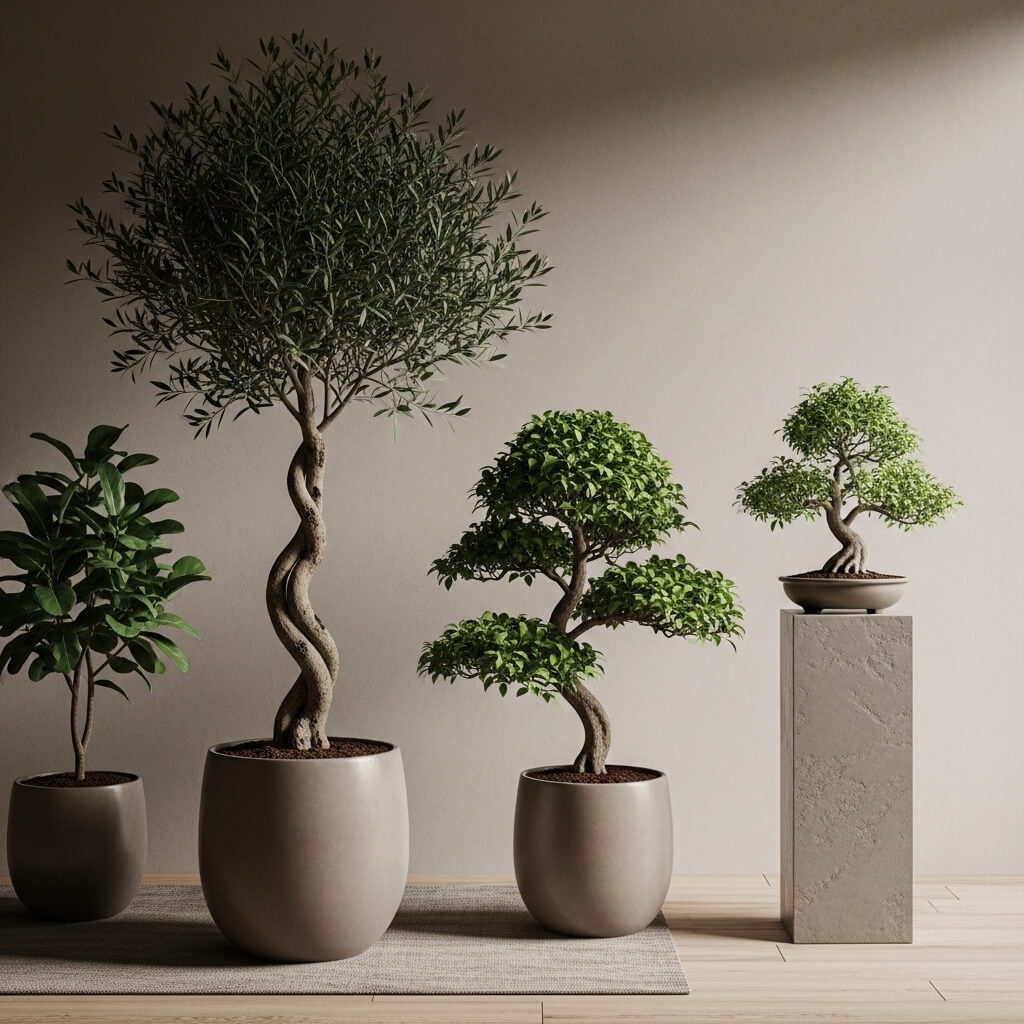
A deep reverence for nature is shared by both Scandi and Japanese cultures.
Biophilic design brings the outside in, not just with a few potted plants, but with significant, sculptural greenery integrated into the layout.
A large, twisting Olive tree, an indoor Ficus Audrey, or a carefully cultivated Bonsai placed on a pedestal acts as a living piece of art.
Ensure these are placed in matte ceramic or stone planters to maintain the earthy, muted aesthetic.
8. Noguchi-Inspired Paper Lighting
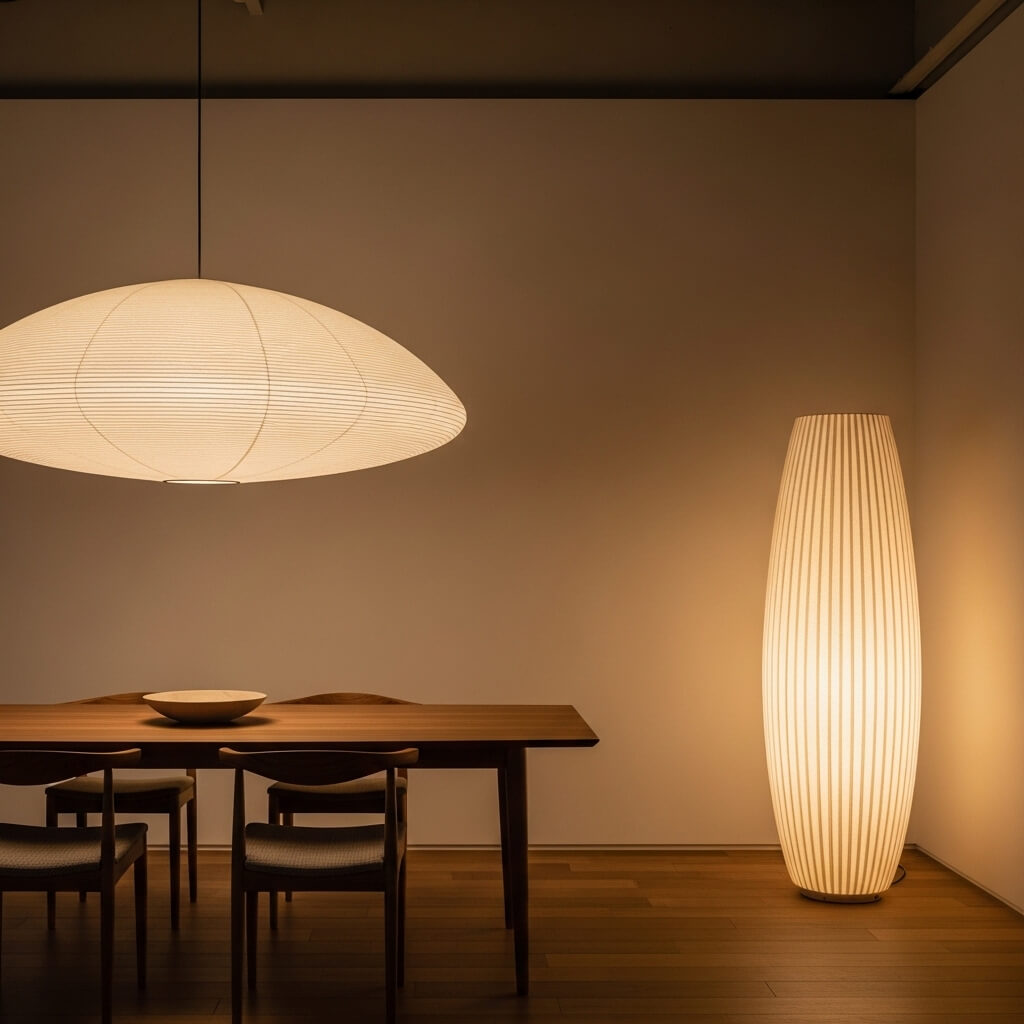
Lighting in a Japandi space should never be harsh or direct.
The goal is a soft, ambient, omnidirectional glow.
Architectural lighting often features oversized paper lanterns inspired by the iconic designs of Isamu Noguchi.
Whether it is a massive, cloud-like pendant suspended over a dining table or a ribbed paper floor lamp glowing warmly in a corner, paper and wood lighting fixtures diffuse the light perfectly, creating a serene, moonlit effect indoors.
9. A Muted, Earth-Drawn Color Palette
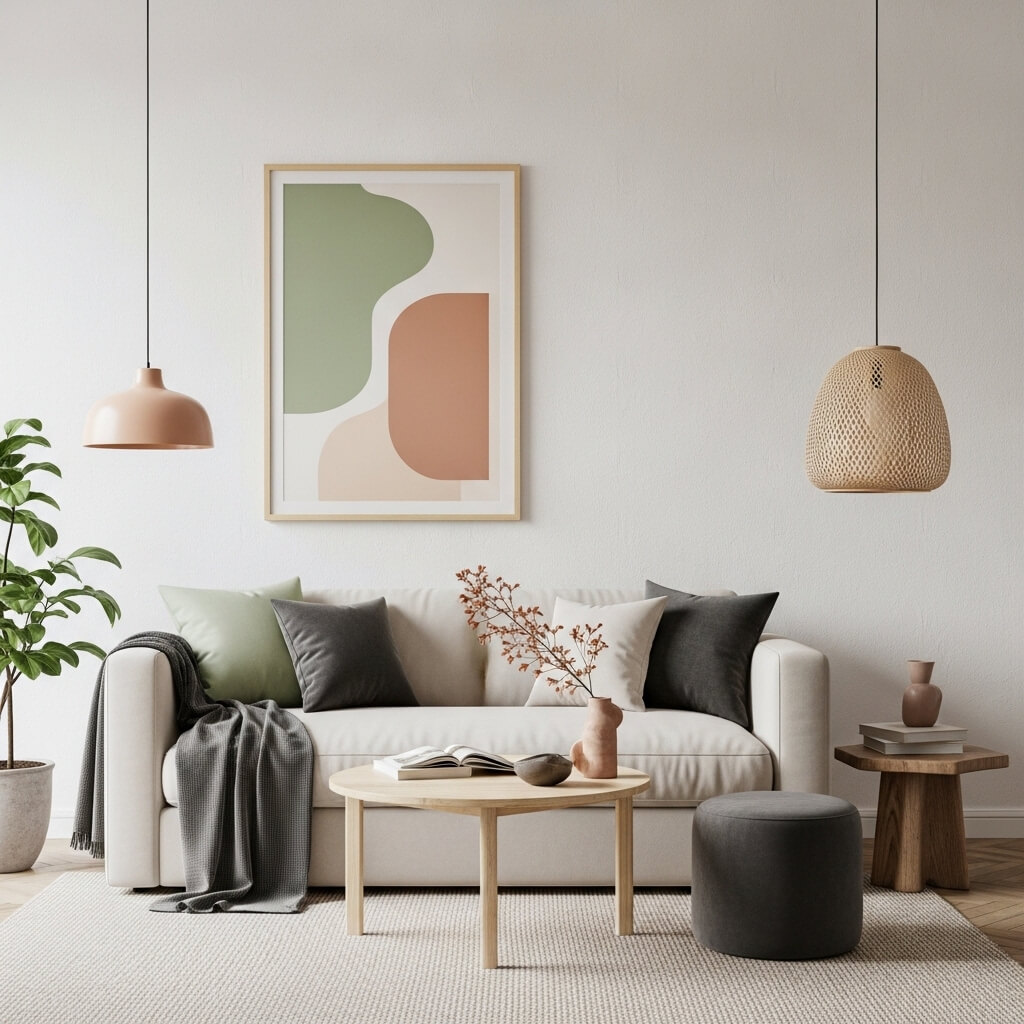
The color palette in this design style is strictly derived from the natural world.
Stark, brilliant whites are often replaced with softer, warmer creams and oatmeals.
Accents come in the form of muted, earthy tones: pale matcha green, soft clay terracotta, warm stone gray, and deep charcoal.
This low-contrast palette ensures that no single element jars the eye, allowing the mind to relax completely upon entering the space.
10. Organic Architectural Arches and Curves
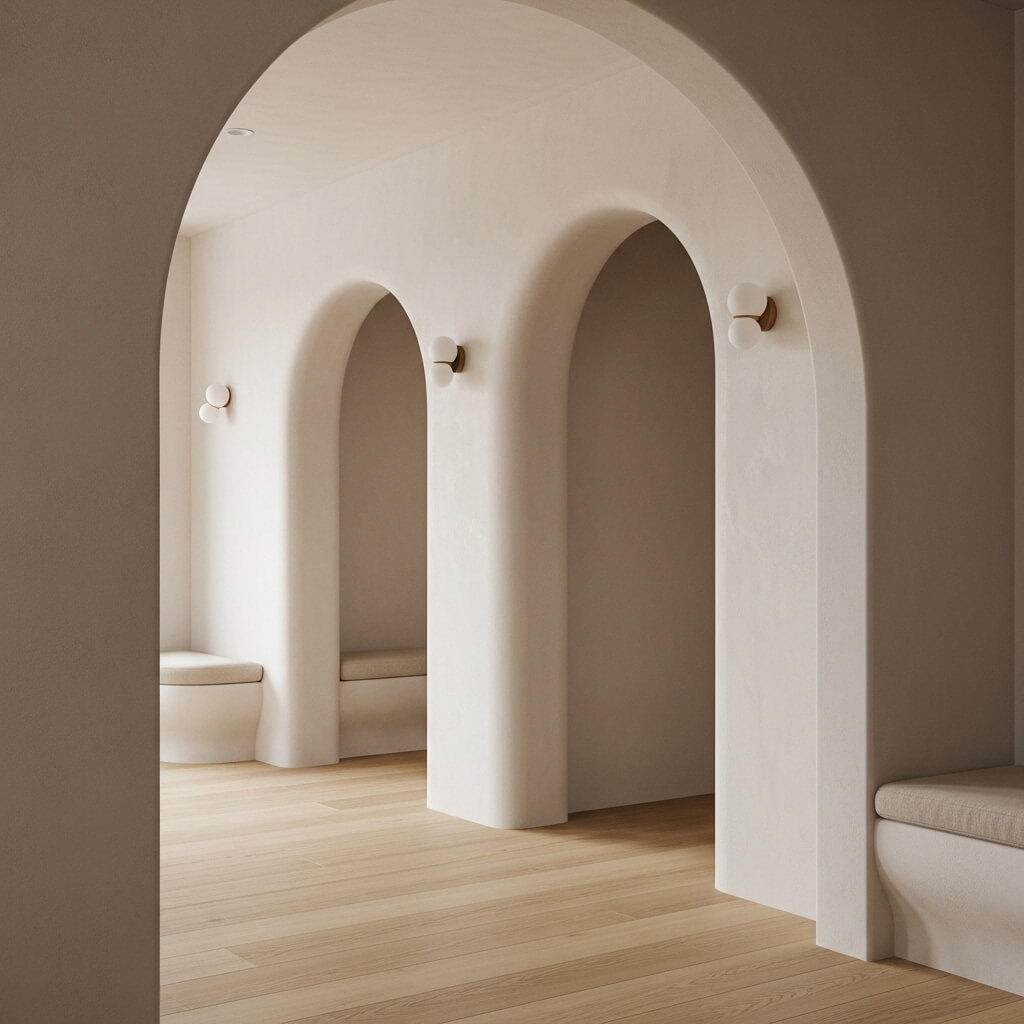
While modern minimalism is known for its strict, rigid right angles, the Japandi and Scandi influences introduce softness through curves.
Incorporating arched doorways, curved transition walls, or rounded alcoves breaks up the harsh geometry of a modern build.
This fluidity mimics the organic shapes found in nature, making the interior architecture feel more yielding, comforting, and inherently cozy.
11. Hygge-Driven Tactile Textiles
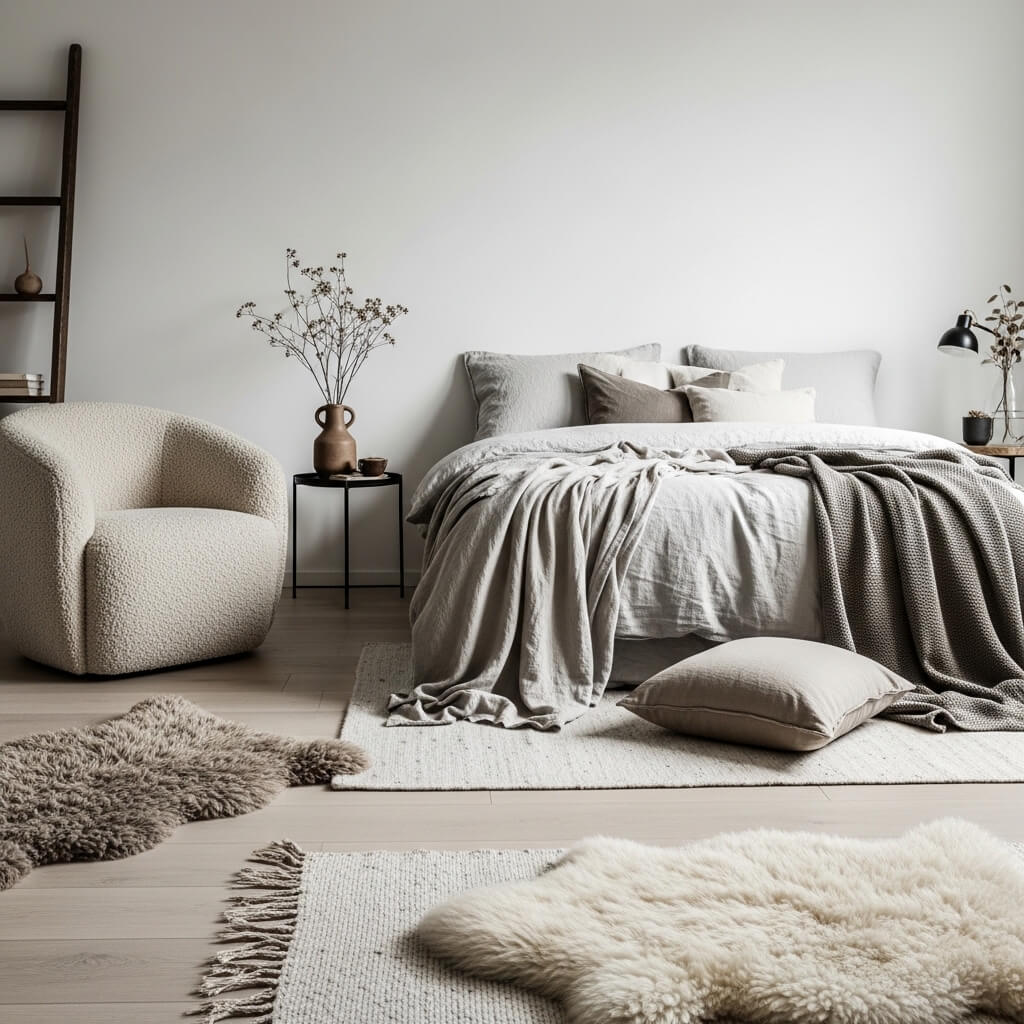
Because the architecture and furniture lines are so clean and minimal, the textiles must do the heavy lifting to introduce “Hygge” (coziness).
Layer your low-profile furniture with deeply textured, natural fabrics.
Think nubby bouclé accent chairs, heavy washed-linen duvet covers, raw silk throw pillows, and soft sheepskin or thick wool rugs layered over the light wood floors.
These tactile elements invite touch and make the minimalist space feel incredibly inviting.
12. Fluid Indoor-Outdoor Transitions
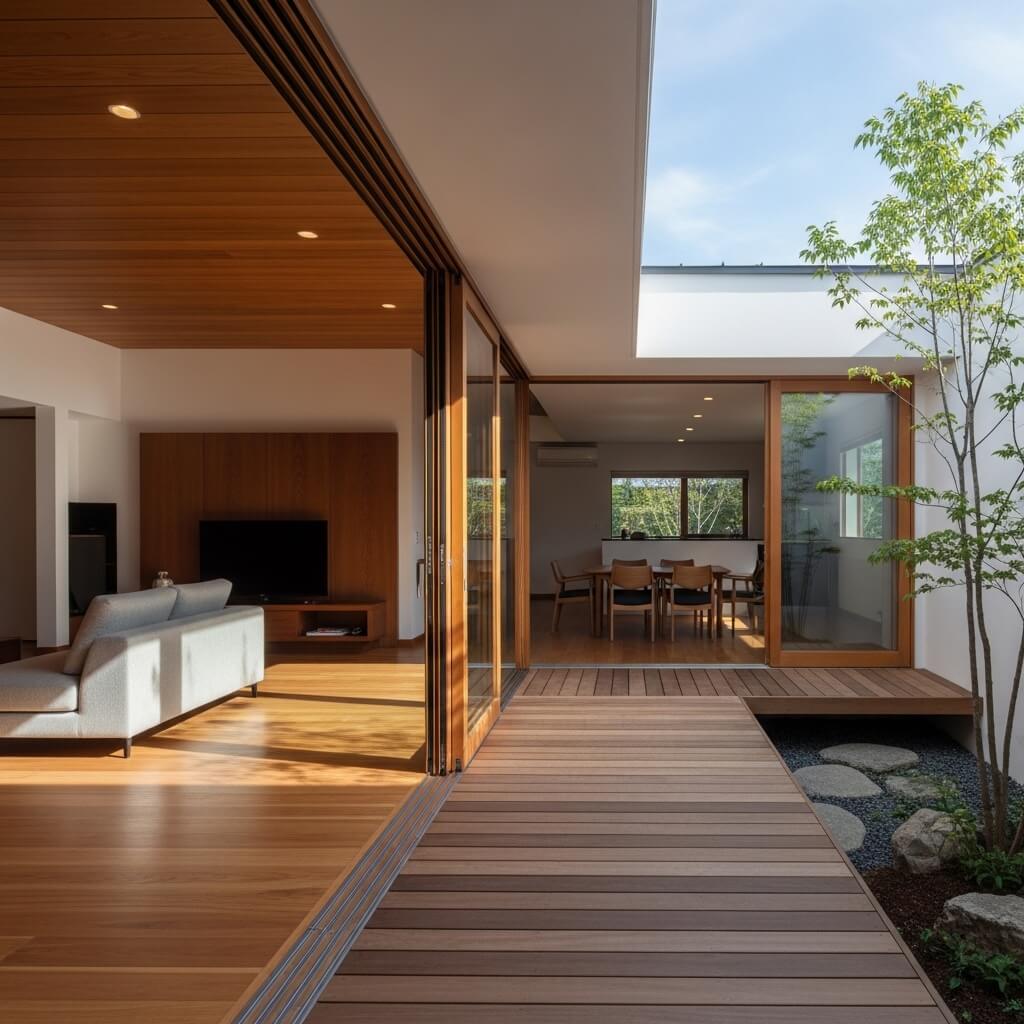
In Zen architecture, the home is not separate from its environment; it is a part of it.
Modern interpretations achieve this through massive, unobstructed, floor-to-ceiling sliding glass doors that pocket into the walls.
When opened, the living room flows seamlessly onto a wooden deck or a minimalist courtyard garden.
Continuing the same flooring material from the inside to the outside further blurs the boundary, making nature an integral part of the interior design.
13. Purposeful Negative Space (The Concept of “Ma”)
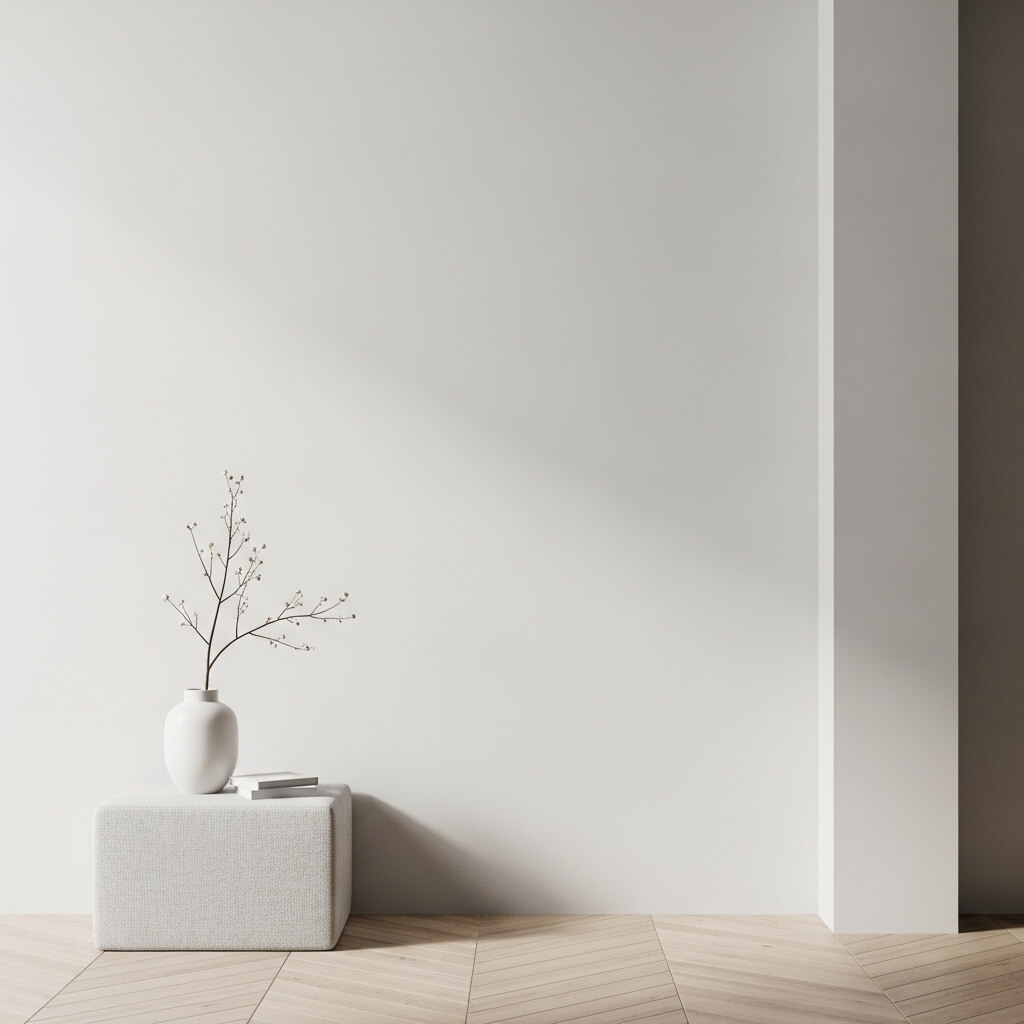
In Japanese spatial design, there is a concept called “Ma,” which translates roughly to “gap,” “space,” or “pause.”
It is the intentional use of empty space. In minimalist interior architecture, leaving a wall completely blank, placing a single branch in a vase on an otherwise empty table, or keeping a corner entirely free of furniture is a deliberate design choice.
This negative space gives the architectural elements and the few chosen decor pieces room to breathe and be fully appreciated.