When crisp produce meets colorful vegetables, a simple Spiralized haverst salad can become the star of a fall meal.
Spiralized vegetables add texture, freshness, and visual appeal without making the salad feel heavy.
From sweet apples and roasted squash to crunchy seeds and creamy dressings, these easy ideas make it simple to build a satisfying seasonal salad.
1. Start With a Colorful Spiralized Base
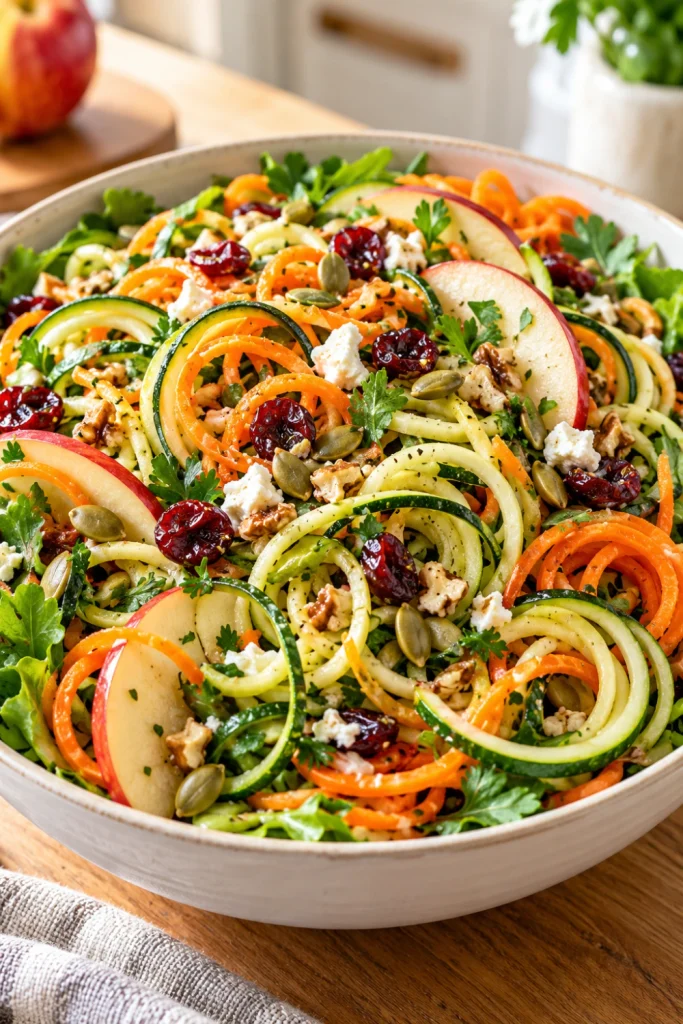
The foundation of a great harvest salad is a vegetable that creates long, attractive ribbons.
Zucchini, carrots, and sweet potatoes can all add different textures and colors while making the salad look especially inviting.
Simple steps:
- Choose one firm vegetable for spiralizing.
- Wash and dry it thoroughly before cutting.
- Spiralize into long, manageable strands.
- Gently pat away excess moisture.
- Place the vegetable ribbons in a large serving bowl.
Tip: Combine two vegetables, such as zucchini and carrot, for more color and contrasting textures.
2. Add Crisp Apples for Natural Sweetness
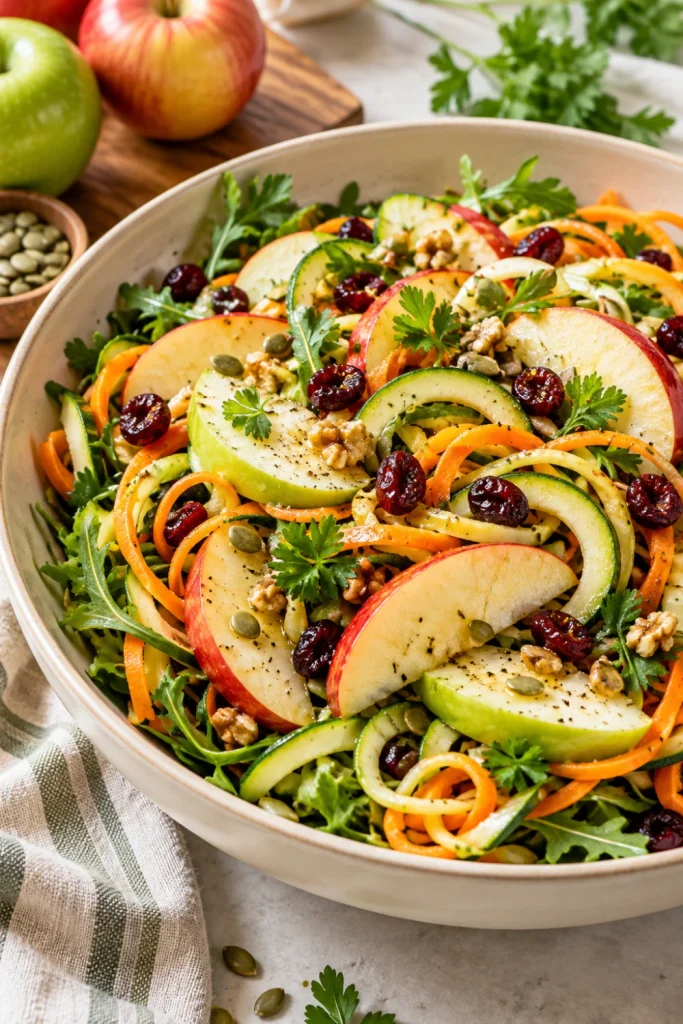
Apples bring a refreshing crunch and gentle sweetness that balances earthy vegetables beautifully.
Choose a crisp variety that holds its texture instead of becoming soft immediately after slicing.
Simple steps:
- Wash and core one or two apples.
- Slice them into thin pieces or small matchsticks.
- Toss them with a little lemon juice.
- Add them immediately before serving.
- Gently mix them through the spiralized vegetables.
Tip: Green apples provide a pleasantly tart contrast to sweeter fall ingredients.
3. Bring in Roasted Butternut Squash
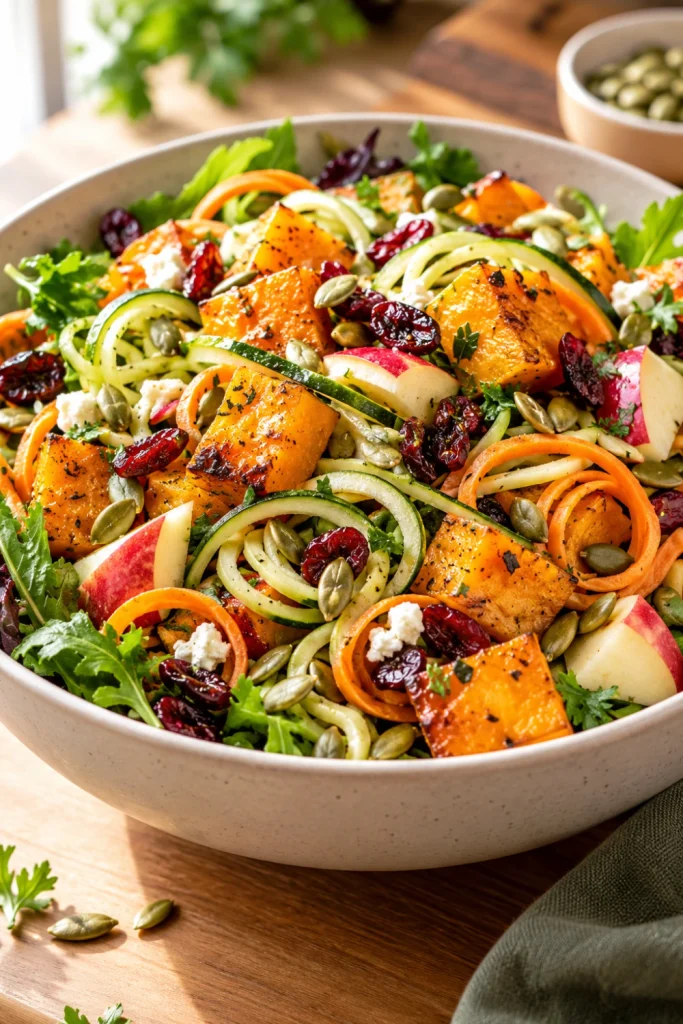
Roasted butternut squash adds warmth and a naturally creamy texture.
Its golden color also creates a beautiful contrast against fresh green and orange spiralized vegetables.
Simple steps:
- Peel and cube the squash.
- Toss the pieces with olive oil and your favorite seasonings.
- Spread them evenly on a baking sheet.
- Roast until tender with lightly browned edges.
- Let the squash cool slightly before adding it to the salad.
Tip: Avoid adding piping-hot squash directly to delicate greens because it can make them wilt quickly.
4. Add Leafy Greens for Extra Freshness
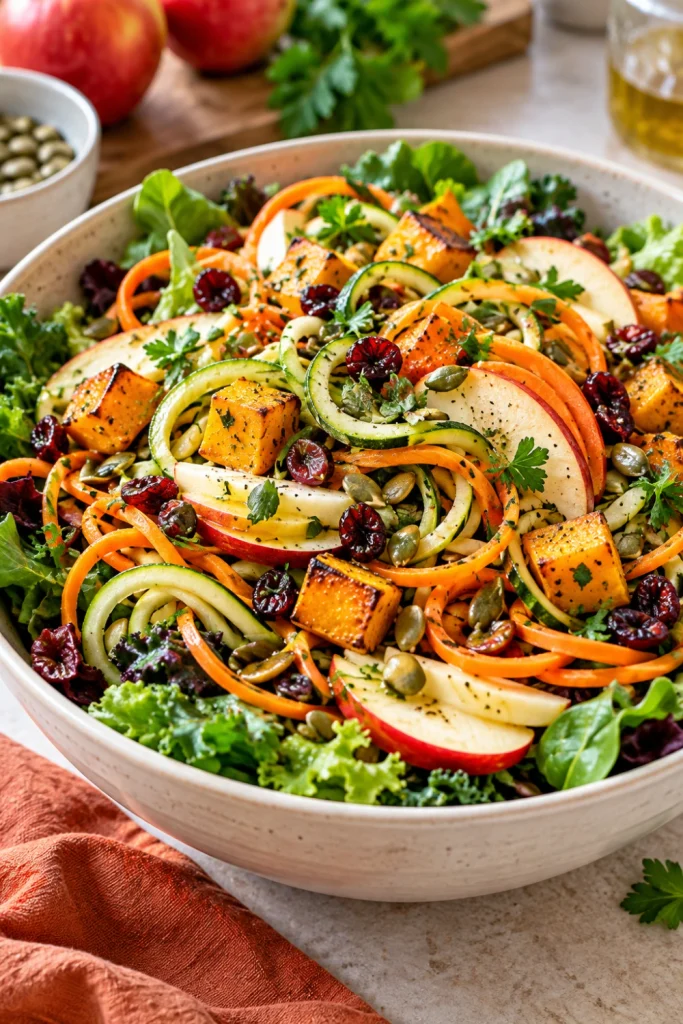
Spiralized vegetables create the visual centerpiece, but leafy greens can give the salad additional volume and freshness.
Kale, baby spinach, arugula, or mixed greens are excellent options.
Simple steps:
- Wash the greens thoroughly.
- Dry them well to prevent a watery salad.
- Tear larger leaves into bite-sized pieces.
- Add the greens beneath the spiralized vegetables.
- Toss gently just before serving.
Tip: Massage kale with a small amount of dressing for a softer texture and more balanced flavor.
5. Sprinkle in Crunchy Seeds and Nuts
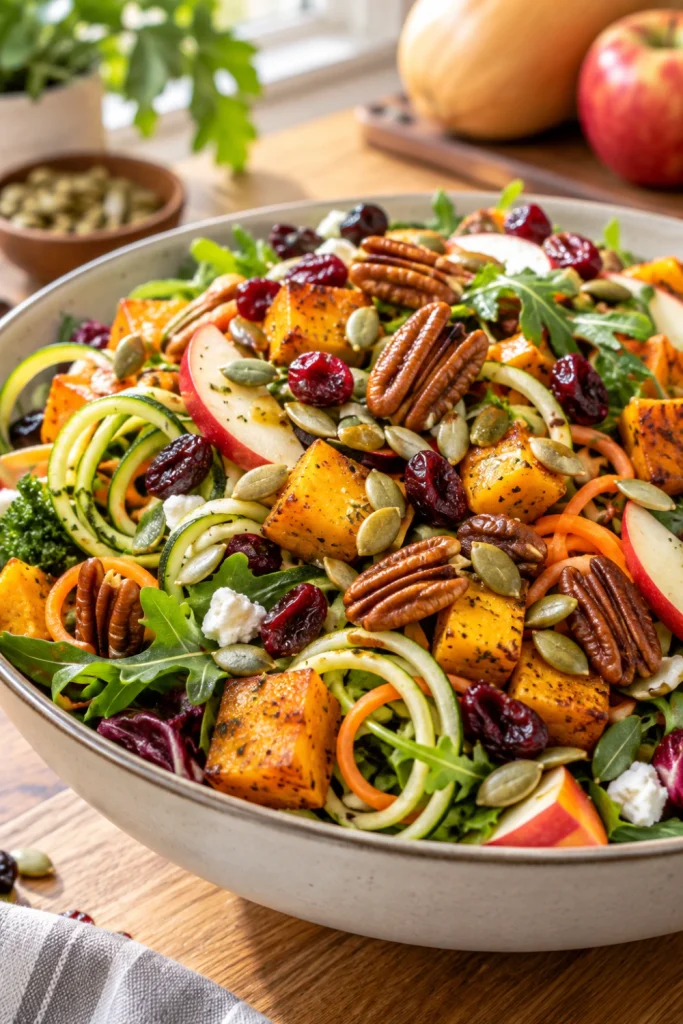
A good salad needs contrast.
Pumpkin seeds, pecans, walnuts, almonds, and sunflower seeds provide satisfying crunch while making the dish feel more substantial.
Simple steps:
- Choose one or two crunchy toppings.
- Toast nuts or seeds lightly if desired.
- Allow them to cool completely.
- Scatter them over the finished salad.
- Reserve a small amount for garnishing individual servings.
Tip: Add crunchy toppings near serving time so they remain crisp.
6. Make the Dressing Tangy and Balanced
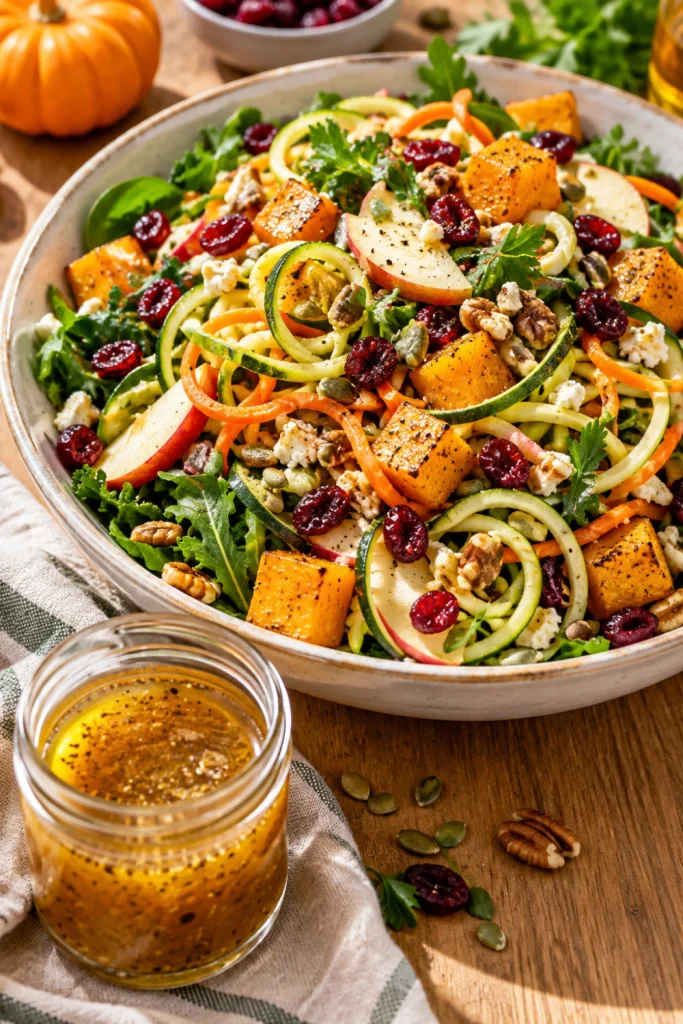
The dressing can transform simple vegetables into a memorable harvest salad.
A combination of olive oil, apple cider vinegar, maple syrup, mustard, and seasonings works particularly well with sweet and savory fall ingredients.
Simple steps:
- Add olive oil to a small jar.
- Mix in apple cider vinegar.
- Add a little Dijon mustard.
- Add maple syrup for gentle sweetness.
- Season with salt and black pepper.
- Shake vigorously until combined.
Tip: Taste the dressing before adding it to the salad and adjust the acidity or sweetness if necessary.
7. Add Dried Cranberries for a Festive Touch
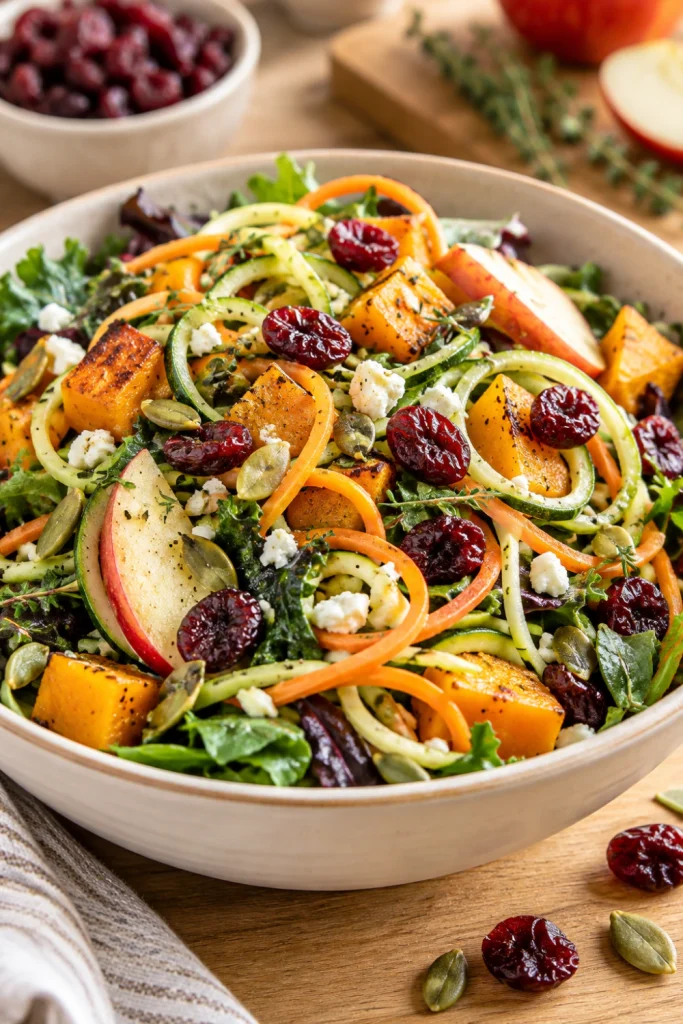
Dried cranberries introduce chewy texture and bursts of tart sweetness. They also make the salad look more colorful, especially when combined with green vegetables and golden squash.
Simple steps:
- Measure a small handful of dried cranberries.
- Check that they are evenly distributed.
- Add them after the vegetables have been combined.
- Toss gently.
- Save a few for sprinkling over the top.
Tip: Use dried cherries or chopped dates instead if you prefer a different flavor.
8. Include a Creamy Element
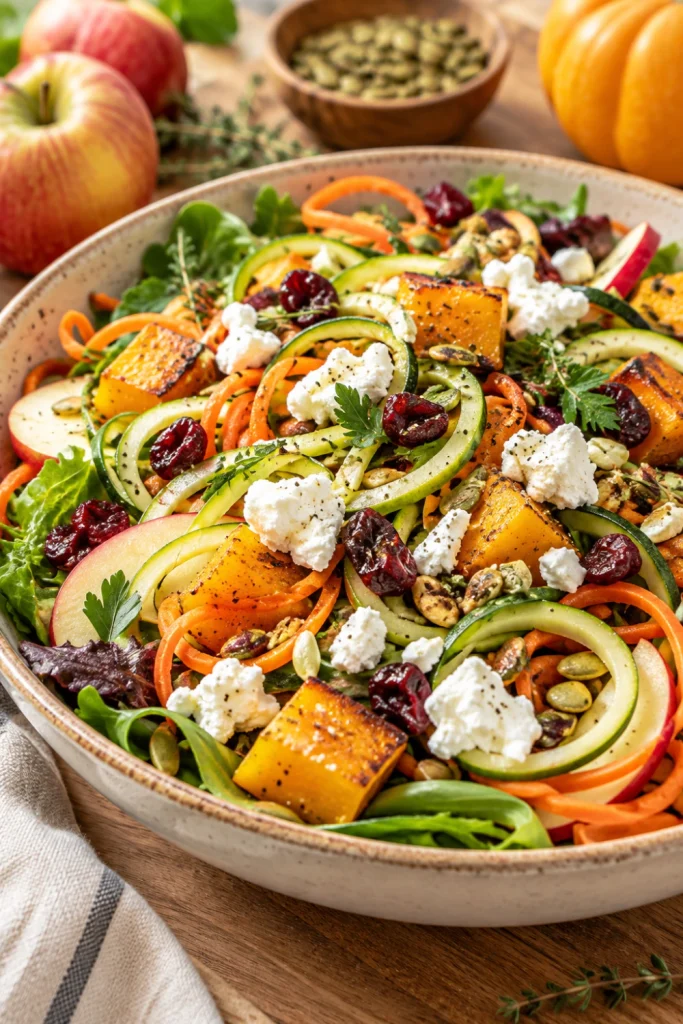
Creamy ingredients can soften the sharper flavors in a vegetable-heavy salad.
Crumbled goat cheese, feta, avocado, or a spoonful of creamy dressing can provide that satisfying contrast.
Simple steps:
- Choose one creamy ingredient.
- Prepare it into bite-sized pieces.
- Add it after tossing the vegetables.
- Distribute it gently throughout the salad.
- Finish with a small amount on top.
Tip: Goat cheese pairs particularly well with apples, roasted squash, cranberries, and maple-based dressings.
9. Give the Salad a Protein Boost
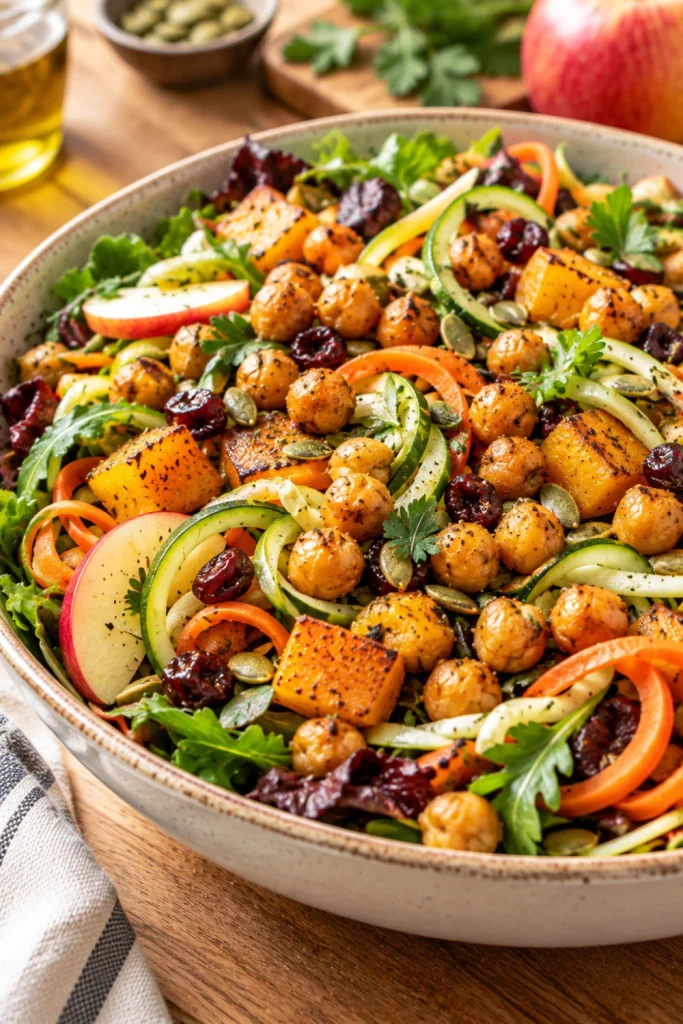
If the salad is intended to become a complete lunch or light dinner, adding protein can make it considerably more filling.
Chickpeas, grilled chicken, lentils, or roasted tofu are versatile choices.
Simple steps:
- Select your preferred protein.
- Cook or prepare it separately.
- Season it to complement the salad.
- Allow hot ingredients to cool slightly.
- Add the protein just before serving.
Tip: Chickpeas are an easy plant-based option that work especially well with roasted vegetables.
10. Use Fresh Herbs to Wake Up the Flavors
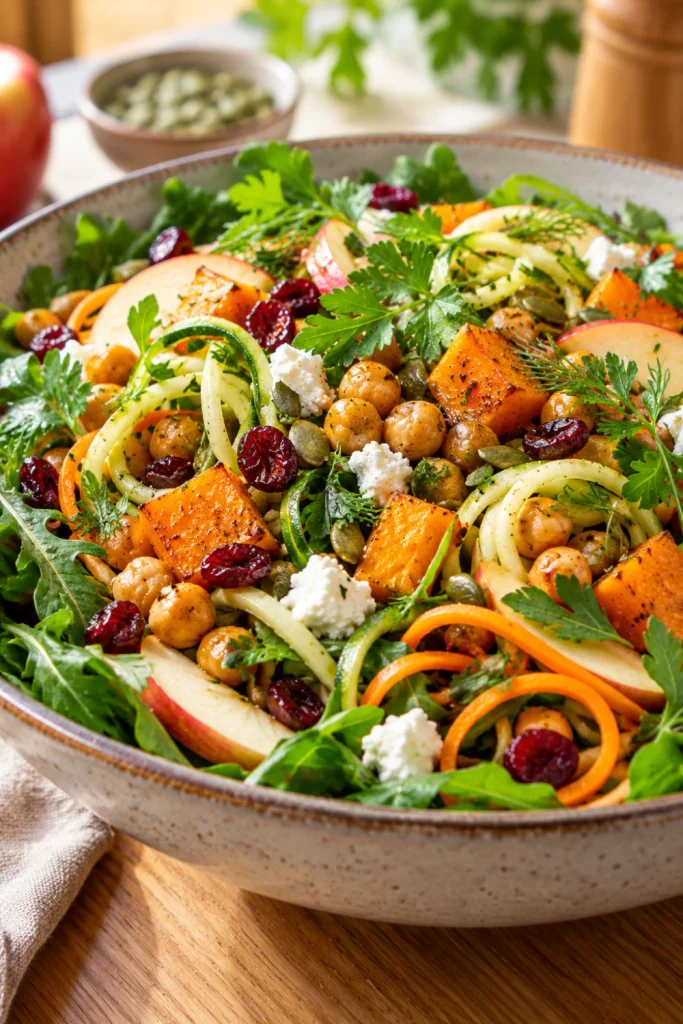
Fresh herbs can make a seasonal salad taste brighter without requiring a complicated ingredient list.
Parsley, mint, basil, and thyme can each bring a slightly different character.
Simple steps:
- Rinse the herbs carefully.
- Dry them thoroughly.
- Remove tough stems where necessary.
- Chop larger leaves roughly.
- Scatter the herbs over the salad.
Tip: Use herbs sparingly at first because their flavors can become surprisingly strong when combined.
11. Create Layers Instead of Tossing Everything Together
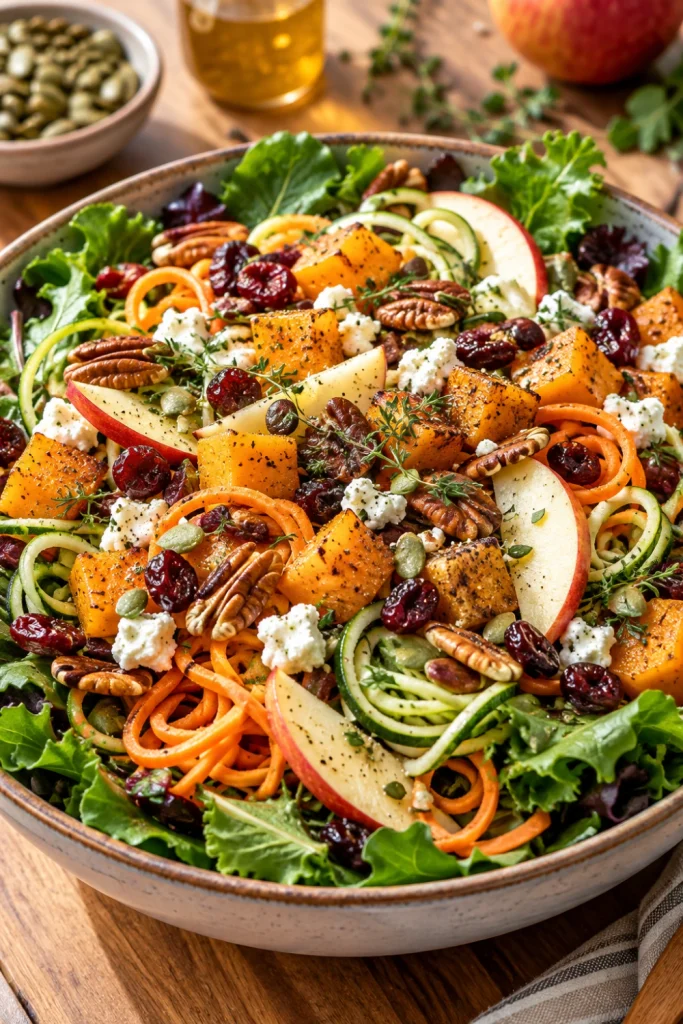
Presentation matters, especially when preparing a salad for a holiday gathering or Pinterest-worthy table.
Layering the ingredients allows every colorful component to remain visible.
Simple steps:
- Start with leafy greens.
- Add spiralized vegetables.
- Arrange roasted squash around the center.
- Scatter apples, cranberries, and nuts across the top.
- Finish with cheese and fresh herbs.
- Drizzle with dressing immediately before serving.
Tip: Keep a little of every colorful ingredient aside for the final garnish.
12. Prepare Components Ahead of Time
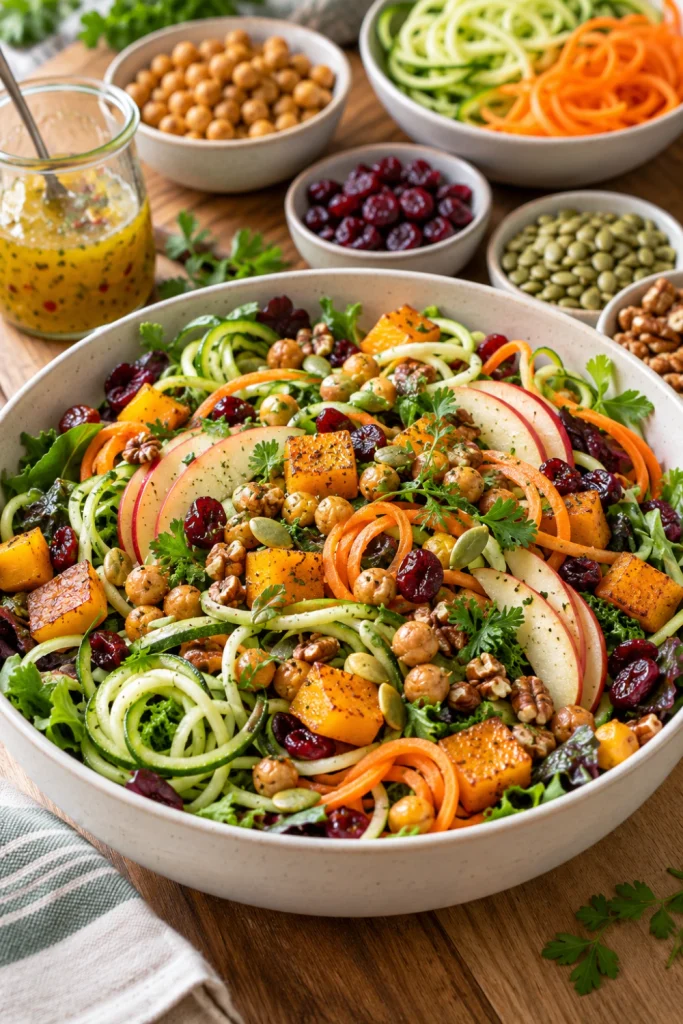
A harvest salad becomes much easier to assemble when the individual ingredients are prepared beforehand.
This approach is particularly useful for busy weeknight dinners or entertaining.
Simple steps:
- Roast the vegetables earlier in the day.
- Prepare the dressing and refrigerate it.
- Wash and dry the greens.
- Spiralize sturdy vegetables ahead of time.
- Store crunchy toppings separately.
- Assemble shortly before serving.
Tip: Keep wet ingredients away from delicate greens until you are ready to eat.
13. Turn It Into a Complete Seasonal Meal
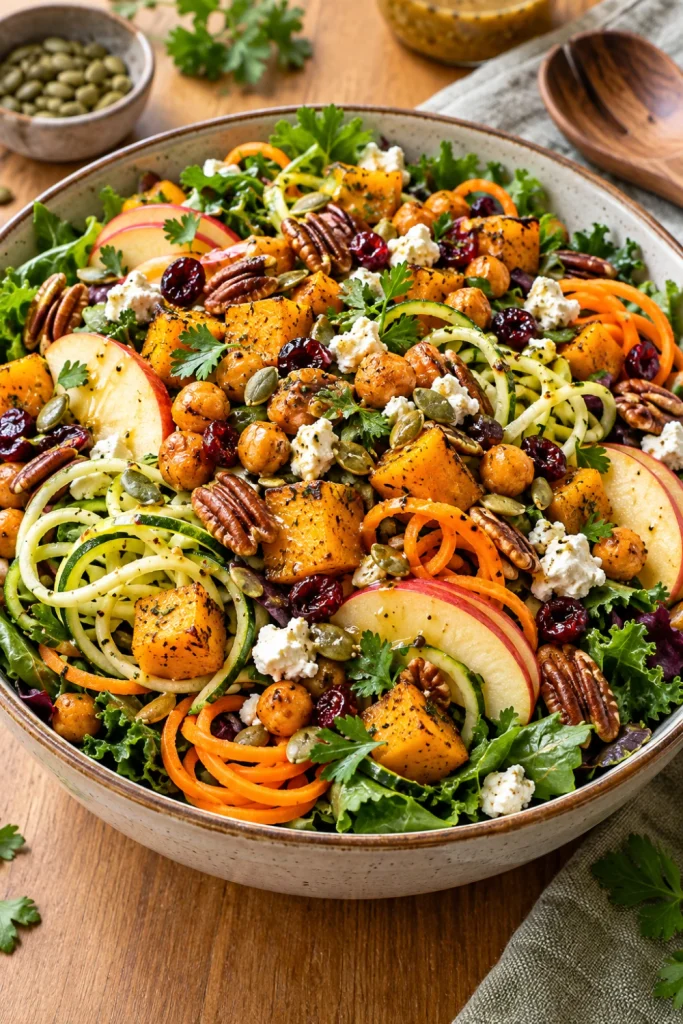
The best part of a spiralized harvest salad is its flexibility.
It can work as a colorful side dish, a packed lunch, or a satisfying main meal depending on the ingredients you choose.
Simple steps:
- Begin with spiralized vegetables.
- Add leafy greens for volume.
- Include roasted seasonal produce.
- Add fruit for sweetness.
- Choose a protein for staying power.
- Finish with nuts, seeds, cheese, and dressing.
Tip: Keep the flavor balance in mind: combine something fresh, something crunchy, something creamy, something sweet, and something tangy.
Final Thoughts
A spiralized harvest salad does not need complicated techniques or an enormous ingredient list to feel special. The secret is creating contrast.
Crisp vegetables, sweet fruit, warm roasted produce, creamy toppings, crunchy seeds, and a bright dressing can turn everyday ingredients into a beautiful seasonal meal.
For the best result, follow each step carefully: prepare the vegetables properly, keep crunchy ingredients separate until serving, balance sweet and tangy flavors, and avoid overdressing the salad.
Most importantly, use the ingredients as a flexible framework rather than a strict formula.
Swap vegetables, fruits, herbs, proteins, or toppings according to what is available.
Whether served beside a roasted dinner or enjoyed as a colorful lunch, these ideas make it easy to create a fresh, satisfying harvest salad that looks as good as it tastes.